Summary
- The US and China have begun high-level talks in New York to coordinate an extension of their trade truce as well as tariffs and export restrictions.
- The two sides are also discussing easing trade barriers on $30 billion of goods from each country, along with lower tariffs on US energy and agricultural products.
- The US and China plan to negotiate issues including AI use, US-China AI competition and the war in Iran, then continue those discussions at a Trump-Xi summit.
Forecast Trend Report by Period


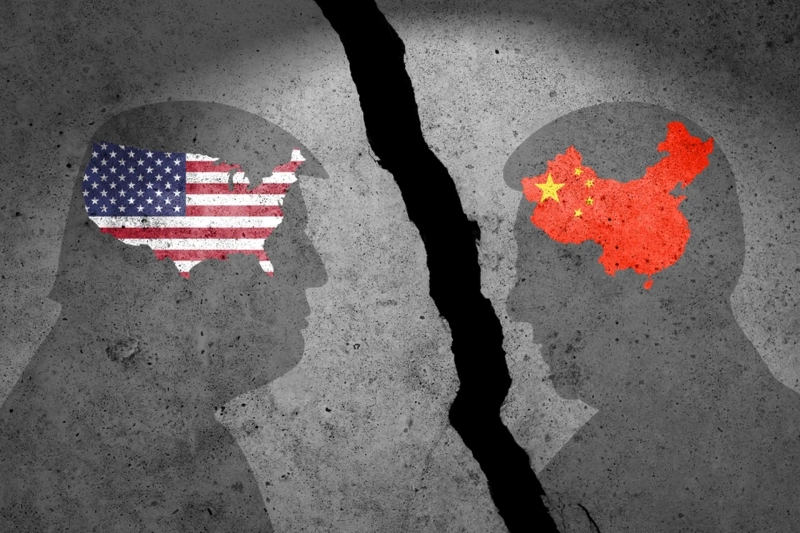
The US and China have opened high-level talks aimed at coordinating on major issues ahead of a summit between President Donald Trump and President Xi Jinping, including an extension of their trade truce, artificial intelligence and the war in Iran.
Bloomberg reported on September 20 that delegations led by US Treasury Secretary Scott Bessent and Chinese Vice Premier He Lifeng began talks that day at JPMorgan Chase offices in Manhattan, New York.
China's delegation included He and Li Chenggang, its international trade representative. The US side included Trade Representative Jamieson Greer. Arriving at the venue at about 10:30 a.m., Bessent said he expected constructive talks between the two sides.
The negotiations were arranged to work through key agenda items before the Trump-Xi summit scheduled for September 24 at the White House. Xi's state visit to the US would be his first in more than a decade.
One of the main issues is the US-China trade truce, which expires in November. The two countries had previously agreed to lower tariffs and ease export restrictions, and the latest talks are focused on ways to preserve or extend that agreement. A planned US announcement of additional tariffs, which Washington had been reviewing over concerns about excess production capacity among trading partners, was also delayed until after the Trump-Xi summit, Bloomberg reported.
The two sides have also been discussing ways to lower tariffs on US energy and agricultural products. Under the Board of Trade framework launched this year, officials are discussing steps to ease trade barriers on $30 billion of goods from each side.
AI has also emerged as a key new point of friction. The US government, security agencies and Silicon Valley AI companies argue that Chinese firms are using American AI models to develop their own products. China has rejected that as baseless and said it would respond if the US moved against Chinese AI companies.
Beijing has also pushed back against calls from parts of the US technology industry to slow the pace of AI development. China's Foreign Ministry has previously criticized arguments for slowing AI development on safety grounds as fearmongering.
Bessent recently said he was open to discussions aimed at reducing shared risks and avoiding a complete split between the US and Chinese systems in the AI race.
The war in Iran is also set to be on the agenda. After advance talks on trade, AI and geopolitical issues, the two sides plan to continue discussions at the Trump-Xi summit.

Suehyeon Lee
shlee@bloomingbit.ioI'm reporter Suehyeon Lee, your Web3 Moderator.