SEC Tokenized-Stock Trial Raises Prospects for Coinbase, Robinhood and Circle
Summary
- The SEC’s innovation exemption for tokenized stocks has put Coinbase, Robinhood and Circle forward as key potential beneficiaries.
- Goldman Sachs and Citizens highlighted the business structures of Coinbase and Robinhood across tokenized stocks, custody, layer-2 services and Robinhood Chain.
- They said broader on-chain securities trading could increase demand for tokenized cash such as Circle’s USDC, while the impact on existing exchanges is expected to remain limited.
Forecast Trend Report by Period


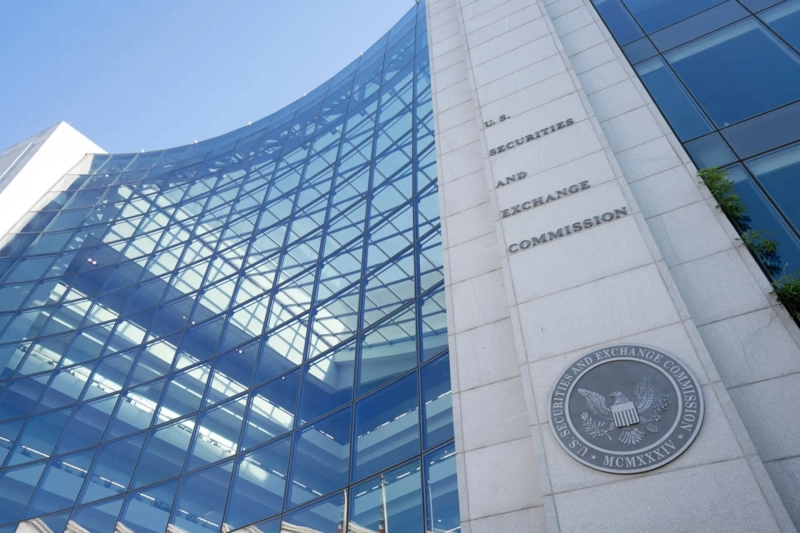
Coinbase, Robinhood and Circle are being cited as key potential beneficiaries after the U.S. Securities and Exchange Commission moved ahead with a regulatory trial allowing tokenized stocks to trade on public blockchains.
CoinDesk reported on September 20 that the SEC’s five-year “innovation exemption” framework is centered on allowing U.S. stocks to be tokenized and traded through automated market makers, or AMMs. The tokens must preserve traditional shareholder rights, including dividends and voting rights. Trading platforms would also be subject to limits on volume and the number of securities they handle.
Goldman Sachs said Coinbase could benefit across multiple business lines. Its existing tokenized-stock product already meets many of the SEC’s requirements, including dividend features similar to those of the underlying shares. Chief Executive Officer Brian Armstrong recently said voting functionality would be added soon.
Coinbase’s institutional custody business and Coinbase Tokenize, which helps companies tokenize assets, were also cited as positives. Citizens likewise pointed to Coinbase’s business model spanning custody, tokenized assets, stablecoins and Base, its Ethereum-based layer-2 network.
Coinbase would still need additional infrastructure to operate a trading platform directly. Its exchange currently uses a central limit order book, or CLOB, while the SEC’s proposed framework is built around AMMs. Goldman Sachs said the company could build a new system or use a decentralized exchange on Base.
Robinhood was also named as a potential beneficiary. Its tokenized-stock products offered overseas are currently derivatives that track the price of the underlying assets and do not provide the full shareholder rights required by the SEC. The company would need additional product development to launch the service in the U.S.
Robinhood Chief Executive Officer Vlad Tenev recently said the company plans to add shareholder functions such as stock redemption and voting rights to tokenized stocks. Citizens said Robinhood could move quickly in the U.S. market, citing the growth of its overseas tokenized-stock business and development of the Arbitrum-based Robinhood Chain.
Circle stands to benefit indirectly through stablecoins. Goldman Sachs and Citizens said broader on-chain securities trading could increase demand for tokenized cash used in settlement and collateral, lifting USDC usage as well.
The impact on incumbent exchanges such as Nasdaq and Intercontinental Exchange, the parent of the New York Stock Exchange, is expected to remain limited for now. Given trading-volume caps, issuers’ veto rights and the limitations of AMMs in large transactions, new platforms are unlikely to capture a significant share of volume from traditional exchanges.

Suehyeon Lee
shlee@bloomingbit.ioI'm reporter Suehyeon Lee, your Web3 Moderator.