PiCK
US Crypto Rulemaking Accelerates; FSC Says It Will Fast-Track South Korea Digital Asset Basic Law
Summary
- The SEC’s Regulation Crypto Assets would make fundraising easier, fueling concern that South Korean companies could move to the U.S. and that companies and capital could flow overseas.
- South Korean experts said the country needs a regulatory framework that can bring capital back through a basic digital asset law, an issuance and disclosure regime, and a reshoring policy.
- The Financial Services Commission said it will move quickly on a government bill for the basic digital asset law so it can be discussed by a National Assembly legislation subcommittee by November at the latest.
Forecast Trend Report by Period


Min Byung-deok: No More Delays in Legislation
Questions Raised Over Waiting for a Government Bill
Concerns Grow Over an Outflow of Companies and Capital
FSC: We Want It Passed More Than Anyone
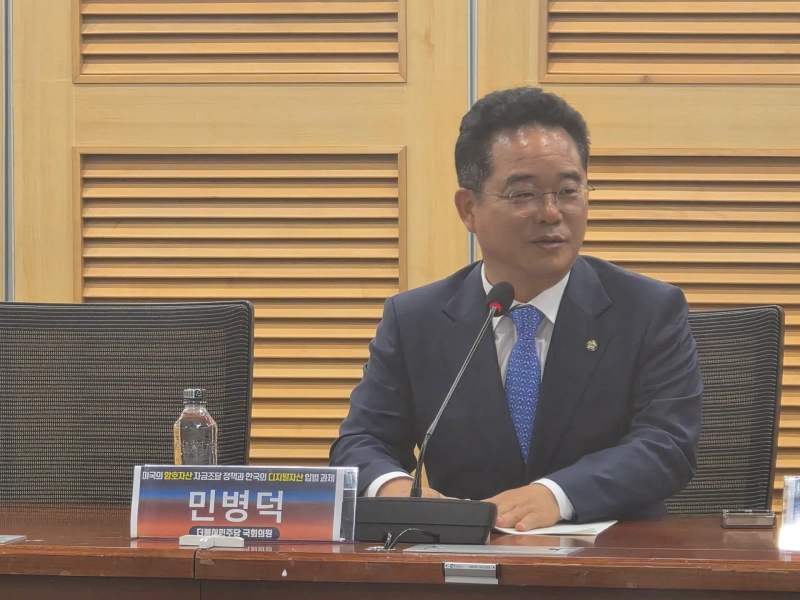
As the U.S. Securities and Exchange Commission steps up efforts to formalize digital-asset rules, concerns are rising that South Korean companies could move overseas. Financial authorities in Seoul said they also intend to speed work on a basic law for digital assets.
Min Byung-deok, a lawmaker from the Democratic Party, told a seminar at the National Assembly in Seoul on Sept. 22 that the U.S. is moving quickly to institutionalize digital assets, including through the SEC’s Regulation Crypto Assets. “We can’t delay legislation any longer,” he said.
Regulation Crypto Assets is an SEC framework for digital-asset fundraising and issuance announced last month. Market attention shifted to the agency’s proposal after a cloture vote on the Clarity Act failed on Sept. 15.
The framework creates a separate exempt offering path that would allow eligible digital-asset companies to raise capital without following registration procedures under existing securities laws. Startups could raise up to $5 million over four years, while other companies could raise as much as $75 million over 12 months.
Min also criticized financial authorities during the seminar. More than a year has passed since the government said it would submit its own bill to the National Assembly, he said. Parliament can begin its own discussions while the government proceeds separately, then reconcile the two later. “I don’t understand why we have to wait for the government bill,” he said.
Warnings Grow That Digital-Asset Companies Could Head to the US

Kim Jong-seung, chief executive of digital-asset research firm MRI, said at the seminar that the SEC’s digital-asset rules are welcome news for the industry. For South Korea, however, they pose a policy challenge because the changes could encourage local companies to move to the U.S.
If a South Korean company chooses the fundraising registration exemption, its issuing entity and business management would be based in the U.S., Kim said. Even if initial development takes place in South Korea, fundraising and decision-making could happen in America. Management could ultimately become centered there, affecting domestic job creation and tax revenue, he added.
That points to a need for policies to prevent corporate outflows. South Korea should respond with a reshoring policy that also overhauls procedures for digital-asset fundraising, distribution and verification, Kim said.
Han Seo-hee, a lawyer at Lee & Ko, also stressed the need for a domestic system for digital-asset issuance and disclosure. If issuance rules are too strict in South Korea, companies will issue abroad, and those assets could later circulate in the domestic market, she said. A country whose regulatory framework is out of step with global trends can instead create regulatory gaps.
Han said South Korea should establish a separate issuance and disclosure framework tailored to its market. The country has a well-developed digital-asset trading market but has gained none of those benefits on the issuance side, with the gains effectively accruing to offshore issuers, she said. Once a basic digital-asset law is in place, regulators should also consider a framework that helps capital return to the domestic market.
Basic Law Needs Changes in Both Speed and Direction
Speakers in the discussion that followed also said South Korea needs to move faster to overhaul its system. Kim Jong-hyup, chief executive of Parameta, said the U.S. may move at different speeds, but its policy direction is clearly set. South Korea, by contrast, still has not established a direction, he said.
Despite a large domestic trading market and strong user participation, projects have had little choice but to operate through overseas entities because the regulatory direction remains unclear, Kim said. Advancing discussions on the basic law would help create an institutional foundation for a wider range of digital-asset businesses, including fundraising.
Kim Yong-il, vice president for global business development at Avalanche, said policy changes in the U.S. are aimed not only at energizing the digital-asset market but also at protecting investors. The measures support faster, lower-cost corporate adoption of blockchain, he said. But user and investor protection remains at the center of the policy approach.
Lee Jung-geun, chairman of EQBR Holdings, described moving his business base overseas because of South Korea’s regulatory system. He said he began a blockchain business in South Korea in 2018 but moved its base to Singapore as operations continued. Eight years later, domestic legislation still has not been enacted, he said.
FSC Says It Will Enable National Assembly Debate by November
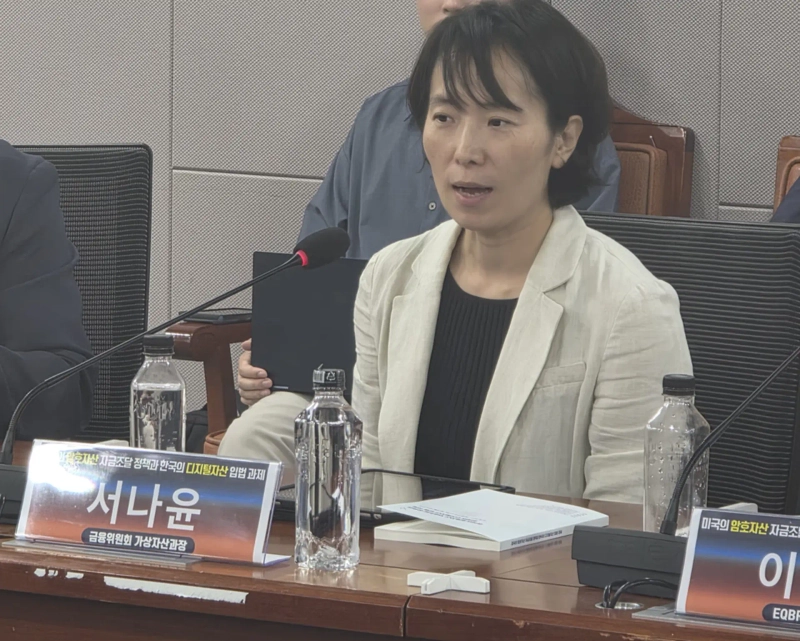
South Korea’s financial authorities said they will expedite submission of a government bill so the National Assembly can begin discussing the basic law by November at the latest.
Seo Na-yoon, head of the Financial Services Commission’s virtual asset division, said at the seminar that the FSC wants passage of the basic law as quickly as anyone. The agency shares the view that the measure should be discussed by a National Assembly legislation subcommittee in November, she said.
Seo said further discussion is still needed on specific issues. The FSC has no intention of unilaterally settling those questions at the government level, she said. The broad direction has already been set, and discussions are now focused on the details. Even if submission of the government bill is somewhat delayed, lawmaker-sponsored bills are already on the table and could be consolidated, allowing sufficient discussion in November, she added.

Uk Jin
wook9629@bloomingbit.ioH3LLO, World! I am Uk Jin.