Global Crop Prices Surge Most Since 2022, Stoking Fears of Renewed Inflation
Summary
- Global agricultural prices surged 13% over three months, heightening concern over renewed inflation pressures.
- Fighting between Russia and Ukraine, extreme weather, and US-China agricultural trade supported higher prices for soybeans, corn, and wheat.
- Despite the US Department of Agriculture's ample supply outlook, corn, wheat, and soybeans rose sharply in Chicago in the third quarter, potentially increasing the burden on central banks.
Forecast Trend Report by Period


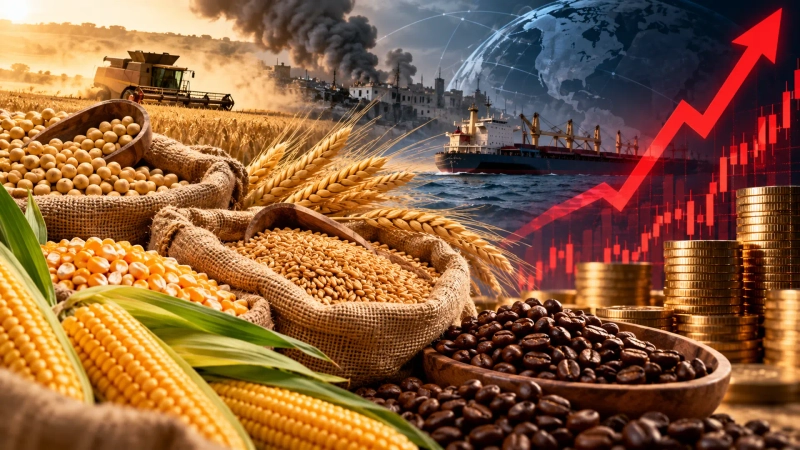
Global agricultural prices have posted their biggest jump since Russia's 2022 invasion of Ukraine, fueling concern that inflation pressures could build again, especially through food costs.
Bloomberg reported on October 1 that the Bloomberg Agriculture Spot Index, which tracks 10 major farm commodities including soybeans and coffee, rose 13% in the three months through September. That marked its largest quarterly gain since March 2022.
Supply uncertainty has been the main driver of the advance. Intensifying fighting between Russia and Ukraine has disrupted exports from the Black Sea region, a major global supply hub for grains and oilseeds. Major importers in Asia and Africa are seeking alternative suppliers.
Extreme weather is also increasing the risk of higher food prices. Adverse conditions have affected wheat and corn production in key growing regions in the US and Europe, while a strong El Nino is straining output of major agricultural products such as palm oil and cocoa. India is also experiencing its weakest monsoon season in a decade, raising the possibility of poorer harvests and higher food prices.
US-China agricultural trade flows also supported prices. China has continued buying US soybeans, and expectations for improved trade relations increased after the two countries' leaders met in late September. As part of the agreement between the two sides, China agreed to lower tariffs on US wheat and corn, while keeping additional tariffs on US soybeans in place.
Still, US supply conditions may limit further gains in agricultural prices. After the US Department of Agriculture released its latest report on September 30 projecting ample supplies, Chicago grain futures at one point tumbled before recovering some of their losses.
Even so, corn and wheat prices in Chicago each rose 15% in the third quarter, while soybeans gained 13%. If the rally in agricultural prices is prolonged, it could intensify price pressures through food costs and add to the burden on central banks seeking to meet their inflation targets.

Suehyeon Lee
shlee@bloomingbit.ioI'm reporter Suehyeon Lee, your Web3 Moderator.