PiCK
US Tailors Crypto Tax Rules for Stablecoins, Staking as South Korea Lags
Summary
- The ADAPT Act, introduced in the US Senate, would create more detailed tax rules tailored to the characteristics of digital assets, including stablecoins, fees, mining, and staking.
- The bill would also apply wash sale and mark-to-market rules to digital assets to improve tax parity with traditional financial assets.
- Industry participants and experts said South Korea's treatment of digital assets as miscellaneous income, its 20% tax rate, and the lack of netting of gains and losses and loss carryforwards fail to reflect transaction types such as mining, staking, and DeFi.
Forecast Trend Report by Period


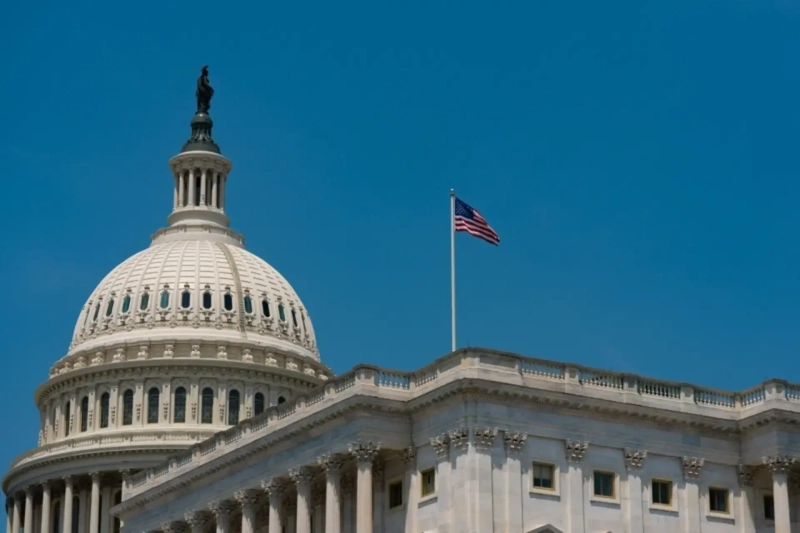
US lawmakers have introduced a bill that would tailor digital-asset tax rules based on how the assets are used. The measure is intended to refine the tax code and make digital assets easier to use. In South Korea, by contrast, officials have been building a crypto tax framework since 2020, but critics say it still does not reflect how the industry actually works.
According to the US Senate on October 7, Senator Steve Daines introduced the Adjusting Digital Asset Principles Tax Act, or ADAPT Act, on September 30 to overhaul federal tax rules for digital assets. Daines said the bill would modernize tax standards for digital assets and provide clearer guidance for taxpayers, businesses and the Internal Revenue Service.
A Closer Look at the ADAPT Act
At its core, the bill would apply existing tax law when digital assets are used as investments in a manner similar to traditional financial assets. It would also create separate tax rules for economic activity unique to blockchain networks.
Stablecoins are a key example. The bill states that gains or losses would not be taxed when qualifying dollar-based stablecoins are used to purchase goods or services.
Under current US rules, digital assets are treated as property. That means users must calculate gains or losses if an asset's price changes between the time it is acquired and the time it is spent. The ADAPT Act is designed to ease that burden for stablecoins used as a means of payment.
The bill also creates an exemption for small fees incurred when using applications on blockchain networks. If the value of digital assets used to pay transaction fees or gas fees is $10 or less, users would not have to recognize gains or losses. That would reduce the hassle of calculating taxes based on the acquisition and disposal value of tokens used to pay fees.
The legislation would also update tax rules for mining, staking, digital-asset lending and donations.
Still, the ADAPT Act is not simply a measure to ease crypto taxes. It would extend wash-sale rules, which apply to stocks and other assets, to digital assets in a bid to curb improper tax savings.
The bill also would let digital-asset brokers and dealers elect mark-to-market taxation. That would allow gains and losses to be calculated using year-end market prices regardless of whether an asset was actually sold, with the aim of improving tax parity between traditional financial assets and digital assets.
Could Lower Barriers to Using Digital Assets
If passed, the bill could reduce unnecessary administrative burdens tied to digital-asset taxation.
That pressure has already been rising in the US as the new 1099-DA information-reporting regime for digital-asset transactions begins to take hold this year. Starting in 2025, taxpayers' transaction records will be reported to the IRS under the system, but cost-basis data will be excluded, leaving taxpayers to calculate actual gains and losses themselves.
Cointelegraph reported that a survey of 1,000 US digital-asset investors conducted in August by crypto tax firm Awaken Tax found that 21% of respondents who had extended or planned to extend their tax filing said they still had not received the information they needed from exchanges or digital-asset platforms. One in five respondents also said they were not sure whether the 1099-DA form they received was incomplete or accurately reflected their transaction history.
'South Korea's Tax System Does Not Reflect Industry Characteristics'

As the US moves to build out its digital-asset tax regime, attention is also turning to the South Korean government ahead of next year's planned start of crypto taxation.
On October 6, Lee Hyoung-il, deputy prime minister and minister of economy and finance, said during a parliamentary audit by the National Assembly's finance committee that the government would broadly gather views from experts and the industry, along with a range of opinions raised in parliament, on digital-asset taxation.
Industry participants have criticized the current tax code for failing to adequately reflect the characteristics of digital assets.
Under current tax law, income generated from the transfer or lending of digital assets is classified as miscellaneous income and taxed at 20% on annual income above about $1,810. But the digital-asset industry generates income through a wide range of activities, including mining, staking and DeFi, and critics say no framework exists to distinguish among them.
Kim Min-seung, head of research at Digital X, said the US already classifies digital assets as capital assets like stocks or real estate and applies netting of gains and losses as well as loss carryforwards. With Washington now moving to further subdivide tax standards by use case and income type, he added, the US appears to be well ahead of South Korea.
South Korea still has not resolved issues around tax parity with other assets, netting of gains and losses, and loss carryforwards, Kim said. The current proposal also appears to have been designed around cash trading on domestic exchanges without considering transaction types such as mining, staking and DeFi.
Hwang Seok-jin, a professor at Dongguk University's Graduate School of International Information Security, said digital assets are now used in far more ways than simple buying and selling, including staking, mining, lending, airdrops, DeFi and stablecoin payments. Tax rules should be broken out according to economic substance and the nature of the income, rather than treating all such income uniformly as miscellaneous income.
He added that the proper sequence would be to first establish the market's legal framework through a Digital Asset Basic Act, including the nature of the assets and the classification of business operators and transaction types, before imposing taxes. More important than taxation itself is building a fair and rational tax foundation first.

Uk Jin
wook9629@bloomingbit.ioH3LLO, World! I am Uk Jin.