PiCK
At EastPoint: Seoul 2026, Presto Research Chief Says Korea Risks Losing RWA Talent Without Regulatory Overhaul
Summary
- Jung said RWA is a technology that can expand investment access, create investment opportunities that did not previously exist, and fundamentally change how financial products are held and traded.
- He said South Korea's conservative regulatory stance is undermining the competitiveness of the RWA industry and fueling a talent drain, adding that investor protection should focus less on preventing losses and more on creating a fair investment environment.
- Jung said that if won internationalization advances, overseas investor interest could grow in won-based stablecoins and domestically issued tokenized assets, and that Korean companies could capture opportunities in the global RWA market if the institutional groundwork is put in place.
Forecast Trend Report by Period


Jung Seok-moon, Head of Research at Presto
"RWA Expands Access to Financial Products"
Also Stresses Need to Address Risks Including Liquidity
Sharp Criticism for Authorities' "Regulation-First" Approach
Picks Won Internationalization as a Key Variable
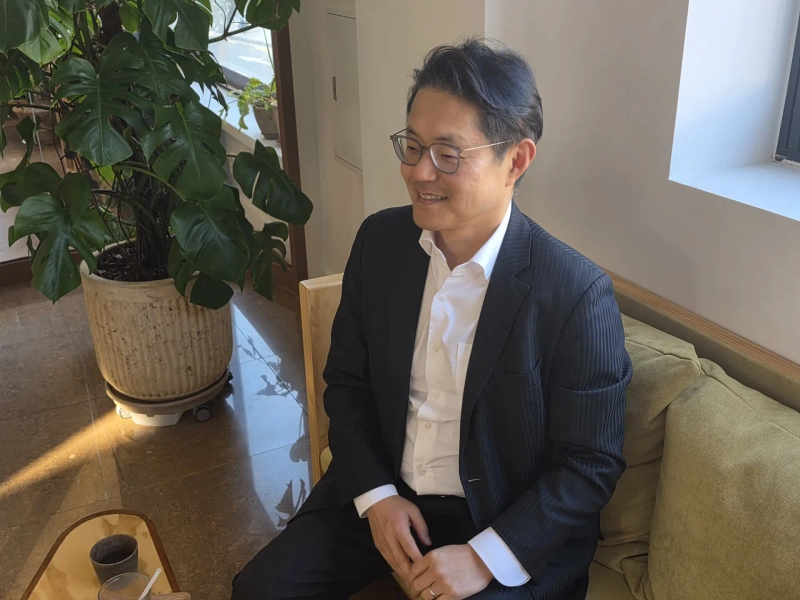
"Real-world assets, or RWA, are a new technology that can reshape financial markets. I hope financial authorities move away from a regulation-first approach and work to build an institutional framework that fosters the industry."
Jung Seok-moon, head of research at Presto, made the remarks in an interview with Bloomingbit on Oct. 13.
Jung is a digital-asset specialist who leads research at Presto, a global quantitative trading firm. He is currently visiting the US, Hong Kong and Singapore to track global digital-asset industry trends and analyze markets.
One area that has recently drawn his attention is RWA. The technology tokenizes assets such as stocks, bonds and real estate on blockchain networks. The industry sees it as a key technology linking traditional finance and digital assets.
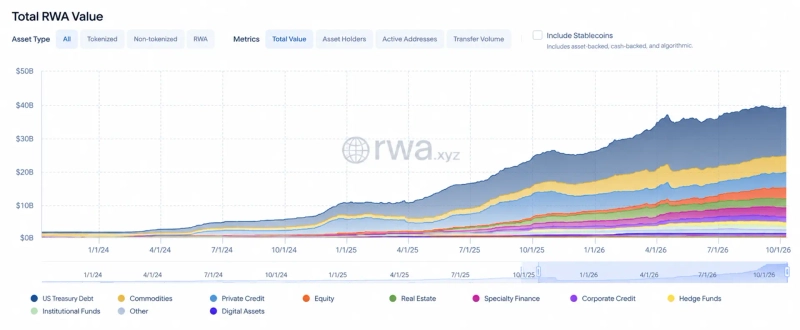
The RWA market is growing rapidly. According to RWA analytics firm RWAxyz, global RWA market capitalization stood at about $39.2 billion as of Oct. 13. That compares with about $25.5 billion at the start of the year, an increase of more than 50% in just 10 months.
"RWA Creates Investment Opportunities That Didn't Exist Before"
Jung cited broader investment access as RWA's core value. "If something can already be done well enough in the existing financial system, there is no reason to use blockchain," he said. "The point of RWA is to make possible services that were difficult to offer in traditional finance because of various constraints."
He pointed to overseas stock investing as a representative case. RWA can offer a new investment route for retail investors who have struggled to access foreign equities because of country-specific regulations and limited infrastructure.
Robinhood's rollout of a tokenized US stock service for European investors targeted that demand, he said. It could also open a new opportunity for overseas investors who want to invest in Korean stocks but have found it difficult to do so through the traditional financial system.
He also cited broader access to private shares, more efficient trading and settlement, and better asset utilization as strengths. Assets such as stocks and real estate, which have traditionally faced limits on how they can be used, could serve as collateral for a wide range of financial services if enough liquidity is secured. If RWA technology spreads, the way investors hold and trade financial products could change fundamentally.
Still, he said the technology could create new risks. He pointed in particular to the need for systems to address liquidity strains that could emerge as trading hours expand, as well as mechanisms to monitor unfair trading. "If tokenized stocks are traded on decentralized exchanges, we need to think about how to monitor unfair practices such as insider trading," Jung said. "As new financial services emerge, investor-protection systems also need to evolve."
"Korea's Conservative Stance Is Hurting Industry Competitiveness"
The US now leads the global RWA market. Tokenization is spreading first in dollar-denominated assets such as US Treasuries and equities. Major Asian markets including Hong Kong, Singapore and Japan are also moving quickly to refine tokenization rules and test related businesses.
Korea, by contrast, is losing competitiveness because of its financial authorities' conservative regulatory stance, Jung said. "Hong Kong and Singapore are international financial hubs, so they focus on how freely and efficiently capital can move," he said. "In Korea, when a new financial service appears, the first question is how to control it."
He also said the thinking of financial authorities on investor protection needs to change. "In Korea, investor protection is often understood as preventing investor losses," Jung said. "But real investor protection is about creating a fair investment environment."
Jung also raised concerns that the authorities' regulatory stance could lead to a talent drain. "To master a new technology, people need to fail repeatedly and build up experience and know-how," he said. "Korea is blocking new attempts out of fear of failure." The outflow of people with experience and expertise is already under way, he added, and he worries there may be few people left in Korea to lead the industry once the RWA market fully takes off.
He also pointed to developments overseas. One case worth watching is the US Securities and Exchange Commission's recently introduced Innovation Exemption. The system gives qualifying platforms conditional regulatory relief for five years so they can trade tokenized stocks.
"The SEC has spent a long time thinking about and discussing how to bring blockchain technology into regulated finance," Jung said. "Through measures such as the Innovation Exemption, it is now creating an environment where companies can actually test new financial services."
"Korean Companies Have Enough Global Competitiveness"
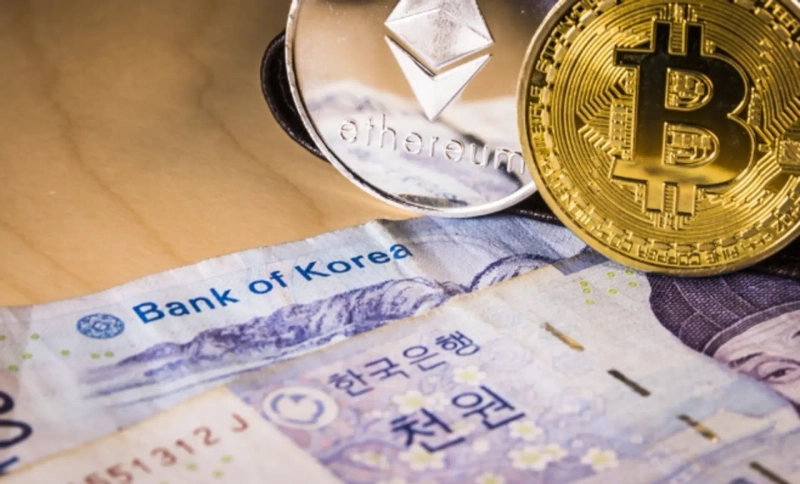
Jung cited the internationalization of the won as a key variable for Korea's domestic RWA market. If the won becomes more widely used, overseas investor interest could rise not only in won-based stablecoins but also in tokenized assets issued in Korea.
"The financial authorities are pushing a plan to allow won trading overseas starting in January 2027," he said. "If that raises the won's international use, it could also open new opportunities for Korea's RWA market."
He also noted that Korean companies are already preparing related businesses. "Korean companies have sufficient technical capabilities and competitiveness," he said. "If an institutional foundation is put in place, they can seize opportunities in the global RWA market as well."
Jung also mentioned EastPoint: Seoul 2026, a private global digital-asset conference held last month at the Westin Seoul Parnas in Seoul's Samseong-dong. "EastPoint was meaningful because domestic and overseas digital-asset companies and policymakers could gather in one place to discuss technology and business opportunities," he said. "That kind of exchange needs to become more active if new opportunities are to emerge in Korea's digital-asset market."

Uk Jin
wook9629@bloomingbit.ioH3LLO, World! I am Uk Jin.