PiCK
Web3 Sustainability Questioned as Abstract, StandX and Edgen Scrap TGEs, Shut Down Services
Summary
- Ethereum layer-2 Abstract, StandX, and Edgen announced they would scrap TGEs and shut down services, raising questions about the sustainability of Web3 models that rely on airdrop rewards.
- Users said they had invested time and money expecting token rewards, but losses and frustration are mounting as projects shut down without issuing tokens and trigger refund disputes.
- The market is increasingly saying only Web3 projects with real business viability, rather than flashy marketing and expectations of token issuance, can survive amid regulatory and market changes.
Forecast Trend Report by Period


Web3 projects increasingly scrap TGEs and shut down services
User frustration grows as expected airdrop rewards fail to materialize
"Projects now need real business viability, not just token-launch hype"

A growing number of Web3 projects are abandoning token generation events, or TGEs, following Ethereum layer-2 network Abstract, bringing renewed scrutiny to the sustainability of business models built around token rewards.
Abstract, developed by Igloo, the parent company of NFT project Pudgy Penguins, recently announced it will shut down on Dec. 15, citing stalled chain growth and a lack of liquidity and profitability.
Abstract said its growth was constrained by a limited DeFi ecosystem, weak liquidity and muted institutional investment. After spending the past year exploring ways to expand the business, it concluded that sustainable operations as an independent blockchain would be difficult and decided to wind down the chain in phases.
Abstract launched its mainnet in January 2025 and had originally planned a TGE in the fourth quarter of that year, before later postponing it indefinitely. It ultimately decided to terminate the service without issuing a token, disappointing users who had committed time and money in anticipation of rewards.
Web3 projects abandoning TGEs
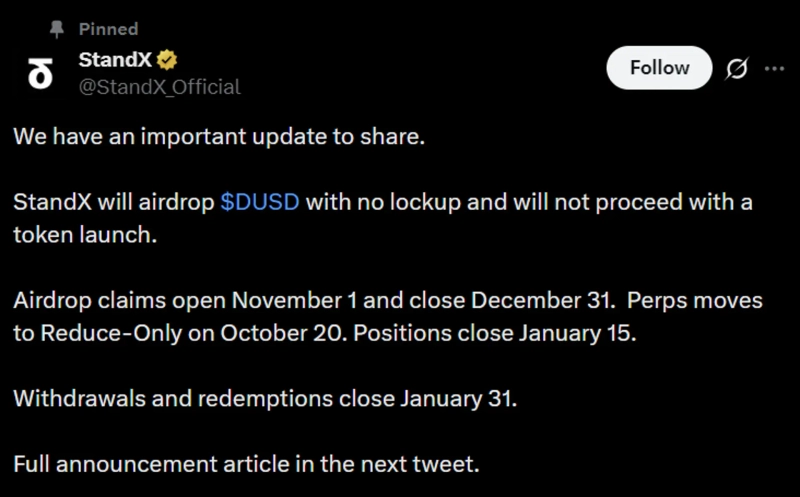
Around the same time, other Web3 projects also announced plans to scrap token launches or shut down services. On Oct. 15, decentralized trading platform StandX said it was withdrawing plans to issue its own token.
As recently as last month, the team had told users asking about the TGE schedule that it was not delaying the launch and was focused on rolling out its "SIP5" product. It eventually abandoned the token plan. StandX now intends to distribute the stablecoin DUSD instead of a native token and shut down the business. Users responded positively to the DUSD distribution decision, but also expressed disappointment that they would not receive the token they had expected.
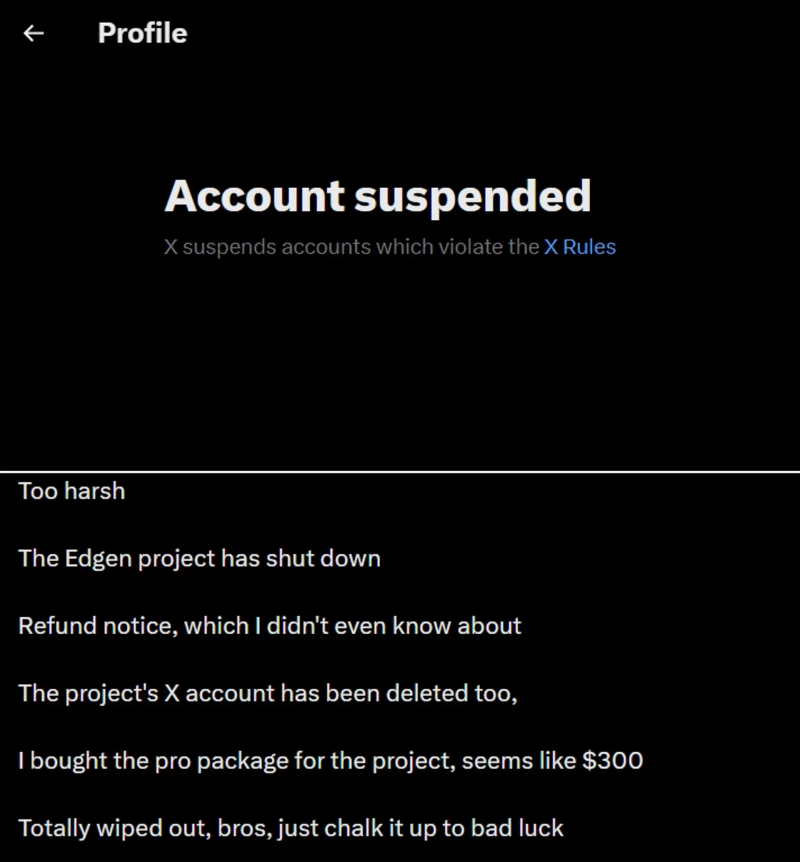
AI-based financial intelligence platform Edgen also shut down on Oct. 12 without holding a TGE. Refund problems surfaced in the process. Edgen accepted refund requests through Oct. 12, the day the service ended, but some users later complained that they were unable to check refund guidance after the project's official X account was shut down shortly afterward.
One user wrote on X that they had not been aware of Edgen's refund notice and that the project's official account had also disappeared. The user said they had purchased Edgen's pro package and now faced losing the full $300. Edgen had also participated in Kaito's leaderboard, which rewards social-media activity related to digital assets. Refund complaints have continued, particularly from users who purchased VIP and annual subscription packages to boost their ranking on the leaderboard.
"Users put in time and money" as limits of Web3 business models come under scrutiny

At the center of the controversy is the airdrop model many early-stage Web3 projects use to attract users. Under that approach, tokens are distributed for free to help activate an ecosystem. Users pursue those rewards by depositing assets, joining testnets and checking in regularly in what is commonly known as airdrop farming.
That process can take considerable time, and in some cases also requires users to pay costs such as gas fees.
The problem is that token issuance or rewards are not always guaranteed. When a project is discontinued, users often struggle to recover the time and money they invested. Retail investor A said the structure itself was flawed because it drew users with the expectation of making money rather than the competitiveness of the service.
Critics also say risk disclosure is inadequate. Retail investor B said projects often attract users with flashy marketing while failing to sufficiently communicate the possibility of a shutdown or the risks involved.
Byun Chang-ho, who runs the Telegram community "Byun Chang-ho Coin Academy," said regulatory and market standards are changing. He added that the industry now needs projects with real business viability rather than ones sustained by expectations of a token launch.

Suehyeon Lee
shlee@bloomingbit.ioI'm reporter Suehyeon Lee, your Web3 Moderator.