Summary
- The US Securities and Exchange Commission announced an Innovation Exemption allowing tokenized stock trading, a move that has sparked debate across the blockchain industry and Wall Street financial institutions.
- The SEC’s innovation exemption requires public, permissionless blockchains and publicly disclosed smart contracts, but the lack of detailed standards has sharpened differences between projects including Solana and Hedera.
- Companies that meet the exemption’s conditions can begin tokenized stock trading after 30 days without separate approval, but many US-listed companies selected as tokenization targets are voicing opposition.
Forecast Trend Report by Period


SEC Introduces ‘Innovation Exemption’ for Tokenized Stock Trading
Dispute Flares Over Standards for ‘Public, Permissionless’ Blockchains
Companies Targeted for Tokenization Push Back
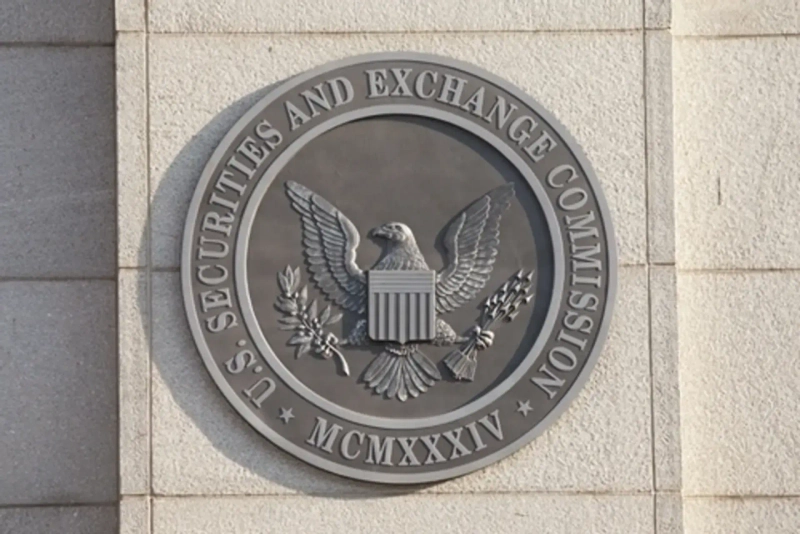
The US Securities and Exchange Commission’s introduction of an “Innovation Exemption” for tokenized stock trading is fueling debate, with blockchain projects arguing that their networks should qualify for the measure.
Digital-asset outlet Crypto in America reported on October 24 that the SEC’s move has drawn a range of responses from the blockchain industry and Wall Street financial firms.
The SEC announced in September that companies meeting certain conditions could trade tokenized US stocks without registering as traditional securities exchanges. Tokenized stocks are digital tokens on a blockchain that represent the rights attached to conventional shares.
The exemption carries conditions. Smart contracts used in tokenized stock trading must be publicly available for outside review and operate on public, permissionless blockchains.
The issue is that the SEC has not clearly defined what qualifies as a public, permissionless blockchain. Because blockchain networks differ in transaction validation methods and governance structures, interpretations vary over which chains should be allowed.
Companies preparing to operate tokenized stock trading platforms have already selected different blockchains.
Three companies have filed operating plans with the SEC so far: TSV, OKXICE and Kephas. TSV plans to use Canton Network, an institutional blockchain. OKXICE and Kephas plan to use Ethereum layer-2 networks developed by their respective corporate groups.
Solana Says Standards Should Be Tougher; Hedera Wants Permissioned Chains Included
The industry is split over what standards blockchain networks should meet to qualify for the exemption.
The Solana Policy Institute wrote in a comment letter submitted to the SEC on October 22 that the definition of a permissionless blockchain should be stricter. Simply allowing anyone to access a blockchain does not by itself make it a permissionless network, the group argued.
It added that a blockchain’s actual degree of decentralization should be assessed based on who controls transaction validation or blocking authority and who can change the network’s operating rules.
Hedera took the opposite view.
In a comment letter submitted to the SEC on October 9, Hedera argued that blockchains with limits on who can participate in transaction validation should also be eligible for the exemption.
Hedera allows anyone to access the network, but grants transaction-validation authority only to approved participants. The company’s position is that limits on validator participation alone should not exclude it from the innovation exemption.
For now, the SEC is taking the view that it will let the market experiment rather than immediately determine whether any specific blockchain qualifies. An SEC official said the measure is not a formal rulemaking and that the market would determine which blockchain model is appropriate.
Companies that meet the exemption’s conditions can begin trading tokenized stocks 30 days after filing an operating plan with the SEC, without separate approval. That means the SEC is not pre-approving the blockchain chosen by each company.
‘We Don’t Want Tokenization’: Listed Companies Also Object
Opposition is also growing among existing listed companies selected as tokenization targets.
Of the 62 US-listed companies initially selected by OKXICE for tokenization, 22 have said they object. That is more than one-third of the total.
Reuters reported that Wells Fargo, Arm Holdings and Intuit were among six additional companies that voiced opposition on October 23. Including 16 companies that had already objected, the total has reached 22.

Uk Jin
wook9629@bloomingbit.ioH3LLO, World! I am Uk Jin.