Hashed Joins DC Fintech Week, Shares South Korea’s Digital-Asset Regulatory Roadmap
Summary
- Hashed said it took part in DC Fintech Week and shared the regulatory status of the South Korean digital-asset market and the challenges of institutionalization.
- Kang Byung-jin said he presented institutionalization cases including the Digital Asset Basic Act, the second phase of virtual-asset legislation, won-denominated stablecoins and Project Hangang, a CBDC initiative.
- The event also included discussions on regulation and custody and settlement systems for tokenized assets, including tokenized securities, real-world asset tokenization (RWA) and broader institutional participation.
Forecast Trend Report by Period


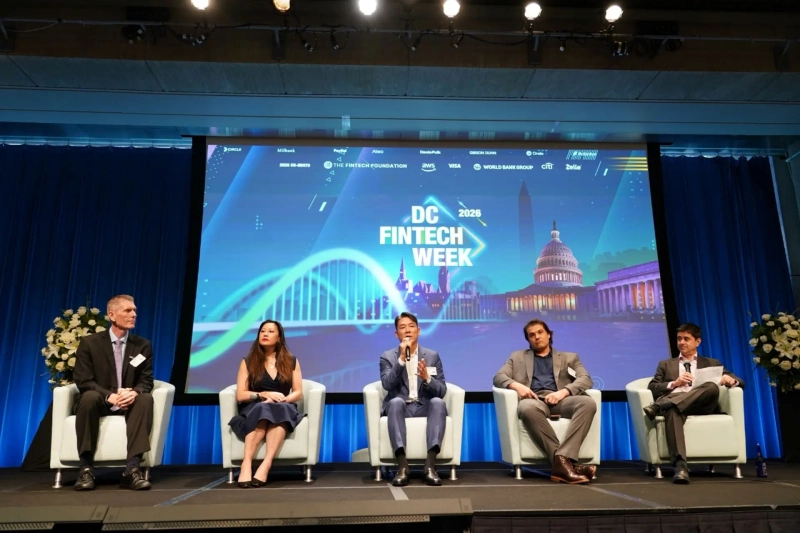
Global digital-asset venture capital firm Hashed said on October 28 that it participated in DC Fintech Week in Washington, D.C., where it shared the regulatory status of South Korea’s digital-asset market and the challenges involved in building out its institutional framework.
Kang Byung-jin, Hashed’s head of global legal, spoke at the event. DC Fintech Week is an international conference on financial-technology innovation and regulatory policy, and this year it was held at the World Bank in Washington. Other speakers included Strategy Chairman Michael Saylor, CME Group Chief Executive Officer Terry Duffy and Tether CEO Paolo Ardoino.
Kang said South Korea’s digital-asset market has grown mainly around retail investors. As a result, domestic regulators have taken a cautious stance on institutional participation and changes in market structure.
He also pointed to key policy initiatives including the proposed Digital Asset Basic Act, the second phase of virtual-asset legislation, discussions on regulating won-denominated stablecoins and Project Hangang, the Bank of Korea’s pilot program for a wholesale central bank digital currency. Those examples show South Korea is gradually putting digital-asset rules in place while taking investor protection and financial stability into account.
Kang said the regulatory framework will eventually need to expand beyond virtual-asset trading to include stablecoin payments, tokenized securities and real-world asset tokenization, or RWA. He added that South Korea should reflect overseas regulatory trends while also considering the characteristics of its domestic financial market.
The event also featured discussions on atomic settlement using blockchain, custody and settlement systems for tokenized assets, and broader institutional participation. Participants shared views on ways to integrate digital-asset technology into existing financial infrastructure and on how regulatory frameworks are evolving across countries.
A Hashed official said it was meaningful to share the state of South Korea’s digital-asset market and related institutionalization discussions in Washington, a hub of global financial policymaking. Hashed will continue communicating with global policymakers, traditional financial institutions and blockchain-industry participants while serving as a bridge for the sector’s healthy development and formalization, the official added.
The official also said that as industry-led efforts to establish international standards gain momentum ahead of legislation in global markets, South Korea should actively join those discussions and seek to lead standard-setting.

Suehyeon Lee
shlee@bloomingbit.ioI'm reporter Suehyeon Lee, your Web3 Moderator.