PiCK
Israel Election Deadlock Risk Puts Crypto on Edge as Oil Rises, Rate Fears Mount
Summary
- Israel's election has emerged as a new variable for digital assets such as Bitcoin as difficulties in forming a coalition government increase uncertainty in the Middle East.
- Rising global oil prices amid the risk of conflict in the Middle East could stoke U.S. inflation and the possibility of interest-rate increases, adding pressure on the crypto market.
- Experts said that if uncertainty over Iran policy and persistently high oil prices continue, downside pressure could build across risk assets broadly, including Bitcoin.
Forecast Trend Report by Period


Netanyahu, Eisenkot Camps Set to Fall Short of Majority
Coalition Talks Face Hurdles as Uncertainty Grows Over Iran Policy
Rising Oil Prices and Rate Pressure Stoke Downside Risks for Crypto
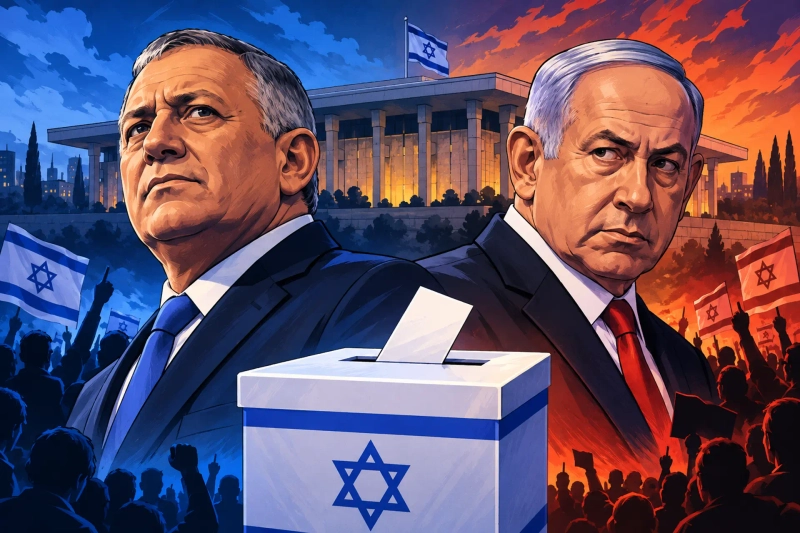
With no clear winner emerging from Israel's general election, uncertainty in the Middle East is becoming a new variable for digital assets such as Bitcoin.
The New York Times reported on October 28 that, with about 90% of the vote counted from the Israeli election held a day earlier, Prime Minister Benjamin Netanyahu's bloc was projected to win 54 seats and the camp led by former military chief Gadi Eisenkot 49. Neither side was on track to secure the 61 seats needed for a majority in the 120-seat Knesset, raising the risk of a political impasse.
The count of regular ballots is nearly complete, and the tally is effectively set to wrap up by the afternoon of October 29. Official results are due on November 4 because absentee ballots from diplomats and other voters still need to be counted separately.
The digital-asset market also swung after exit-poll results from the election were released a day earlier. Bitcoin rebounded from around $80,000 to about $81,200 as reports indicated the anti-Netanyahu camp held a narrow lead. The rally then lost momentum as projections showed neither side would likely win a majority, though prices later bounced again and continued to fluctuate.
Middle East Uncertainty Persists as Israel Election Result Draws Scrutiny
The election is drawing attention because the next Israeli government's policy toward Iran could shape the broader Middle East outlook. Netanyahu has long stressed the need for a hard-line military response to Iran and for regime change. Eisenkot agrees on the need for military action to block Iran from developing nuclear weapons, but has been skeptical about using force to bring down the regime. He has also argued that diplomacy should be pursued if necessary.
Still, neither camp is projected to win the 61 seats needed for a majority, a result that could prolong coalition negotiations. Under Israel's system, President Isaac Herzog names a candidate to try to form a government after the official election result is announced. That candidate gets up to 42 days, including any extension, to negotiate. If those talks collapse, another candidate can be given the chance to form a coalition. If that also fails, Israel could head to another election, meaning it may take months for a new government to take office.
A prolonged political deadlock in Israel could deepen uncertainty over any military response to Iran. Whether Israel resumes attacks on Iran and the direction of future operations could depend on the shape of the eventual coalition. The Times of Israel reported that if Netanyahu fails to form a coalition and remains caretaker prime minister, it could become harder for him to resume attacks on Iran. Commerzbank analysts, by contrast, said that if Netanyahu returns to power, he may seek regime change in Iran and that the election outcome will have an important effect on the course of any war with Tehran.
As uncertainty in the Middle East persisted, oil prices rebounded after one day of declines. December Brent crude settled at $115.32 a barrel in London trading on October 28, up 1.26% from the previous session. December West Texas Intermediate rose 2.88% to $102.78 a barrel on the New York Mercantile Exchange. Both contracts had fallen the previous day, down 1.67% and 1.83%, respectively.
Prolonged Middle East Conflict Could Raise Rate-Hike Odds, Adding Pressure on Bitcoin
Analysts said investors should watch how the Middle East outlook shaped by Israel's election affects crude prices and U.S. monetary policy. If military tensions intensify and oil rises, inflation pressure could build. That could limit the Federal Reserve's room to cut rates or increase the odds of further tightening, weighing on the crypto market.
Kim Min-seung, head of research at DigitalX, said Israel's political situation does not directly move prices of digital assets such as Bitcoin, but the Middle East conflict ultimately affects oil, which then feeds into U.S. inflation and interest rates. A deeper regional conflict driven by Israeli politics and higher oil prices could become a bearish factor for Bitcoin by lifting expectations for higher U.S. inflation and further rate increases.
Jung Min-kyo, an analyst at Presto Research, said the election result itself matters less for the crypto market than the possibility that geopolitical uncertainty in the Middle East could drag on. Uncertainty over Israel's Iran policy may persist through coalition talks. If oil remains elevated, as it is now, rate pressure could continue and weigh on risk assets broadly, including Bitcoin.

Suehyeon Lee
shlee@bloomingbit.ioI'm reporter Suehyeon Lee, your Web3 Moderator.