

PiCK
Fed, BOE and ECB Officials Signal More Rate Hikes; U.K. Base Rate Seen Reaching 5%
Summary
- Officials from the central banks of the U.S., U.K. and euro area said additional rate hikes remain on the table as inflation pressures persist.
- Markets are pricing in about a 70% chance that the Bank of England base rate will rise by 0.25 percentage point to 4.25% in December.
- The National Institute of Economic and Social Research said the U.K. needs a 5% benchmark rate, or else inflation could remain above 2% through the end of 2030.
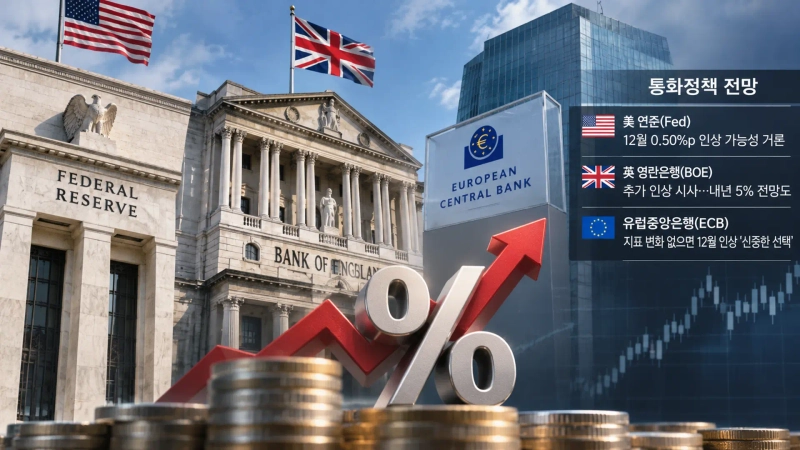
Officials from the central banks of the U.S., U.K. and euro area signaled that further interest-rate increases may be needed, warning that inflation pressures remain persistent.
Bloomberg reported on November 10 that monetary policymakers from major economies attending the Bank of England’s Watchers’ Conference in London said recent declines in energy prices have not done enough to ease inflation pressures. A stronger-than-expected U.S. consumer price index reading for October has also bolstered market bets on additional tightening before year-end.
Clare Lombardelli, the BOE’s deputy governor, said persistent wage pressures could make another rate increase necessary in the near term. After the BOE raised its benchmark rate last week for the first time in more than three years, she did not rule out another move in December. Markets are pricing in about a 70% chance that the base rate will rise by 0.25 percentage point to 4.25% on December 17.
At the same event, Federal Reserve Governor Christopher Waller raised the possibility of a 0.50 percentage-point rate increase next month. He said the current degree of monetary tightening is weaker than expected and that keeping rates at current levels alone would make it difficult to bring down inflation. European Central Bank Chief Economist Philip Lane likewise said a December rate increase would be a prudent option if economic data show no clear change.
Uncertainty over prices persists despite lower crude oil prices. Expectations spread after the U.S. midterm elections that the war with Iran could end early, pushing Brent crude briefly below $90 a barrel. But concerns remain that supply instability in the Middle East and strong wage growth could keep inflation elevated.
The National Institute of Economic and Social Research, a U.K. think tank, said the BOE should raise its benchmark rate to 5% next year. If tightening ends after just one more increase, U.K. inflation could remain above the 2% target through the end of 2030, according to its analysis. Raising rates to 5% could bring forward price stability by about 18 months.
NIESR also said U.K. inflation could top 4% next year, fueling broader wage demands. It said changes to the energy price cap could lift household gas and electricity bills by about 25% in January, raising the risk that energy-driven inflation spreads to other sectors.
James Smith, NIESR’s chief economist, said larger rate increases later could become unavoidable if central banks fall behind in responding to inflation. With major economies holding up better than expected despite the energy-price shock, monetary tightening in the U.S. and Europe may continue for the time being.

Suehyeon Lee
shlee@bloomingbit.ioI'm reporter Suehyeon Lee, your Web3 Moderator.