

US, South Korea and Seven Others Agree to Jointly Protect AI Supply Chains as China Risks Rise
Summary
- The U.S., South Korea and seven other countries said they agreed to jointly protect core AI technologies and related infrastructure in response to supply-chain risks tied to China.
- The agreement is part of the U.S.-led 'Pax Silica' initiative and is focused on improving the resilience of supply chains spanning semiconductor design, manufacturing equipment and logistics infrastructure.
- The U.S. is expanding cooperation with allies to secure advanced-technology supply chains and reduce strategic dependence on China.
Forecast Trend Report by Period
AI is analyzing this news. Please check back later
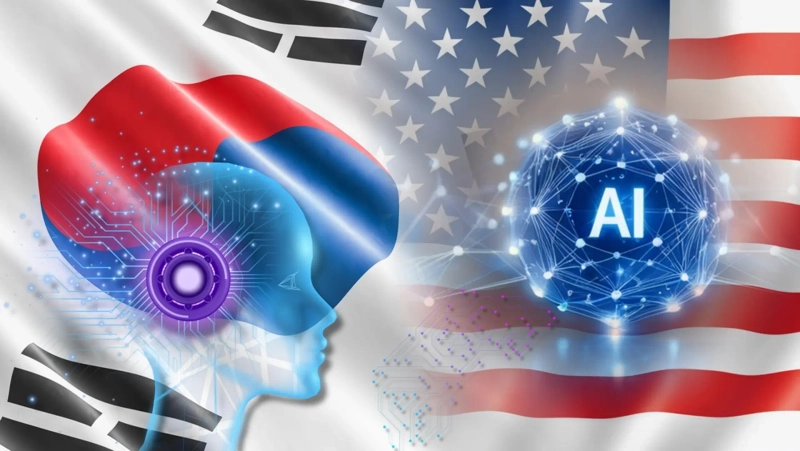
The U.S., South Korea, Japan and six other countries agreed to jointly protect core artificial intelligence technologies and related infrastructure in response to supply-chain risks tied to China.
Bloomberg, citing the Financial Times, reported on Nov. 15 that the U.S. had signed an agreement with key allies and partners to identify and protect AI technologies and supply chains vulnerable to China.
The agreement includes South Korea, Japan, Australia, Israel, the U.K., India, Qatar and the United Arab Emirates, alongside the U.S. Jacob Helberg, the U.S. State Department's under secretary for economic growth, energy and the environment, said Germany, Sweden, the Netherlands and the European Commission are also set to sign the accord next week.
The accord is part of Pax Silica, a U.S.-led initiative on AI supply-chain cooperation. It is aimed at strengthening the resilience of critical technologies and supply chains spread across multiple countries, from semiconductor design to manufacturing equipment and logistics infrastructure.
Helberg said semiconductor design technology, manufacturing equipment and ports that handle product shipments can each be located in different countries. The San Francisco Declaration, he added, reflects participating countries' agreement to treat the security of critical technologies and related infrastructure as a shared responsibility.
The agreement comes as the U.S.-China race for dominance in AI intensifies. Washington is expanding cooperation with allies to secure advanced-technology supply chains, including semiconductors, and reduce strategic dependence on China.
The announcement also came as U.S. President Donald Trump is scheduled to meet Chinese President Xi Jinping and Russian President Vladimir Putin on Nov. 19 in Shenzhen, China, on the sidelines of the Asia-Pacific Economic Cooperation summit.

Suehyeon Lee
shlee@bloomingbit.ioI'm reporter Suehyeon Lee, your Web3 Moderator.