Tokenized Securities Need Non-Cash Trust Certificate Rules Before 2027 Launch, CEO Says
Summary
- To ensure the successful rollout of the tokenized securities (STO) market next year, a formal legal basis for issuing non-cash trust beneficiary certificates is essential, speakers said.
- Delays in related legislation have slowed market growth, with tokenized securities issuance falling from 20 billion won ($14.4 million) in 2024 to 5 billion won ($3.6 million) this year.
- Lee Kang-il said tokenized securities and the Basic Digital Asset Act could help create a new capital-markets paradigm and reshape industrial structure.
Forecast Trend Report by Period


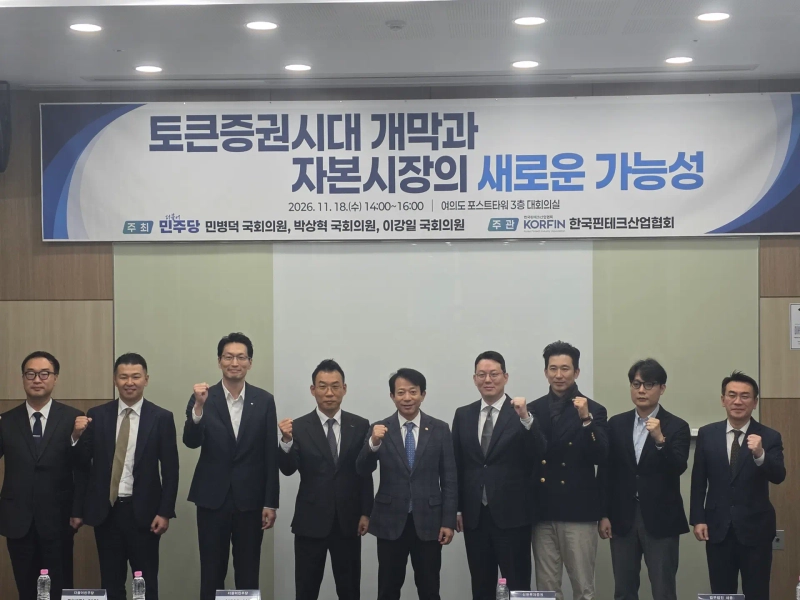
South Korea’s tokenized securities market, set for a full-scale launch next year after related legislation passed earlier this year, still faces key hurdles before it can take hold, speakers at a Nov. 18 seminar said. Even after the system takes effect, the market may struggle to gain traction unless authorities establish a legal basis for some products, including non-cash trust beneficiary certificates.
Shin Beom-jun, chief executive officer of BuySell Standard, said at the “Opening of the Tokenized Securities Era and New Possibilities for the Capital Market” seminar in Yeouido Post Tower on Nov. 18 that “the final puzzle” for institutionalizing tokenized securities remains unresolved. He called for a formal basis for issuing non-cash trust beneficiary certificates.
Those certificates currently lack an official issuance framework, forcing market participants to use indirect methods such as asset-backed securitization vehicles, Shin said. In some cases, financial institutions or listed companies must buy the underlying assets first.
Under that structure, small and medium-size companies and small business owners face steep barriers to entering the market. Shin urged swift passage of the related bill.
He said the issue is also weighing on growth in the tokenized securities market. Issuance, which stood at 20 billion won ($14.4 million) in 2024, has totaled just 5 billion won ($3.6 million) this year. The longer the bill is delayed, the wider the gap between the market’s opening and the actual supply of products will become, he added.
Lee Kang-il of the Democratic Party, who hosted the event, also voiced support for tokenized securities. Progress is bound to be slow when charting an unfamiliar path, he said, but the National Assembly is working to ensure South Korea does not fall behind.
He said tokenized securities could create new opportunities for participating companies and investors. Lee added that he hopes they will play an important role in creating a new capital-markets paradigm and reshaping industrial structure.
Lee also expressed his determination to push for a basic law on digital assets. The framework legislation has yet to pass the National Assembly, he said, adding that because the government has promised to submit a bill, he hopes to receive the government draft next week.

Uk Jin
wook9629@bloomingbit.ioH3LLO, World! I am Uk Jin.