PiCK
ONE’s Jang Says Company to Move to Busan, Sees Profit as Early as Fourth Quarter
Forecast Trend Report by Period


ONE, One Store to Move Headquarters and All Employees to Busan
Decision Aimed at New Businesses Including Blockchain-Based DEX and Games
Seeking Licensing Talks With Financial Authorities With Support From Busan City
Sees Turnaround to Profit as Early as Fourth Quarter
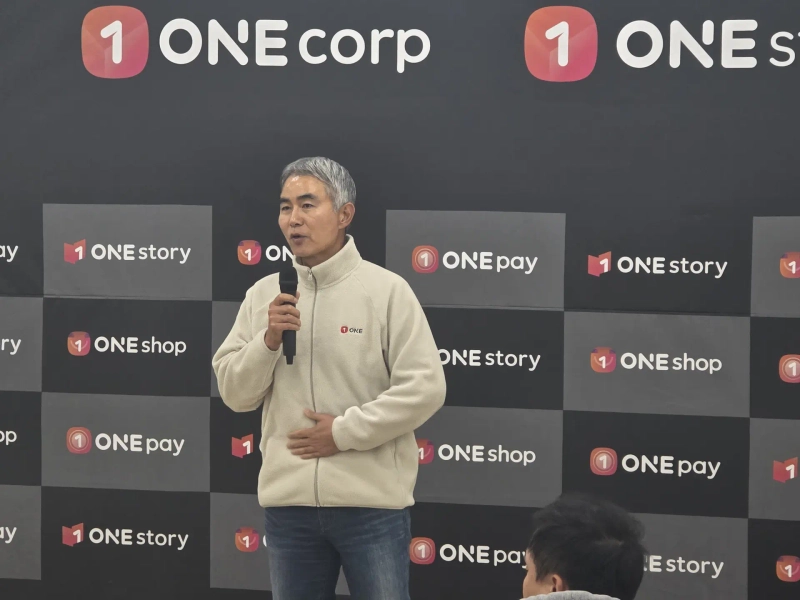
ONE Co., which changed its name after acquiring One Store, has formally confirmed plans to relocate to Busan. The company plans to use Busan’s blockchain regulatory sandbox zone to expand blockchain services now operating overseas into the domestic market.
Chief Executive Officer Jang Hyun-guk said at a press briefing at the Busan Museum of Art on Nov. 19 that all employees of ONE and One Store will move to Busan. The company plans to establish a new base there and make a fresh start, he said.
A Decision Shaped by Blockchain, Gaming and AI
The move was driven by the company’s strategy in gaming, blockchain and artificial intelligence, Jang said.
Busan is one of the best locations for the gaming business outside the Seoul metropolitan area because it hosts major gaming events including G-Star, he said. ONE plans to deepen cooperation with game companies in Busan and share its relocation experience with companies in the greater Seoul area that want to move, helping build the local ecosystem.
Busan’s status as a blockchain regulation-free zone also influenced the decision. ONE plans to use the special-zone framework to bring blockchain services it has focused on in overseas markets into South Korea.
Most of the company’s services are currently run for the global market, Jang said, adding that cannot continue indefinitely. ONE will use Busan’s blockchain special-zone program to extend its existing blockchain business into Korea, he said.
Access to graphics processing units, or GPUs, needed for AI operations was another factor. Jang said the company needs GPUs it can directly use if it wants to apply customer data to AI models. Inquiries to shareholders and major companies in the Seoul area, including SK Telecom, KT, LG Uplus and Naver, were met with responses that supply would be difficult to secure. Plans for an AI data center to be built in Busan from next year, with local companies also able to use it, also supported the relocation decision, he added.
Pushing New Blockchain Businesses, in Close Contact With Busan City
Jang also laid out more detailed blockchain business plans during a question-and-answer session. ONE plans to seek faster licensing procedures with support from the Busan city government and test various services through a regulatory sandbox.
The company will first pursue a domestic launch for blockchain-based games. Jang said it is currently difficult in South Korea to launch blockchain-based reward games. Even so, the company plans to test such services in a limited format by using the special-zone framework.
ONE is also pushing an order book-based decentralized exchange. Such a DEX allows users to keep assets in their own wallets while placing buy and sell orders at desired prices, much like on a centralized exchange.
Jang said he has experience developing and operating an order book-based DEX dating back to his time at Wemade. With security incidents becoming more frequent, this model can reduce the scope of damage because users do not pool assets in one place, he said.
He added that the DEX will handle both spot and futures trading and support trading in real-world assets, or RWAs. More detailed plans could be announced within one to two weeks, he said.
Jang said the company is also actively communicating with the Busan city government on its blockchain push. Moving to Busan will not automatically mean the business is approved, he said, adding that while gaining approval in South Korea is difficult, the value created by succeeding would be significant.
Busan city officials recently visited the company to conduct due diligence on the scale of the headquarters relocation, he said. The company is now in close consultations with the city.
The domestic business will be rolled out in stages. Jang said ONE will first introduce the order book-based DEX to overseas retail and institutional clients. Once the service gains traction, the company plans to pursue the business in South Korea for institutions. It will consult with financial authorities with support from the Busan city government, he said.
Business Expansion Through M&A; Sees Profit as Early as Fourth Quarter
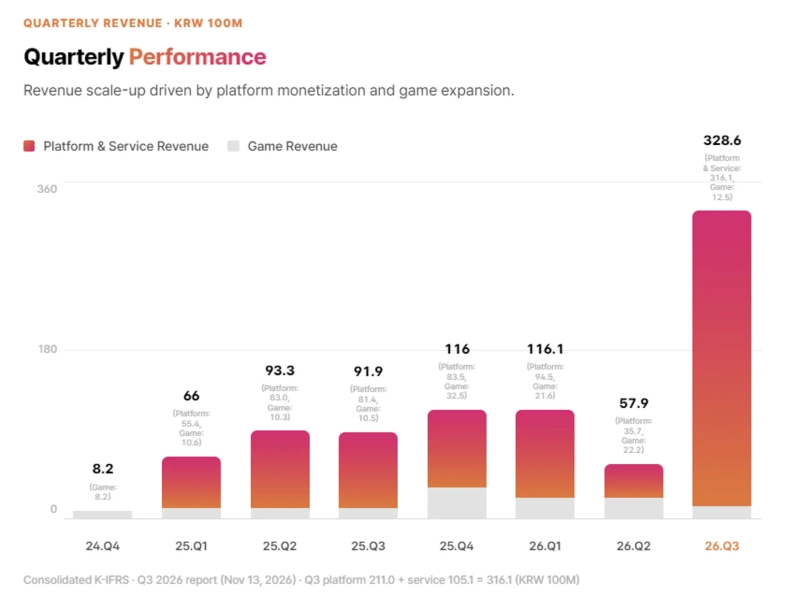
ONE also plans to accelerate expansion through mergers and acquisitions. The company is looking for additional acquisition targets in gaming, blockchain and AI. Its goal is to expand annualized revenue from around $71.7 million this year to the hundreds of millions of dollars next year.
Jang said the One Store acquisition was also structured with financing raised alongside the deal. The company plans to continue pursuing sizable M&A transactions, including funding arrangements, he said.
As part of that strategy, ONE announced earlier on Nov. 19 that it will invest about $2.2 million in Proground, the operator of blockchain-based move-to-earn service Superwalk. Jang said Superwalk has about 100,000 users. While the business is small, the company judged that it has a model in which users participate consistently and real revenue is being generated, he said.
Jang also expressed confidence in improving profitability. One Store turned monthly profitable in September, he said. On a combined basis with ONE, the company expects to swing to profit as early as the fourth quarter of this year, or by the first quarter of next year at the latest.
Busan — Jin Uk, Bloomingbit reporter

Uk Jin
wook9629@bloomingbit.ioH3LLO, World! I am Uk Jin.