PiCK
South Korea’s Lee Says More Measures Ready Beyond Stock Market Stabilization Fund
Summary
- The government said it is preparing additional stabilization measures alongside plans to activate the stock market stabilization fund, so they can be rolled out at the appropriate time.
- Authorities said they reviewed pre-launch procedures for the immediate activation of the stock market stabilization fund and decided to conduct special monitoring of illegal short selling for the next three months.
- Vice Prime Minister Lee Hyoung-il said volatility in the domestic stock market had increased due to concerns over AI industry profitability and the possibility of additional US interest-rate hikes, and said the timing and size of any fund deployment would be determined based on market conditions.
Forecast Trend Report by Period


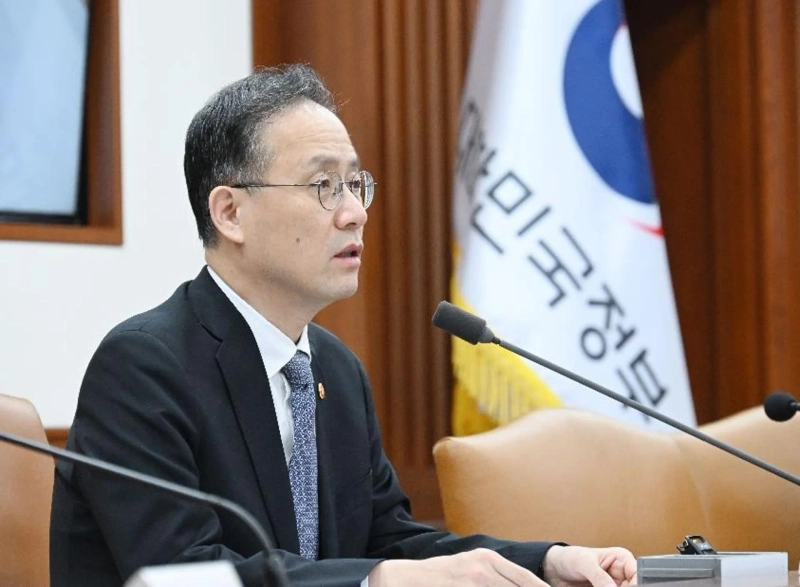
South Korea has begun preparing to activate its stock market stabilization fund, and Vice Prime Minister Lee Hyoung-il said additional measures are also in place to address volatility in the equity market.
At a briefing with reporters at the government complex in Sejong on November 23, Lee said the government already has a contingency plan and is making preparations so measures can be implemented at the appropriate time depending on market conditions.
A day earlier, Lee held an emergency market review meeting with Financial Services Commission Chairman Lee Eok-weon, Financial Supervisory Service Governor Lee Chan-jin and Bank of Korea Governor Shin Hyun-song. At the meeting, officials reviewed procedures to ensure the stock market stabilization fund could be activated immediately in the event of a sharp market drop. They also decided to conduct special monitoring of illegal short selling for the next three months.
The stock market stabilization fund is a mechanism under which financial firms and related institutions jointly provide money to buy shares during steep market declines to help stabilize trading. The fund was created in 2020 at 10.76 trillion won, or about $7.8 billion, during the Covid-19 outbreak. Its use was also discussed during the 2022 Legoland crisis, but it was never deployed. If activated this time, it would mark the first use since the 2008 global financial crisis.
Lee took a cautious stance on the timing of any intervention. He said officials were continuing to monitor the market because trading had only just opened on November 23 and would make a decision after assessing conditions. He added that the adequacy of the existing fund size would also be reviewed if activation becomes necessary.
Lee cited doubts about profitability in the artificial intelligence industry and the possibility of additional US interest-rate increases as factors behind the recent market instability. He said heightened external uncertainty had widened volatility in South Korea’s stock market and that it was difficult to judge whether the current decline would amount to only a temporary correction.
On how the fund would operate, Lee said the focus is on checks and readiness for actual deployment rather than institutional changes. Because the fund has not been used for a long period, authorities plan to review procedures and effectiveness so it can function smoothly if needed.
Lee also ruled out tougher short-selling restrictions. He said South Korea’s short-selling rules are already stricter than those in major advanced economies, and that the government would focus on cracking down on illegal trades rather than imposing additional limits. Financial authorities therefore plan to strengthen oversight of unfair trading during the special monitoring period.

Suehyeon Lee
shlee@bloomingbit.ioI'm reporter Suehyeon Lee, your Web3 Moderator.