Blue House Says Chip Boom’s Duration Hard to Predict; Stock Shock May Be Temporary
Summary
- The Blue House said it is difficult at this point to determine how long the semiconductor boom will last, and added that it cannot conclude that the Future Response Fund will run out of money.
- Ryu Deok-hyun said funding can be secured if the fund’s idle cash is managed to target returns above government bond yields while being paired with spending restructuring.
- Ryu said the recent stock-market plunge centered on semiconductor shares may be temporary and driven by an external shock, citing growth in the AI industry and semiconductor supply contracts held by Samsung Electronics and SK Hynix.
Forecast Trend Report by Period


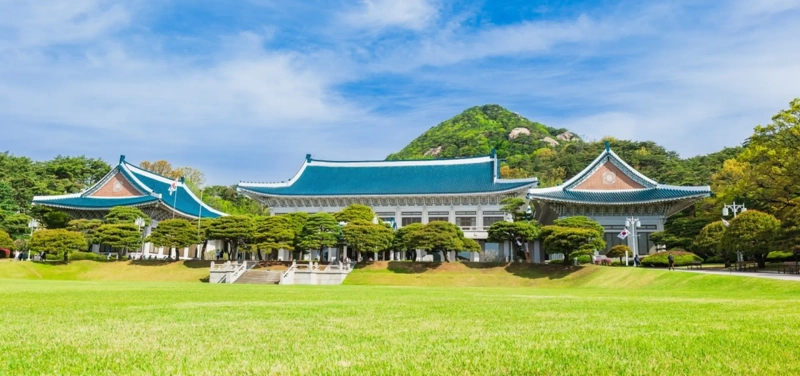
South Korea’s presidential office struck a cautious tone on the recent semiconductor cycle and stock-market volatility, while saying the broader growth trend in artificial intelligence is unlikely to reverse quickly.
On November 23, Ryu Deok-hyun, fiscal planning secretary at the Blue House, said in a radio interview that it is difficult at this point to judge how long the semiconductor boom will continue. He added that it would be premature to conclude that the Future Response Fund could run short of resources.
The National Assembly Budget Office, parliament’s fiscal policy arm, and others had earlier said that, given uncertainty in the chip sector, additional tax revenue earmarked for the Future Response Fund may not materialize from 2029.
Ryu said funding can still be secured if the fund’s idle cash is managed to generate returns above government bond yields and paired with spending restructuring. Even if resources become tight later, necessary projects could continue through other funds or accounting channels.
On the semiconductor industry, he cited the 2017 supercycle, which lasted roughly two to three years. This time, however, the structural growth of the AI industry is a new variable, making it unclear whether the current cycle will follow the same path.
He also said the shock tied to Nvidia Chief Executive Officer Jensen Huang’s resignation is unlikely to alter the AI industry’s long-term growth trajectory. Ryu cited semiconductor supply contracts at Samsung Electronics Co. and SK Hynix Inc. that extend beyond next year.
Still, he said he did not know the specifics of whether major customers such as Nvidia might revise existing contracts.
Ryu also said the recent plunge in the stock market, led by semiconductor shares, may prove temporary and stem from an external shock. The market needs to be watched closely, he said, but there is no need to take an excessively pessimistic view of the current trend.

Suehyeon Lee
shlee@bloomingbit.ioI'm reporter Suehyeon Lee, your Web3 Moderator.