PiCK
South Korea Unveils Digital Asset Bill With 20% Exchange Ownership Cap, Bank-Led Stablecoins
Summary
- The government said in its proposed Digital Asset Act that it would further classify digital-asset businesses and impose regulations comparable to those applied to financial companies.
- It said won-denominated stablecoins would be issued mainly by consortiums in which banks hold a majority stake, while requiring reserve assets of at least 100% of outstanding issuance and guaranteeing redemption rights.
- The government said it would cap major shareholders’ stakes in crypto exchanges at 20% in principle, while also allowing ICOs and imposing strict liability for user-asset losses and punitive surcharges to strengthen investor protection.
Forecast Trend Report by Period


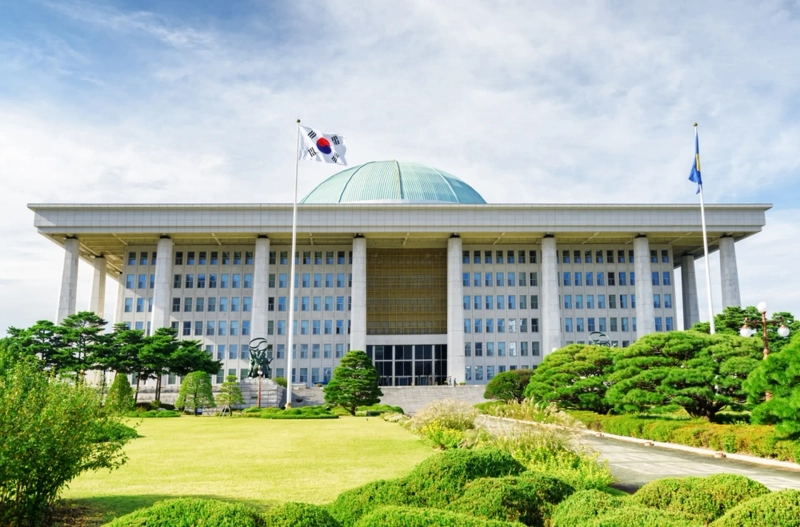
South Korea’s government has released a draft Digital Asset Act for the second phase of cryptocurrency legislation.
Under the proposed Act on the Innovation of the Digital Asset Industry and User Protection, disclosed on Nov. 24, the government plans to build a regulatory framework around three pillars: fostering innovation in the digital-asset industry, creating a fair and efficient market, and establishing a safe and reliable trading environment.
To support the industry, the government would replace the legal term “virtual asset” with “digital asset” and clarify its definition. It would also split the sector into four business categories — trading, brokerage, custody and management — along with platform operators. Depending on the type of business, firms would be subject to licensing, registration or designation, as well as conduct rules comparable to those applied to financial companies.
The government settled on a bank-centered consortium structure for issuers of won-denominated stablecoins, one of the key issues in the legislative process. In the early stage of the regime, issuance would first be allowed for consortiums in which banks hold a majority stake, to support stable operations including regulatory compliance and anti-money laundering controls. Non-bank institutions, including fintech and technology companies, would still be allowed to participate as the largest individual shareholder and lead consortium operations.
The minimum capital requirement for stablecoin issuers would be set at 5 billion won ($3.6 million). Issuers would be required to hold reserve assets equal to at least 100% of outstanding issuance and guarantee holders the right to redeem at face value. The government also plans to introduce a system to designate and manage important stablecoins based on issuance size and user numbers.
On ownership limits for major shareholders of cryptocurrency exchanges, another closely watched issue, the government set a general cap of 20%, in line with alternative trading systems in South Korea’s capital markets. An exception would be created in the enforcement decree to allow holdings of as much as 34% if approved by the Financial Services Commission, including in cases involving financial companies. Voting rights on shares held above the cap would be restricted.
For existing and new exchanges, the government would suspend the application of ownership-dispersion rules for three years after designation. Smaller exchanges could receive an additional three-year grace period, taking into account the need to attract investment. The bill would also introduce governance rules similar to those for financial companies, including a requirement that outside directors make up a majority of the board and that an audit committee be installed.
The proposal would also allow domestic issuance and sale of digital assets, or ICOs, provided sufficient disclosures are made. Issuers would be required to file a white paper with the Financial Services Commission that includes the intended use of funds, issuance volume, project information and investment risks. Exchanges would be required to provide information on listed assets and immediately disclose any information with a material effect on prices, such as changes in issuance or circulating supply.
To strengthen user protection, the bill would create obligations to establish internal control standards and information-technology safety measures at a level comparable to financial companies, and to maintain a standing inspection system for user assets. In the event of hacking or system failures, operators would in principle bear strict liability for damages. If an incident occurs because a firm violated its duty to ensure IT safety, authorities could impose punitive surcharges of as much as 10% of revenue.

Suehyeon Lee
shlee@bloomingbit.ioI'm reporter Suehyeon Lee, your Web3 Moderator.