Card Issuers Confront AI, Stablecoin Era, Call for Customer Trust and Standardized Infrastructure
Summary
- Shinhan Card said the spread of AI agents is weakening direct customer touchpoints and that it must secure competitiveness through a secure payments framework.
- As fraudulent transactions become a bigger risk with the spread of AI-agent payments, card issuers' survival strategy is to provide secure payment procedures built on trust.
- Samsung Card said responding to the adoption of AI agents and stablecoins will require a standardized payments infrastructure and shared standards.
Forecast Trend Report by Period


Korea Fintech Week 2026
'AI Is Taking Over Customer Touchpoints' as Card Issuers Seek to Compete on Safety
Korea's Payments Industry Needs Shared Standards to Advance
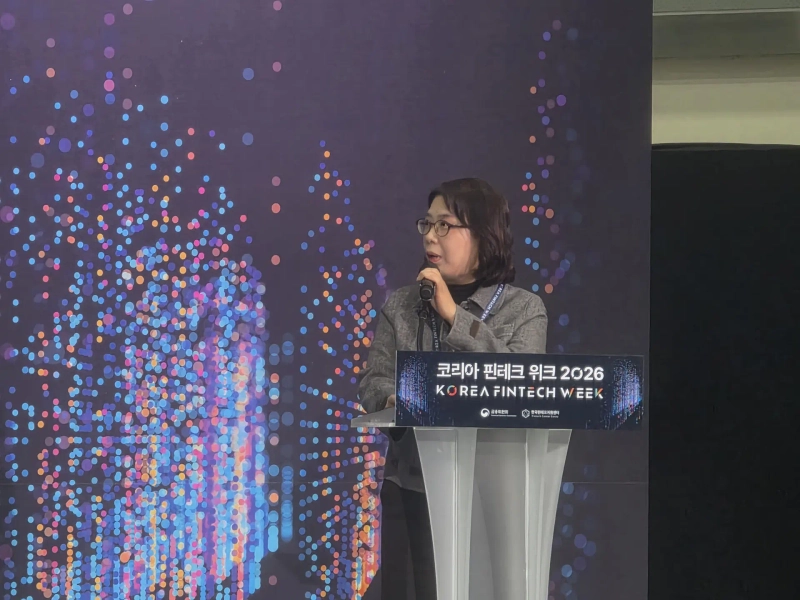
As new fintech technologies such as AI agents and blockchain evolve rapidly, Shinhan Card and Samsung Card laid out their response strategies. They aim to keep card issuers from losing direct contact with customers by building a safer payments environment, while also taking an active role in establishing shared infrastructure for new payment methods.
Ahn Sung-hee, an executive at Shinhan Card, said at Korea Fintech Week 2026 on Nov. 25 at Seoul's Yangjae aT Center that card issuers have long secured customer touchpoints by intermediating payments. They then used the data generated in that process to upgrade their core business and pursue new ventures. But the emergence of AI agents is starting to take those customer touchpoints away, he added.
If a consumer asks an AI agent to pay with the card offering the best benefits, the product selected could come from a lesser-known issuer, Ahn said. That would weaken the brand advantage traditional card companies once enjoyed.
In that environment, he said card issuers' survival will depend on building a secure payments framework. As AI-agent payments spread, risks including fraudulent transactions are becoming more prominent. That remains an area where incumbent card issuers have traditionally had an edge, leaving room to win customer trust by processing payments safely.
While it is important for AI agents to understand customers' purchasing preferences and gather product information, the first issue to solve is secure payment, Ahn said. Ultimately, the companies that build payment procedures customers can trust will be the ones chosen.
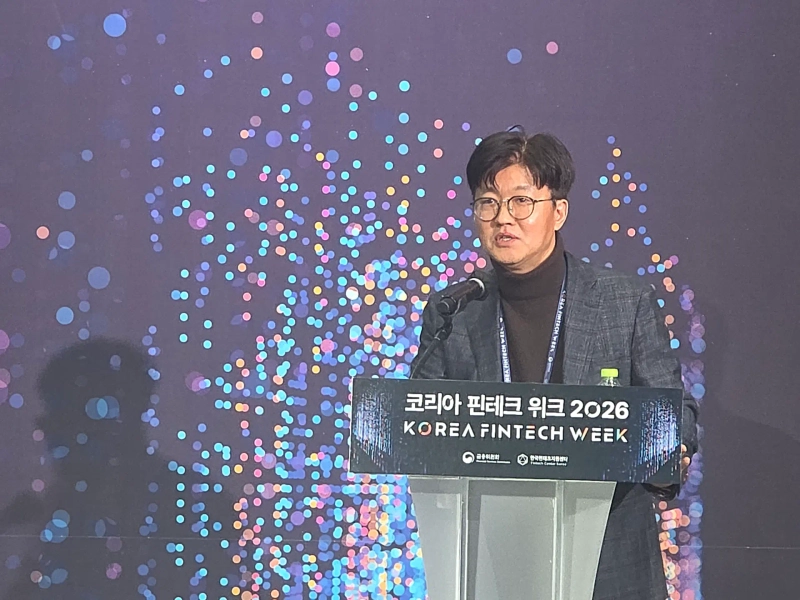
Samsung Card proposed an industrywide standardized payments infrastructure as its response to new technologies.
Lee Young-hee, an executive at Samsung Card, said AI agents change the party that initiates payment, while stablecoins change how funds move and how settlement is handled. That means a new payments infrastructure is needed for both.
Lee said stablecoins still face issues that must be resolved before commercialization. They can make it easier to move funds on-chain, but because transactions pass through multiple blockchain networks, charge cancellations and refunds are not easy to manage consistently. Questions also remain over which transaction records should be used to reimburse customers when problems arise and who should bear responsibility.
To address those issues, Lee said the industry needs common standards in four areas: system interoperability among providers, delegation of payment authority, settlement, and liability when accidents occur. Without a standardized payments infrastructure in an increasingly complex payment environment, social costs will inevitably rise exponentially. With such infrastructure in place, the industry would be able to respond more flexibly even as new payment methods emerge.
Major global players have already developed and announced their own common standards and protocols in those areas, Lee said. Korea's payments industry can grow only if the standards being developed by domestic providers are brought together into a single framework.

Uk Jin
wook9629@bloomingbit.ioH3LLO, World! I am Uk Jin.