

Bloomberg "Impeachment Rejection Expands Volatility in Korean Assets…Concerns Over Domestic Recession"
Summary
- Bloomberg warns of increased volatility in Korean assets due to the political crisis and urges investors to prepare.
- The rejection of the impeachment motion against President Yoon Suk-yeol raises concerns about a domestic economic recession and is expected to keep the Korean won on a downward trend.
- Market experts advise investors to be cautious as political paralysis is feared despite government intervention.
Korean Won, Lowest Since 2009?
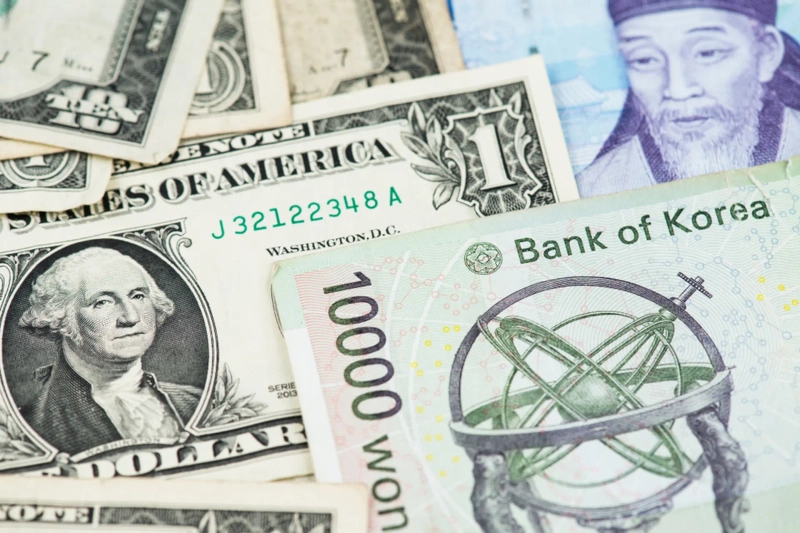
Wall Street is paying attention to the urgent political situation in South Korea over the weekend and is preparing for increased volatility in Korean assets.
On the 8th (local time), Bloomberg News reported that "traders are preparing for continued volatility in Korean assets," and predicted that "the Korean won and Korean stock market will initially be under pressure due to the heightened political crisis over the weekend." It continued, "After the first impeachment motion against President Yoon Suk-yeol was discarded due to a lack of quorum on the 7th, traders are calculating the possibility of the situation becoming deadlocked."
With President Yoon's public address, the plan for an 'orderly resignation through a responsible prime minister system' announced by Han Dong-hoon, the leader of the People Power Party, and Han Duck-soo, the Prime Minister, the opposition from the Democratic Party of Korea, the weekly impeachment motion against President Yoon announced by the Democratic Party, and nationwide protests continuing over the weekend, there are analyses that the tourism industry and others are hit, raising concerns about a weakening domestic economy. According to a Bloomberg Intelligence report, social unrest is expected to amplify, reducing the number of Chinese tourists visiting Korea in the first quarter of next year by 19% year-on-year to 830,000.
Regarding Deputy Prime Minister and Minister of Economy and Finance Choi Sang-mok's statement that market stabilization measures will be taken, Shaun Callow, a senior foreign exchange analyst at Intouch Capital Markets, told Bloomberg News, "Government intervention could immediately reduce the won's losses." However, he also diagnosed, "There will be disappointment over the failed impeachment attempt," and "as long as President Yoon remains in power and the People Power Party protects him, the market will worry about political paralysis." He pointed out that the upcoming inauguration of the new administration of U.S. President-elect Donald Trump is also causing the won to decline.
At 8:32 a.m. on the 9th, the won-dollar exchange rate was 1,428.50 won, up 4.50 won from the previous day. According to Bloomberg News, strategists at Barclays pointed out that "the won remains weaker than before the declaration of martial law and is vulnerable to further declines." They predicted, "Due to the highly fluid situation, the won could maintain volatility in the short term."
The won-dollar exchange rate has fallen about 10% since the end of September, hitting its lowest level in two years last week. Reuters explained, "The won-dollar exchange rate is very likely to surpass 1,445 won, which is the weakest level since the global financial crisis in early 2009."
Reporter Han Kyung-jae

Korea Economic Daily
hankyung@bloomingbit.ioThe Korea Economic Daily Global is a digital media where latest news on Korean companies, industries, and financial markets.