

PiCK
[New York Stock Exchange] Nasdaq Reaches Historic 20,000 Mark Amid Rate Cut Expectations, Big Tech Rally
Summary
- The Nasdaq index received significant attention as it surpassed the 20,000 mark for the first time in history.
- A big tech rally occurred as the Federal Reserve's rate cut was taken as a given.
- Investors are watching the November Producer Price Index announcement, which could influence future rate policies.
Nasdaq Reaches 20,000 for the First Time in History
Tesla Surges 5%... "Musk's Net Worth Estimated at 628 Trillion Won"
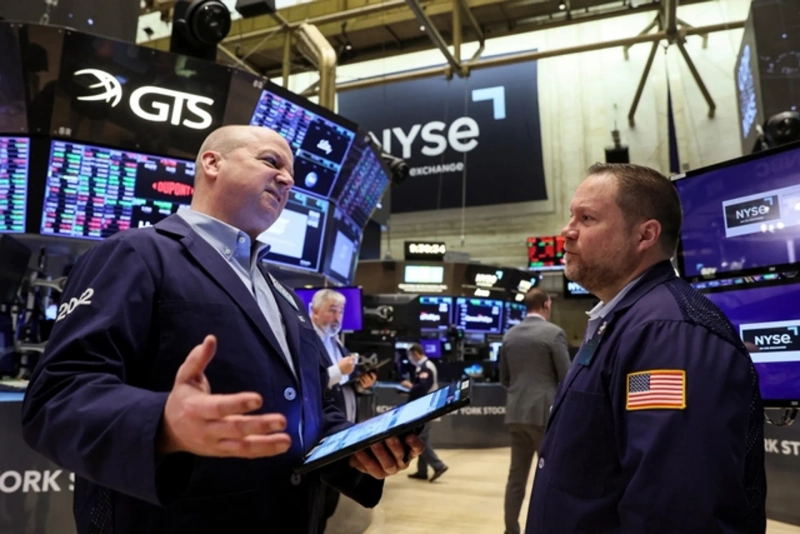
On the 11th (local time), the Nasdaq Composite Index on the New York Stock Exchange reached the 20,000 mark for the first time in history. This was due to the rally in big tech stocks as the market anticipated a rate cut by the Federal Reserve following the Consumer Price Index (CPI) rise last month, which met market expectations.
On this day, the tech-heavy Nasdaq index closed at 20,034.89, up 347.65 points (1.77%) from the previous trading day. This is the first time the Nasdaq index has surpassed the 20,000 mark. The large-cap S&P 500 index rose 49.28 points (0.82%) to 6,084.19, while the blue-chip Dow Jones Industrial Average fell 99.27 points (0.22%) to 44,148.56.
Major tech stocks rose across the board. Tesla surged 5.93% from the previous trading day to close at $424.77 per share, hitting an all-time high. It surpassed the previous record high of $409.97 (closing price on November 4, 2021) after three years and one month.
Bloomberg estimated that Elon Musk's net worth reached $439.2 billion (about 628 trillion won) due to the rise in Tesla's stock price and the increased valuation of SpaceX, another company founded by Musk.
NVIDIA, a leading AI stock, jumped 3.14%. Alphabet, Google's parent company, rose 5.46%, while Amazon and Meta, Facebook's parent company, increased by 2.32% and 2.16%, respectively. Microsoft (MS) rose 1.28%.
The driving force behind the big tech rally is attributed to inflation indicators that met market expectations, leading to the prospect of a rate cut this month. According to the U.S. Department of Labor, last month's CPI rose 0.3% from the previous month and 2.7% year-on-year. Although it increased by 0.1 percentage points from October's rise (2.6% and 0.2%, respectively), it met market expectations.
The core CPI, excluding volatile energy and food prices, rose 0.3% from the previous month and 3.3% year-on-year. This is consistent with October's rise and market expectations. Although the broad disinflation trend (decline in inflation rate) has halted, as prices did not surge last month, Wall Street is confident that the Fed will cut rates by 0.25 percentage points this month.
According to the Chicago Mercantile Exchange (CME) FedWatch, the federal funds rate futures market reflects a 98.6% chance that the Fed will cut rates by 0.25 percentage points at the Federal Open Market Committee (FOMC) meeting on the 17th-18th. This is up from 78.1% a week ago and 88.9% the previous day. The chance of keeping rates unchanged is 1.4%.
However, Wall Street is betting that the Fed will hold rates steady in January after a small cut (0.25 percentage point rate cut) this month. There is speculation that even if rates are cut this month, it will be a 'hawkish cut' (preference for monetary tightening).
Previously, Jerome Powell, the Fed Chair, and other monetary policy officials emphasized several times that there is no rush to cut rates as the U.S. economy remains robust. If President-elect Donald Trump implements tariff increases, bans illegal immigration, and fulfills tax cut promises after taking office in January next year, inflation could rise, which is why the Fed is expected to take a cautious stance on monetary easing.
Investors are awaiting the release of the November Producer Price Index (PPI) on the 12th. The PPI, a wholesale price index, is expected to have risen 0.3% month-on-month and 2.5% year-on-year last month, expanding from October's rise (0.2% and 2.4%).
Treasury yields are on the rise. The 10-year U.S. Treasury yield, a global bond yield benchmark, rose 5 basis points (1bp=0.01%) from the previous trading day to 4.27%, while the 2-year U.S. Treasury yield, sensitive to monetary policy, rose 1bp to 4.15%.
Noh Jeong-dong, Hankyung.com reporter dong2@hankyung.com

Korea Economic Daily
hankyung@bloomingbit.ioThe Korea Economic Daily Global is a digital media where latest news on Korean companies, industries, and financial markets.