

Bloomberg "Trump's Economic Team Discusses Gradual Tariff Increase Plan"
Summary
- Trump's economic team is considering a plan to gradually increase tariffs by 2%~5% each month.
- This approach is said to enhance negotiation power with trade partners and avoid an increase in inflation.
- The discussion on tariff increases led to a rise in European stocks and U.S. stock index futures, while the dollar showed a downward trend.
Gradual Increase of 2%~5% Monthly
"Considering to Enhance Negotiation Power and Alleviate Inflation Pressure in the U.S."
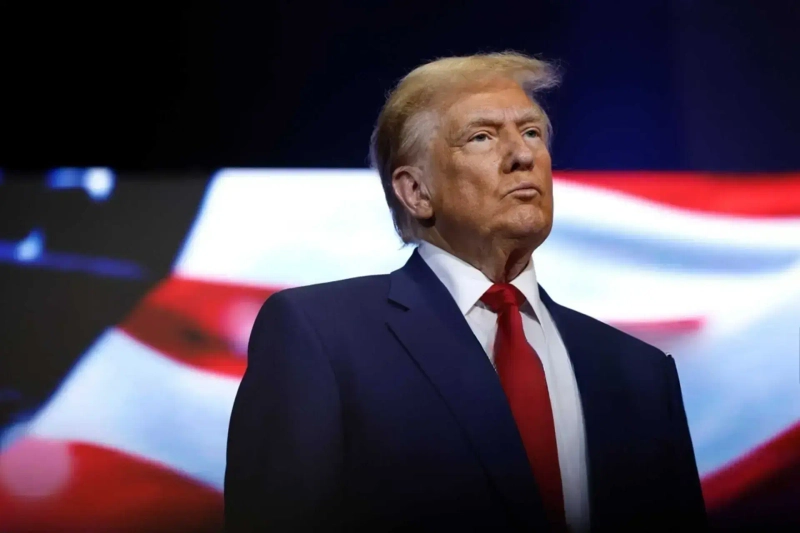
On the 20th local time, Trump's new economic team, which is being inaugurated, is discussing a plan to gradually increase tariffs every month. This is a gradual approach to enhance negotiation power with trade partners and avoid inflation rise in the U.S., contrary to the initial pledge to impose tariffs from the first day of office.
On the 14th (local time), Bloomberg reported, citing sources, that Trump's economic team is discussing such a plan. Following this report, European stocks and U.S. stock index futures turned upward, while the dollar, which had surged the previous day, fell. Particularly, the Chinese yuan and Australian dollar, which have high dependency on trade with the U.S., showed strength. The offshore yuan rose by 0.1% in Asian trading on the 14th, and the Australian dollar increased by 0.3%.
One of the plans currently being discussed by Trump's economic team is to gradually increase tariffs by about 2%~5% each month. This is possible through the administrative authority that the U.S. President can exercise under the International Emergency Economic Powers Act. However, it is still in the early stages of review and has not been presented to Trump, according to officials.
Advisors involved in formulating this plan reportedly include Scott Besant, the nominee for Treasury Secretary, Kevin Hassett, nominated as the Chairman of the National Economic Council, and Steven Miran, nominated as the Chairman of the Council of Economic Advisers.
A spokesperson for Trump's transition team referred to Trump's previous statements and social media posts, stating that the tariff pledge will be implemented as originally planned.
During last year's presidential campaign, Trump had declared that he would impose a minimum tariff of 10%~20% on all imports and more than 60% on Chinese imports.
Since his victory, there have been several reports on tariffs, but Trump has denied them.
The uncertainty is causing instability in both the bond and stock markets. Recently, investors have been selling government bonds due to concerns that Trump's tariff and tax cut policies will persistently drive inflation. This is creating headwinds for the stock market and the economy overall.
Kristalina Georgieva, Managing Director of the International Monetary Fund (IMF), stated on the 10th that global bond yields are rising due to the uncertainty surrounding Trump's tariff threats and trade policies.
Guest Reporter Kim Jung-ah kja@hankyung.com

Korea Economic Daily
hankyung@bloomingbit.ioThe Korea Economic Daily Global is a digital media where latest news on Korean companies, industries, and financial markets.