

Bank of Korea 'February Rate Cut' Likely
Summary
- The Bank of Korea announced that the likelihood of a rate cut next month has increased due to exchange rate stabilization and worsening domestic economy.
- It was reported that the GDP growth rate in the fourth quarter of last year was lower than expected, raising expectations for a rate cut.
- With the resolution of foreign exchange market instability, which was a stumbling block to a rate cut, a rate cut is now considered certain.
Domestic demand worsens more than expected
Exchange rate, a stumbling block, also on a downward trend
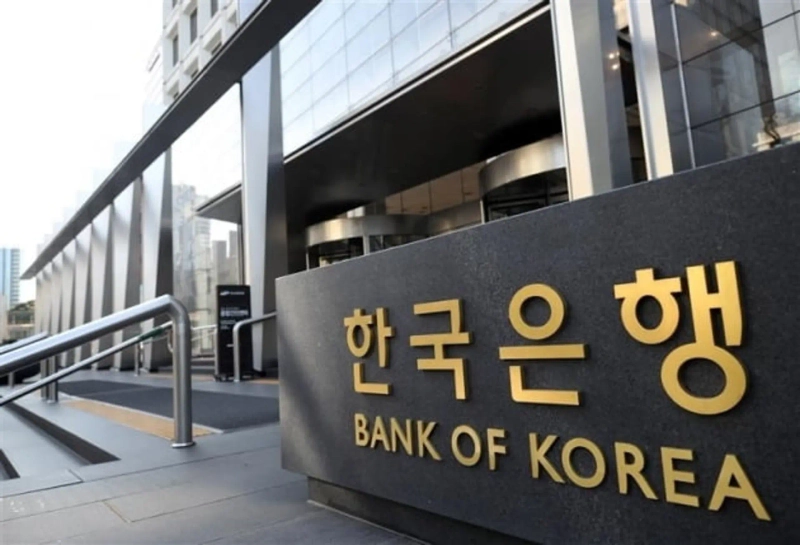
As domestic demand in the fourth quarter of last year turned out to be worse than initially expected, there is a growing call for the Bank of Korea and the government to implement more aggressive monetary and fiscal policies. Particularly, with the won-dollar exchange rate stabilizing downward around the inauguration of Donald Trump's second U.S. administration, there is speculation that the Bank of Korea is more likely to cut the base interest rate next month.
According to the Bank of Korea on the 23rd, the Monetary Policy Committee will hold a meeting on the direction of monetary policy on the 25th of next month to discuss whether to change the base interest rate. The committee decides on monetary credit policy by considering variables such as inflation, financial stability, and the economy. As the preliminary annual real GDP growth rate for last year was announced on this day, the market's expectation for a rate cut has spread. This is because the growth rate for the fourth quarter was only 0.1%, one-fifth of the Bank of Korea's forecast (0.5%) made two months ago. It is reported that the Bank of Korea's executive branch is greatly concerned about the adverse effects of the prolonged state of emergency and impeachment situation on domestic demand. At the Monetary Policy Committee in January, all six committee members, except for Governor Lee Chang-yong, were in favor of 'keeping the possibility of a rate cut open for three months.'
The foreign exchange market, which was considered a stumbling block to a rate cut, is also stabilizing. The won-dollar exchange rate, which exceeded 1,470 won just before the January Monetary Policy Committee meeting, has recently fallen to the 1,430 won range. The biggest reason the committee could not lower the rate at the January monetary policy direction meeting was the instability in the foreign exchange market. At that time, Governor Lee explained the background of the rate freeze by saying, "It is natural to lower the rate when looking only at the economy, but the volatility of the exchange rate could negatively affect domestic prices and financial stability."
Park So-yeon, a researcher at Shinyoung Securities, predicted, "If political instability eases, the exchange rate could stabilize downward faster than expected." The analysis also suggests that the stabilization of the global financial market following the inauguration of U.S. President Donald Trump on the 20th broadens the Bank of Korea's scope of action.
Reporter Leftking leftking@hankyung.com

Korea Economic Daily
hankyung@bloomingbit.ioThe Korea Economic Daily Global is a digital media where latest news on Korean companies, industries, and financial markets.