

PiCK
US Treasury: Trump Won't Ask Fed for Rate Cut... Bank of Japan Initiates Rate Hike
Summary
- US Treasury Secretary Besant conveyed that President Trump will not demand a rate cut from the Fed.
- The Bank of Japan announced plans to raise the benchmark interest rate to 1% by March next year.
- It is expected that the unwinding of yen carry trades will not be as large-scale as last year.
Besant US Treasury Secretary: "President Trump Won't Demand Fed Rate Cut"
"Focus on US 10-Year Treasury Yield Reduction"
Naoki Bank of Japan Policy Board Member: "Need to Raise Rates to 1%"
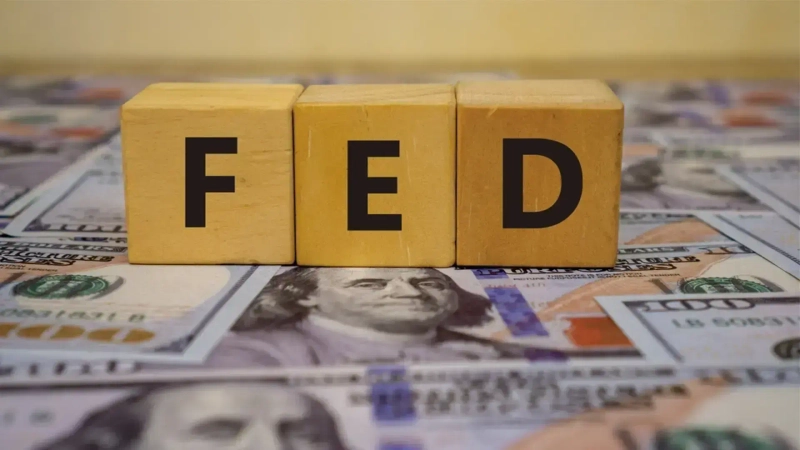
There has been a statement that President Donald Trump of the United States will not pressure the Federal Reserve (Fed) to lower the benchmark interest rate from the current level of 4.5% per annum (upper limit). Meanwhile, the Bank of Japan is expected to raise the benchmark interest rate to 1% per annum by March next year.
Even if the Bank of Japan raises rates, it is expected that the unwinding of yen carry trades will not be as large-scale as last year. This is because the US economy continues to show strength, which may slow down the Fed's rate cut pace more than expected.
"Not Mentioning What the Fed Should Do"
Scott Besant, US Treasury Secretary, said in an interview on the 5th (local time), "President Trump does not demand a rate cut from the Fed," and "I will not comment on what they (the Fed) should do in the future."
Besant's remarks came amid recent indications from President Trump suggesting a demand for a Fed rate cut. Last month, President Trump participated in the World Economic Forum (WEF) in Davos via video and stated, "I will demand an immediate rate cut." Although President Trump did not directly mention the 'Fed' at that time, the statement was interpreted as directed at the Fed due to his previous campaign assertion that "the President should have the right to be involved in the Fed's rate decisions."
However, Secretary Besant stated at the meeting, "President Trump and I are focusing on the US 10-year Treasury yield." The US 10-year Treasury yield serves as a benchmark for the bond market and can influence overall market interest rates. However, to lower long-term Treasury yields, the issuance of long-term Treasuries must be reduced, which is challenging given the current US fiscal situation.
Secretary Besant argued that lowering energy costs could reduce inflation expectations. He said, "Energy is one of the most reliable indicators of long-term inflation expectations," and "If we can lower gasoline and heating oil prices, it will help recover from high inflation."
On this day, the US 10-year Treasury yield fell from the previous day's level of 4.52% per annum to around 4.42%. This was due to Secretary Besant's remarks and the January Purchasing Managers' Index (PMI) for services recording 52.8. This figure is a 1.2-point drop from December's 54.0 and below the market expectation of 54.3.
Bank of Japan Prepares for Additional Hikes
On the other hand, the Bank of Japan, which raised the benchmark interest rate to 0.5% per annum last month, is poised to continue additional hikes. Tamura Naoki, a member of the Bank of Japan's Policy Board, stated on the 6th that the rate should be raised to 1% per annum by March next year.
According to Nihon Keizai Shimbun, Tamura stated in a lecture held in Matsumoto, Nagano Prefecture, "By the second half of fiscal 2025 (April 2025 to March 2026), it is necessary to keep the rate at least around 1%." Tamura is classified as a hawk within the Bank of Japan, advocating for rate hikes. He also expressed the view that raising rates to this extent is necessary to curb inflation.
The market sees a high possibility of the Bank of Japan pursuing additional rate hikes this summer. Tamura did not specify the timing for raising the rate to 0.75%, stating, "I want to judge appropriately." However, he emphasized that even if the rate reaches 0.75%, the real interest rate remains negative.
On this day, in the Tokyo foreign exchange market, the yen-dollar exchange rate plummeted to the 151 yen level per dollar at one point following Tamura's remarks. The yen's value rose to its highest level since December last year. Nihon Keizai Shimbun noted that Tamura had mentioned in a lecture last September that the rate should be at least 1% by the second half of fiscal 2026, analyzing that "the expected timing of the rate hike has been brought forward in this lecture."
Some predict that even if the Bank of Japan raises rates, it will be difficult to see yen carry trade unwinding on a scale similar to last year. This is because the US labor market and consumption remain robust, which may reduce the number of Fed rate cuts more than expected.
Meanwhile, Secretary Besant had his first phone greeting with Ueda Kazuo, Governor of the Bank of Japan, on the 5th. Secretary Besant said, "I shared macroeconomic and financial priorities with Governor Ueda," and "I look forward to cooperating closely and productively." Secretary Besant also held an online meeting with Kato Katsunobu, Japan's Finance Minister, on the 28th of last month. They agreed to cooperate closely between the US and Japan within the frameworks of the G7 and G20.
New York Correspondent: Park Shin-young / Tokyo Correspondent: Kim Il-kyu nyusos@hankyung.com

Korea Economic Daily
hankyung@bloomingbit.ioThe Korea Economic Daily Global is a digital media where latest news on Korean companies, industries, and financial markets.