

US Reciprocal Tariff Alert Triggered... South Korea with FTA May Be Within Range
Summary
- President Trump has indicated that reciprocal tariffs could affect Korean companies.
- South Korea, despite having an FTA with the US, could be subject to reciprocal tariffs due to its trade surplus with the US.
- Non-tariff barriers might be used to pressure Korea-US FTA renegotiation.
Trump Signs Executive Order
Targeting India, Europe with Large Tariff Gaps
May Target South Korea's 'Ambiguous Non-tariff Barriers'
Possible Pressure for Korea-US FTA Renegotiation
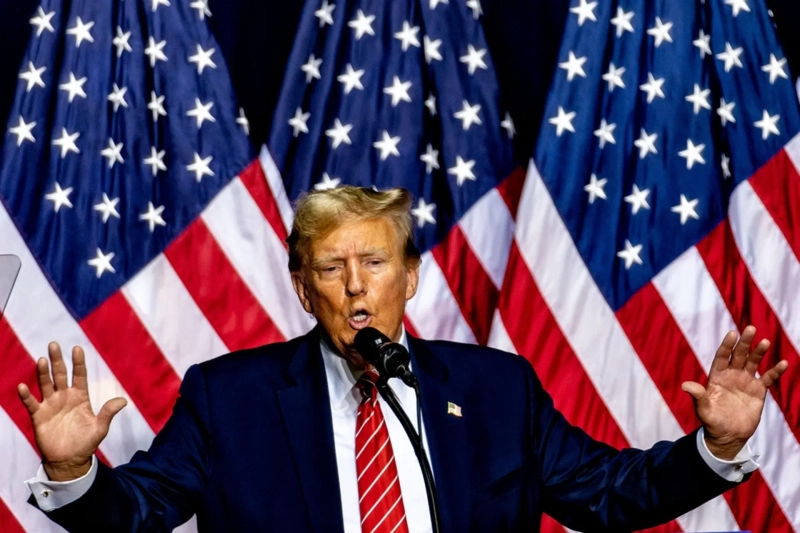
As President Donald Trump's promised reciprocal tariffs are expected to become reality soon, attention is focused on the potential impact on South Korean companies. While South Korea theoretically shouldn't be subject to reciprocal tariffs due to its Free Trade Agreement (FTA) with the US, concerns arise that it may not escape the scope given the size of its trade surplus with the US.
President Trump met with reporters at the White House on the 12th, stating, "We will sign reciprocal tariffs, whether later or tomorrow morning." The White House announced that an executive order signing ceremony is scheduled for 1 PM on the 13th. Reciprocal tariffs mean the US will impose tariffs equivalent to those imposed by other countries on US goods. The European Union (EU) is considered the first target for reciprocal tariffs, as Europe applies an average 10% tariff on US automobiles while the US imposes only 2.5% on European vehicles.
However, there are predictions that countries like South Korea, which have zero-tariff trade through FTAs with the US, could also be targeted. This comes as it was revealed that non-tariff barriers are being considered alongside tariff rates. Non-tariff barriers include value-added tax on US products, government subsidies for domestic companies, and regulations or certification systems that hinder US business operations. The US Trade Representative (USTR) previously pointed out Korea's automotive trade barriers, including ambiguous emission control parts (ERC) certification regulations, in last year's National Trade Estimate Report (NTE).
Jung-hyun Yoon from the Korea Institute for Industrial Economics & Trade's National Security Strategy Institute explained, "Non-tariff barriers are endless and can be used to target anything. For instance, about 10 years ago, the US even raised issues with a Korean conglomerate's operation of in-house daycare facilities, calling it a non-tariff barrier." There are also concerns that the Trump administration might use reciprocal tariffs to increase pressure for renegotiating the Korea-US FTA.
A government official stated, "We are closely monitoring comments from White House trade advisor Peter Navarro, who suggested starting reciprocal tariffs with countries having the largest trade deficits with the US." Navarro is known to be leading the Trump administration's reciprocal tariff strategy.
Washington=Lee Sang-eun correspondent/Kim Ri-an reporter knra@hankyung.com

Korea Economic Daily
hankyung@bloomingbit.ioThe Korea Economic Daily Global is a digital media where latest news on Korean companies, industries, and financial markets.