

Risk appetite revives on Russia-Ukraine peace expectations... Exchange rate falls to 1,440 won range
Summary
- The won-dollar exchange rate fell to the 1,440 won range as risk appetite revived due to expectations of peace between Russia and Ukraine.
- The dollar is expected to remain strong, but its strength could be limited if US growth slows.
- While the euro and yuan are expected to weaken, the Korean won may also show a weakening trend.
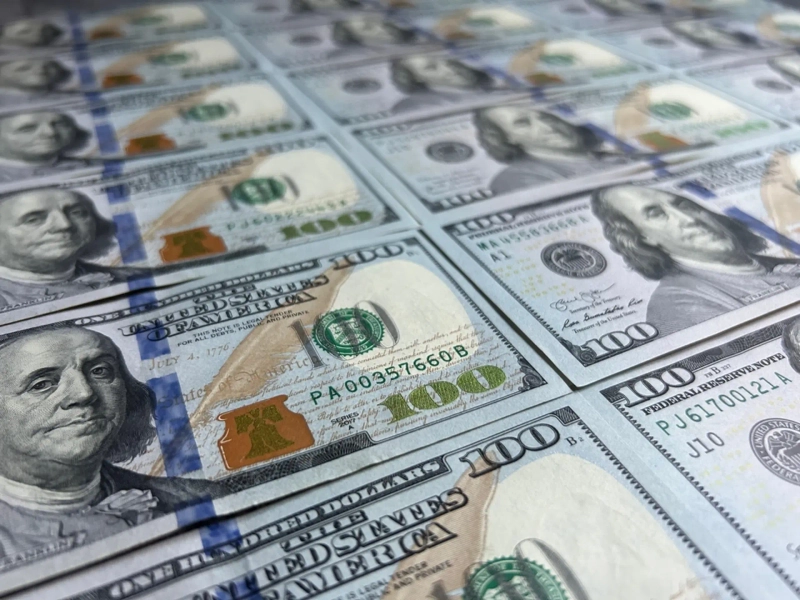
The won-dollar exchange rate entered the 1,440 won range on the 13th. This is the first time in six trading days since the 7th that the exchange rate has been in the 1,440 won range. This is attributed to the revival of risk appetite as expectations for peace between Russia and Ukraine grow.
On this day, the won-dollar exchange rate (as of 3:30 PM) in the Seoul foreign exchange market closed weekly trading at 1,447.50 won, down 5.90 won from the previous day. This is the first time the exchange rate has fallen to the 1,440 won range since 1,447.80 won on the 7th.
The exchange rate moved according to the US January Consumer Price Index (CPI) and the possibility of ending the Ukraine war. After opening at 1,452.10 won, down 1.30 won from the previous day, it turned upward during the morning before showing clear downward pressure around 11 AM.
The dollar index, which shows the value of the dollar against six major currencies, fell 0.5% to 107.518 from the previous day. Risk currencies such as the euro and yuan rebounded, leading to dollar weakness.
As of 3:30 PM, the won-yen cross rate was 939.40 won per 100 yen, down 6.49 won from the previous day's 3:30 PM reference rate. The yen-dollar rate rose 0.25% to 154.023 yen.
The International Finance Center predicted that the value of major currencies this year will be determined by US President Donald Trump's tariff policies. The dollar is expected to maintain strength similar to current levels. Global IBs forecast that the dollar index will move around 109 as expectations for Fed rate cuts retreat. However, how far US growth will continue this year remains a variable. If US exceptionalism in growth weakens, the extent of strengthening could be limited.
The euro and yuan are predicted to weaken. In particular, the yuan is expected to face significant weakness if the tariff war with the US intensifies. From the point when the US additionally raises tariffs on China, the Chinese government is expected to become more tolerant of yuan weakness.
Europe's economy is expected to be a hindrance. The eurozone's growth forecast for this year is only around 1.0%. The euro value is predicted to fall as the European Central Bank (ECB) cuts rates to restore growth.
Korea is also concerned about won weakness. This could occur if the won falls in tandem with the yuan, or if the Bank of Korea cuts rates to respond to domestic growth.
Reporter Jinkyu Kang josep@hankyung.com

Korea Economic Daily
hankyung@bloomingbit.ioThe Korea Economic Daily Global is a digital media where latest news on Korean companies, industries, and financial markets.