

Trump: 'VAT is effectively a tariff'... Korea may become subject to reciprocal tariffs
Summary
- President Trump announced reciprocal tariffs, considering VAT as an unfair trade practice.
- He emphasized that U.S. products could lose price competitiveness due to additional tariffs.
- Korea is likely to be included as a target for reciprocal tariffs.
Criticizes EU VAT while announcing reciprocal tariffs on the 13th (local time)
Interprets VAT as effectively functioning as tariffs
Korea also applies 10% VAT
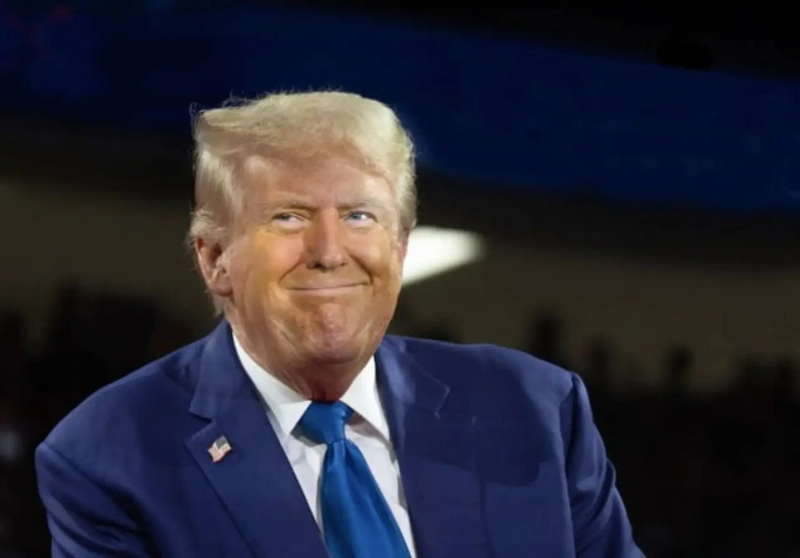
U.S. President Donald Trump has pointed to countries that impose Value Added Tax (VAT) as targets for reciprocal tariffs. While President Trump specifically highlighted the European Union (EU) as a prime example, Korea is also expected to be a likely target for reciprocal tariffs due to its VAT system.
President Trump officially announced reciprocal tariffs on the 13th (local time), treating the EU's VAT system as an example of unfair trade practices.
VAT is a consumption tax imposed in many countries including Korea and Europe but not in the United States. The U.S. instead has a sales tax system. The key difference is that VAT is levied at each stage when value is added throughout the supply chain, while sales tax is generally collected only once at the final point of purchase.
The memorandum signed by President Trump specifically states that "unfair and discriminatory taxes or offshore taxes imposed by trading partners on U.S. businesses, workers, and consumers, including VAT, will be considered in determining reciprocal tariffs." This indicates that VAT is being interpreted as effectively functioning as a tariff.
The U.S. takes issue with VAT for three reasons. First, VAT applies to all goods and services sold domestically regardless of origin. U.S. automobiles imported into countries with VAT systems like the EU or Korea face the same VAT as locally produced vehicles. However, U.S. vehicles must also pay import duties, putting them at a competitive price disadvantage.
The U.S. government also challenges the VAT structure. VAT applies at every stage of the supply chain. For example, in bicycle production and sales, VAT is applied at all stages - from steel companies supplying materials to parts manufacturers, to manufacturers selling to retailers. In contrast, U.S. sales tax only applies at the final point of sale.
VAT rates in other countries are generally higher than U.S. sales tax. European countries impose an average 22% VAT throughout the supply chain in addition to tariffs. Korea's rate is 10%. In comparison, the U.S. sales tax rate is 6.6%.
The U.S. government plans to impose reciprocal tariffs on countries worldwide as early as early April, considering cases of unfair trade practices by trading partners. Korea, which imposes VAT, is likely to be included in unfair trade practices similar to the EU.
White House Deputy Chief of Staff for Policy Stephen Miller argued, "This (VAT application) is the main reason why the U.S. auto industry is suffering and jobs continue to disappear."
New York=Park Sin-young correspondent nyusos@hankyung.com

Korea Economic Daily
hankyung@bloomingbit.ioThe Korea Economic Daily Global is a digital media where latest news on Korean companies, industries, and financial markets.