

Trump: 'Auto Tariffs Around April 2nd'... Points to VAT: 'Same as Tariffs'
Summary
- President Trump announced plans to reveal auto tariffs on imports around April 2nd.
- This measure could significantly impact Korean auto exports to the US.
- Trump indicated that he would consider VAT as tariffs against the US and is reviewing reciprocal tariff implementation.
Reveals plan to impose tariffs on cars imported to the US
Korea exports cars to US tariff-free under KORUS FTA
Auto exports could be hit if tariffs imposed
Trump: 'Will treat VAT as tariffs against US'
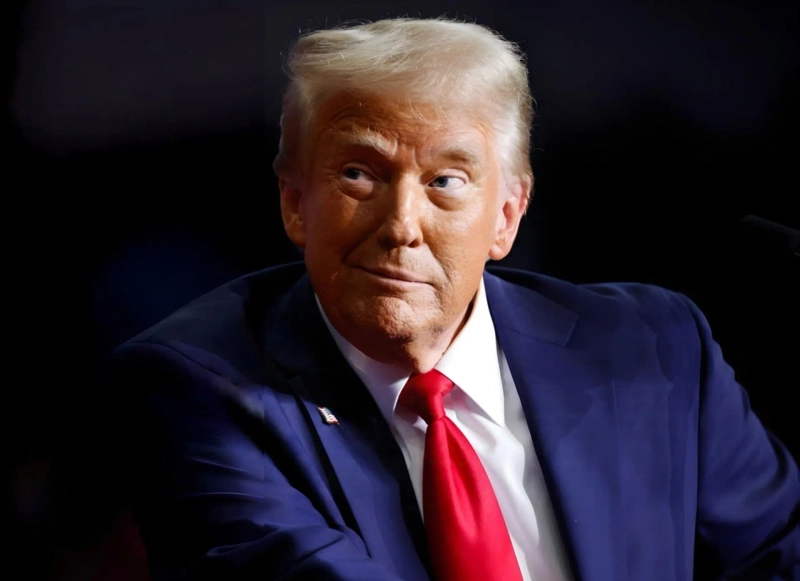
President Donald Trump announced on the 14th (local time) that he plans to introduce tariffs on imported vehicles to the US around April 2nd.
At an executive order signing event at the White House that day, Trump responded "probably around April 2nd" to reporters' questions about the timeline for introducing import car tariffs.
However, he did not specify whether April 2nd would be the implementation date for auto tariffs or the date for announcing detailed plans for imposing auto tariffs. President Trump has recently announced various new tariffs but has typically allowed preparation periods rather than immediate implementation.
This has raised red flags for Korean auto exports to the US, as they are likely to be a major target of the auto tariffs. Under the Korea-US Free Trade Agreement (KORUS FTA), Hyundai Motor and General Motors (GM) currently export vehicles from Korea to the US without tariffs. In contrast, Japanese automakers like Toyota, Nissan, and Honda must pay a 2.5% tariff when exporting to the US.
According to consulting firm GlobalData, among vehicles sold in the US last year, Mexico had the highest import share (16.2%), followed by Korea (8.6%), Japan (8.2%), and Canada (7.2%). Notably, the share of Korean vehicles increased from 5% (about 845,000 units) in 2019 to 8.6% (about 1.37 million units) last year.
Other automakers in the US are using this as grounds to attack Korean companies. Ford CEO Jim Farley recently emphasized that "hundreds of thousands of cars are imported from Japan and Korea annually without additional tariffs."
Meanwhile, Trump suggested that countries with value-added tax (VAT) systems, including Korea, would essentially be treated the same as countries imposing tariffs on the US. In a post on Truth Social on the 15th (local time), after reconfirming the reciprocal tariff decision, he wrote, "We will treat countries using VAT systems, which are much harsher than tariffs, similarly to countries with tariffs (against the US)."
President Trump signed a memorandum on the 13th to impose reciprocal tariffs, a concept of applying tariffs corresponding to those imposed by other countries on the US.
Regarding this, Howard Lutnik, nominee for US Secretary of Commerce and the official in charge, stated that reciprocal tariffs could be applied as early as April 2nd after studying national tariff and non-tariff barriers.
New York=Special Correspondent Park Sin-young nyusos@hankyung.com

Korea Economic Daily
hankyung@bloomingbit.ioThe Korea Economic Daily Global is a digital media where latest news on Korean companies, industries, and financial markets.