

Trump's "Korea charges 4 times US tariffs" remark... caused by 'this chart'
Summary
- President Trump sparked controversy by stating that Korea's MFN tariff rate is four times higher than that of the US.
- However, it emphasized that under the Korea-US FTA, both countries essentially have zero tariffs on most items.
- Trump's statement was based on incorrect information, highlighting the need for accurate awareness about the Korea-US FTA.
WTO MFN tariff rate chart shows Korea at 13.4%, 4 times higher than US
Trump likely forgot about zero tariffs under Korea-US FTA
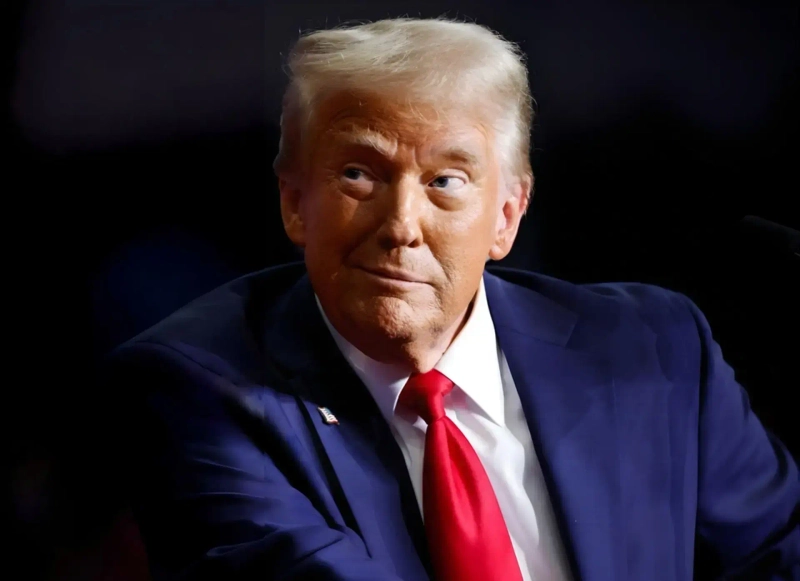
President Trump claimed during his congressional address on the 4th (local time) that 'Korea imposes tariffs four times higher than the US on America, which provides military assistance to Korea.' This statement came from a context where he failed to grasp the clear facts.
If a staff member who drafted the congressional speech was unaware that Korea and the US have a Free Trade Agreement (FTA) that essentially eliminates tariffs, or if this was Trump's ad-lib, the terrible conclusion is that Trump either forgot or has incorrectly internalized this fact.
Under the Free Trade Agreement (FTA), the US and Korea do not apply tariffs to 99.8% of items based on the number of products.
So why did Trump make such a statement? According to foreign media, Trump, as during his campaign, makes statements that contradict facts without hesitation. But why he specifically made this claim about Korea's tariffs can be attributed to several factors.
One factor is the World Trade Organization (WTO) data on Most Favored Nation (MFN) tariff rates by country, which most foreign media cited when Trump mentioned reciprocal tariffs on February 13.
Many foreign media outlets, including Reuters News and Bloomberg, cited this chart. According to this chart, Korea's MFN tariff rate is 13.4%, the second highest among America's top 15 trading partners after India. The US MFN tariff rate is 3.3%. Based on MFN criteria, Korea's rate is exactly 4 times higher than the US, as Trump mentioned.
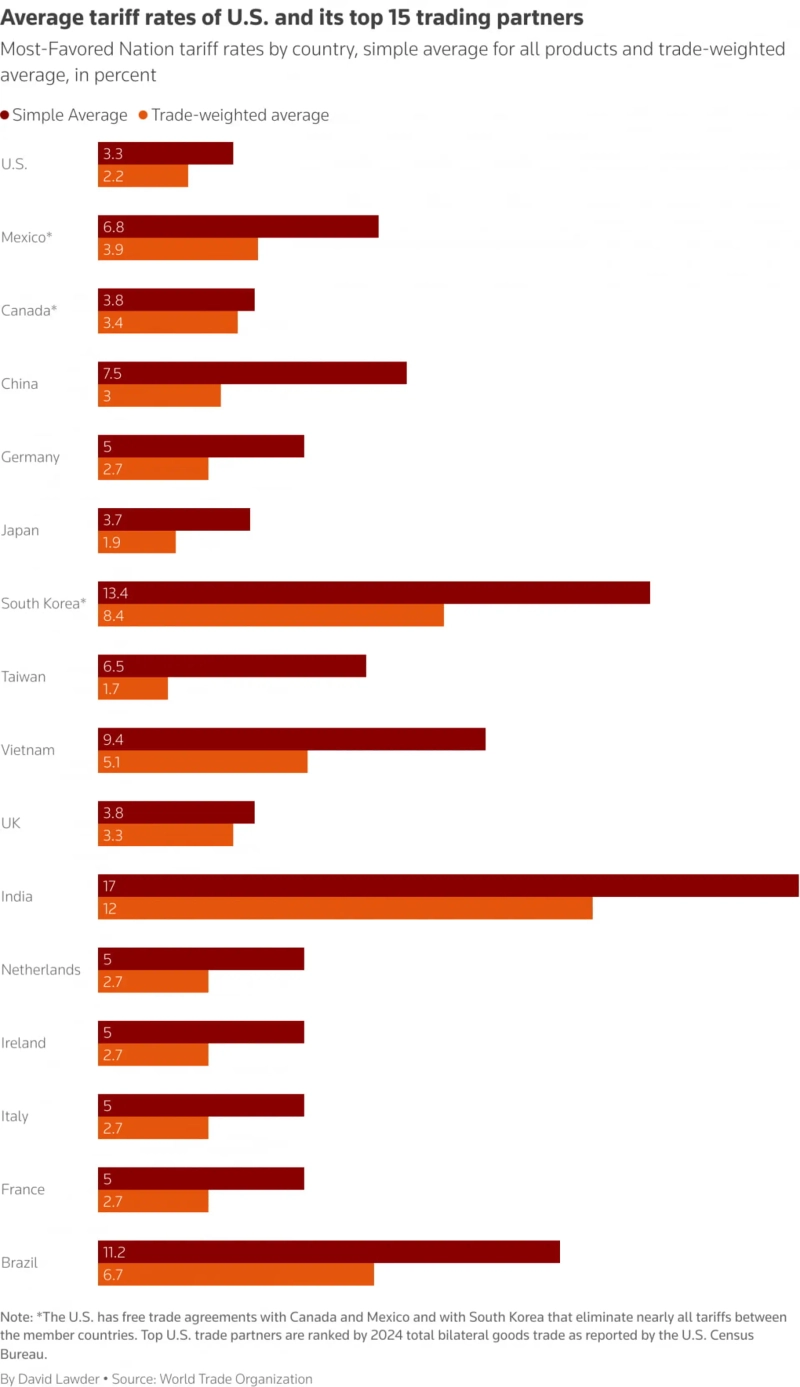
In fine print below this chart reported by Reuters News on February 14, there is a footnote stating, "The US has FTAs with Canada, Mexico, and Korea." However, without properly reading the footnote, one would inevitably calculate that Korea's tariff rate is 4 times that of the US.
Other foreign media used this chart without any footnotes about FTAs. This led to the misunderstanding that Korea applies high tariff rates without having concluded an FTA.
In early February, when reciprocal tariffs were mentioned, articles from Reuters, Bloomberg, CNBC, and others rarely mentioned that Korea and the US essentially have no tariffs due to the FTA. Some foreign media even wrote that Korea could be subject to Trump's reciprocal tariffs due to its high MFN tariff rate, just as Trump claimed. In other words, the Korea-US FTA does not seem to be as well-known in the US or abroad as Korea might expect.
It seems highly unlikely that Trump mentioned this falsehood as a negotiation strategy while knowing about the essentially zero tariffs.
Another possibility is that if this content was included in the draft of the congressional speech, the aide who worked on it did not accurately know about the Korea-US FTA. If it was an impromptu remark by Trump, then in Trump's subjective memory, Korea is firmly misidentified as a country with high tariff rates rather than an FTA country with essentially no tariffs with the US.
In either case, since Trump has spread inaccurate information to all of America through his congressional address, Korea now urgently needs to inform the US about the FTA. Trump has repeatedly said that his team will complete investigations for US reciprocal tariffs by early April.
Kim Jung-a, Contributing Writer kja@hankyung.com

Korea Economic Daily
hankyung@bloomingbit.ioThe Korea Economic Daily Global is a digital media where latest news on Korean companies, industries, and financial markets.