

PiCK
[New York Stock Market Briefing] Rebounding after three days on Trump's tariff easing gesture... Semiconductor index up 2%↑
Summary
- U.S. President Donald Trump's tariff easing gesture led to a rebound in major New York stock market indices.
- Major U.S. automaker stock prices showed an upward trend due to the tariff deferral announcement.
- The Philadelphia Semiconductor Index rose 2.09% due to the strength of artificial intelligence and semiconductor-related stocks.
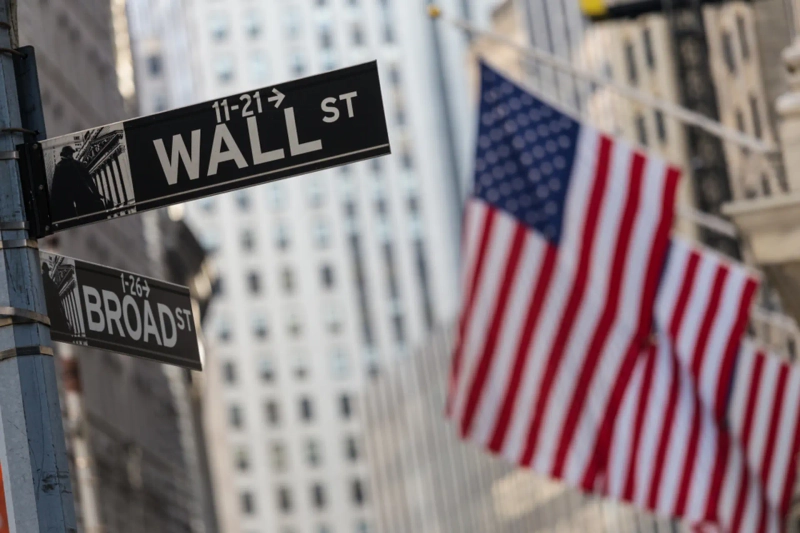
Major indices in the New York stock market rebounded after three trading days as U.S. President Donald Trump hinted at the possibility of easing tariff policies on Canada and Mexico.
On the 5th (local time), near the close of trading on the New York Stock Exchange (NYSE), the Dow Jones 30 Industrial Average closed at 43,006.59, up 485.60 points (1.14%) from the previous day, the Standard & Poor's (S&P) 500 index finished at 5,842.63, up 64.48 points (1.12%), and the Nasdaq Composite index ended at 18,552.73, up 267.57 points (1.46%).
The U.S. administration led by President Trump showed signs of backing down from its tariff policy against Canada and Mexico. The White House said, "We will provide a one-month (tariff) exemption for all cars coming through the United States-Mexico-Canada Agreement (USMCA)," adding, "Reciprocal tariffs will still take effect on April 2, but at the request of companies involved in the USMCA, the president will exempt them for one month to avoid economic disadvantages."
Prior to this announcement, President Trump met with representatives of major U.S. automakers to discuss tariff issues. He also had a phone conversation with Canadian Prime Minister Justin Trudeau regarding tariff matters.
In addition to the auto tariff deferral announcement, U.S. Commerce Secretary Howard Lutnick said in a foreign press interview that while tariffs imposed on Canada and Mexico would remain in place, the 10% tariff on Canadian energy imports could be considered for withdrawal.
As this news spread, expectations that U.S. tariff policy was being used as a negotiation tool were revived in the stock market, and major indices that had shown weakness early in the session rebounded.
Economic indicators released today were mixed.
First, fears of an economic slowdown spread as the increase in U.S. private employment for February fell far short of expectations. According to the ADP National Employment Report, private employment last month increased by only 77,000 from the previous month. This was only half of the market's expected 140,000.
On the other hand, news that the U.S. service sector business conditions improved and maintained an expansion phase thawed investment sentiment. The Institute for Supply Management (ISM) announced that the Services Purchasing Managers' Index (PMI) for February recorded 53.5. This was up 0.7 points from January's 52.8 and also exceeded the market expectation of 52.7.
Standard & Poor's (S&P) Global's February Services PMI also recorded 51, continuing its expansion phase. It also exceeded the preliminary figure of 49.7.
By sector, all sectors except energy and utilities rose. Consumer discretionary, healthcare, industrial, real estate, technology, and communication services rose more than 1%, while materials surged 2.63%.
The rise in U.S. automaker stock prices also caught attention. This was thanks to the tariff deferral. Ford Motors jumped 5.81%, General Motors rose 7.16%, and Stellantis surged 9.24%.
The 'Magnificent 7,' referring to seven giant tech companies, were all strong except for Apple. Microsoft jumped 3.19%, while Amazon and Meta also showed increases in the 2% range. Tesla also rose 2.60%.
The Philadelphia Semiconductor Index, which concentrates on artificial intelligence (AI) and semiconductor-related stocks, rose 2.09%. Nvidia was up 1.13%, TSMC rose 2.38%, Broadcom increased 2.19%, and ASML climbed more than 4%.
Chinese-related stocks also showed strength. Based on American Depositary Receipts (ADRs), Trip.com rose 7.85%, JD.com increased 6.86%, and Pinduoduo climbed 6.27%.
The Federal Reserve's economic assessment report, the Beige Book, confirmed concerns about tariff threats. In the February Beige Book, 'tariff' was mentioned a total of 45 times, which is a sharp increase compared to the previous report.
According to the Chicago Mercantile Exchange (CME) FedWatch Tool, the probability of the benchmark interest rate remaining unchanged in the first half of the year rose slightly to 22.5%. It was 18.9% at the close of the previous day.
Instead, the probability of a 25bp cut in the first half of the year rose slightly to 50.8%, while the probability of a 50bp cut fell to 25.1%.
The Chicago Board Options Exchange (CBOE) Volatility Index (VIX) recorded 21.93, down 1.58 points (6.72%) from the previous session.
Case Han, Hankyung.com reporter case@hankyung.com

Korea Economic Daily
hankyung@bloomingbit.ioThe Korea Economic Daily Global is a digital media where latest news on Korean companies, industries, and financial markets.