

PiCK
Trump-driven Military Buildup... Euro and German Bond Yields Rise as Europe Increases Spending
Summary
- The European Union announced military buildup and fiscal expansion worth 800 billion euros, causing the euro to strengthen.
- Goldman Sachs predicted that German 10-year bond yields could rise to up to 3.75%, and that the euro value could continue to increase.
- The dollar is showing a downward trend due to tariff aftershocks and uncertain economic outlook, contrasting with the euro's performance.
Euro at $1.08... Highest This Year, Market Expects "Economic Stimulus Effect"
EU to Invest 800 Billion Euros in Defense
Euro Rises Against Dollar for 4th Consecutive Trading Day
"Euro Has Potential to Rise Over 10%"
German 10-Year Bond Yields Surge
Up to 2.8% Annually... Largest Increase in 28 Years
Goldman: "Could Rise Another 1 Percentage Point"
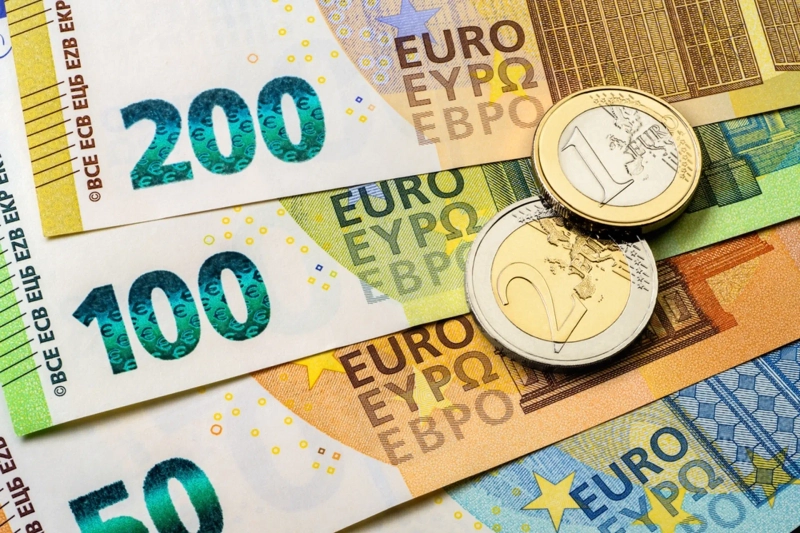
The euro, which earlier this year was forecast to potentially fall below parity with the dollar, is now surging. On the 6th, the euro jumped to its highest level in four months in the foreign exchange market. The 10-year German government bond yield, from the eurozone's largest economy, also recorded its largest single-day increase in 28 years, rising to 2.8% annually. Markets are reacting as Europe, feeling anxious after U.S. President Donald Trump halted weapons support to Ukraine and sided with Russia, has unveiled massive military buildup and economic stimulus measures. This is a kind of 'Trump butterfly effect.'
Euro Breaks Through $1.08
The euro rose to $1.0819 on this day, continuing its upward trend for the fourth consecutive trading day. The euro was around $1.03 at the beginning of this year. With Europe's economy struggling and Germany experiencing negative growth for two consecutive years, there were growing predictions that the euro would fall below parity with the dollar. However, the euro has been on an upward trend since the beginning of this month.
Europe's expansion of fiscal spending has had a significant impact. The European Union (EU) Commission announced on the 4th that it would increase military spending by a total of 800 billion euros for "European rearmament." Friedrich Merz, leader of the Christian Democratic Union who is set to become Germany's next chancellor following his election victory, also declared on the same day that he would create a special fund of 500 billion euros over ten years for military expansion and infrastructure investment. He also said he would change the constitution to make an exception for defense spending from the debt limit rule that restricts the government's annual new debt to 0.35% of GDP.
Germany has maintained the strictest fiscal policy in the eurozone, but its stance has changed due to the rapidly changing security landscape. The market expects that increased military and infrastructure spending will ultimately have an economic stimulus effect. Bond issuance will also increase to raise funds. This explains why the euro is rising and German bond yields are increasing.
Bloomberg reported that the change in German government fiscal policy "reminds us of former European Central Bank (ECB) President Mario Draghi's statement in 2012." During the European fiscal crisis, former President Draghi launched aggressive monetary easing, saying he would "do whatever it takes to preserve the eurozone."
The market reacted immediately. The 10-year German bond yield jumped to 2.8% annually on this day, the highest level since November 2023. The Financial Times reported that the daily increase (0.3 percentage points) was the highest in 28 years since 1997. Goldman Sachs predicted that "if the constitutional amendment proposed by the next German government passes, the 10-year German bond yield could rise to 3.75% annually." This means it could jump by almost 100bp (1 percentage point) from current levels.
Dollar Falls Amid Tariff Uncertainty
Wall Street believes the euro will continue to rise for the time being. This is because the increased spending has turned on a green light for Europe's economic outlook. Goldman Sachs withdrew its "$1 = €1" forecast. It also raised its German growth forecast for this year from 0% to 0.2%, and next year's growth forecast from 1% to 1.5%. Mira Chandan, Goldman Sachs' Global Head of FX Strategy, said, "The euro-dollar exchange rate could reach at least $1.12, last year's high." Some hedge funds predict the euro will rise more than 10% in the coming months to reach $1.2.
Meanwhile, the dollar, which had been strengthening since Trump's election, has recently faltered due to the "tariff aftershock." The Dollar Index, which shows the value of the dollar against major currencies, exceeded 109 just before Trump's inauguration but has now fallen to the 104 range. It has dropped more than 3% just this month. Reuters said, "The dollar's value has fallen due to the impact of inflation and tariffs on the U.S. economy and uncertain growth prospects," adding, "Investors have now begun to price in the possibility of a U.S. economic contraction." According to the U.S. prediction platform Kalshi, traders see a 42% chance of a U.S. recession this year.
Former U.S. Treasury Secretary Larry Summers, in an interview with Bloomberg TV, targeted President Trump and his comprehensive tariff imposition, saying, "The broad approach we are taking toward the world is the biggest factor threatening the role of the U.S. dollar as the world's reserve currency that it has played for the past 50 years."
Reporter Han Kyung-je hankyung@hankyung.com

Korea Economic Daily
hankyung@bloomingbit.ioThe Korea Economic Daily Global is a digital media where latest news on Korean companies, industries, and financial markets.