

"Fear of Second Plaza Accord"...Japan 'Extremely Tense' Over Trump's Remarks [Kim Il-kyu's Japan Watch]
Summary
- Trump's criticism of Japan's currency weakness has led to an increase in the yen's value, according to the report.
- Concerns about a Second Plaza Accord have emerged as a major risk in the foreign exchange market.
- Japan may be forced to implement interest rate hikes due to tariff threats, which could impact small and medium-sized businesses.
Trump Criticizes "Japan's Currency Weakening Strategy"
Yen Value Rises to 147 Yen Per Dollar Range
Yen Surged After 1985 Plaza Accord
Eventually Led to Japan's Lost 30 Years
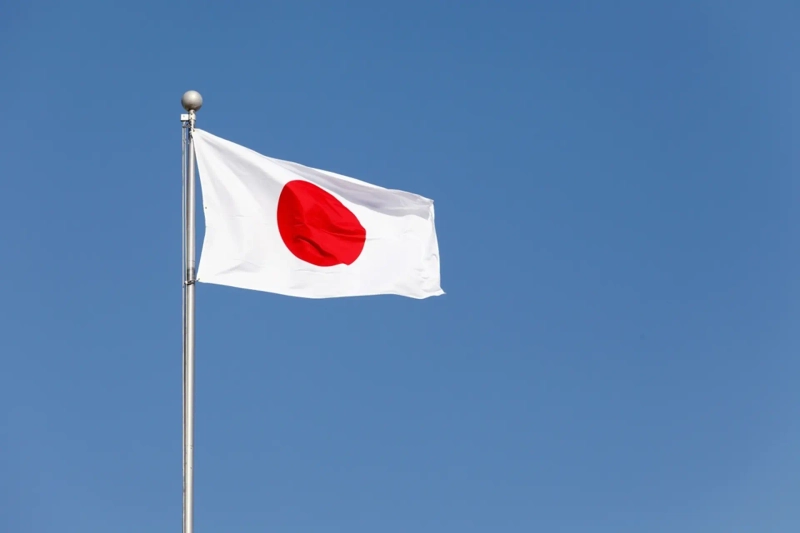
The yen is strengthening after U.S. President Donald Trump criticized China and Japan for deliberately weakening their currencies. In the foreign exchange market, there is speculation that President Trump may establish a new international framework to correct the strong dollar. The market appears to be on guard against the biggest risk: a 'Second Plaza Accord.'
According to the Nihon Keizai Shimbun on the 7th, what's currently drawing attention in the market is a 41-page report titled 'A User Guide for Restructuring the Global Trade System' released by U.S. hedge fund Hudson Bay Capital last November. The term 'Mar-a-Lago Accord' mentioned in this report has become a buzzword in the global foreign exchange market.
The report was written by Steven Miran, who has been nominated as the chairman of Trump's White House Council of Economic Advisers (CEA). In the report, Miran pointed out that "the dollar is overvalued due to demand as the world's foreign currency reserve" and that "manufacturers and producers of tradable goods in the United States are bearing the cost." This aligns with President Trump's claims.
Indeed, the dollar's value is rising. The 'effective exchange rate,' which represents a currency's strength considering trade volume, reflects the dollar's strength. In nominal terms, the dollar is 24% lower than just before the Plaza Accord in September 1985. However, in real terms, accounting for inflation effects, it is at a high level comparable to just before the Plaza Accord.
Miran explains in the report: "The dollar is always overvalued because of foreign currency reserve demand. Countries that hold dollars to protect their own currencies need to sell dollars. They use tariff increases for this purpose. After a series of tariffs, one can imagine that trading partners like Europe and China will accept some currency agreement in exchange for tariff reductions."
Under the Plaza Accord, the Group of Five (G5) major countries—the United States, United Kingdom, West Germany, France, and Japan—engaged in coordinated intervention aimed at weakening the dollar. The yen-dollar exchange rate, which was in the 230 yen per dollar range, fell sharply (yen value rose), and a year later, the 'strong yen' progressed to the 150 yen per dollar range. Japan's monetary easing policy in response to the rapid yen appreciation created a bubble. The subsequent interest rate hikes and real estate loan volume regulations burst the bubble, leading to Japan's 'Lost 30 Years,' according to the established theory.
However, the situation now is significantly different from the time of the Plaza Accord. From the perspective of reducing trade deficits that President Trump advocates, countries with large trade surpluses with the U.S. are China, Mexico, and Vietnam. For the U.S. to coordinate monetary policy as it did with the Plaza Accord, participation from China and others is essential. Analysis suggests this raises the hurdles significantly.
The size of the foreign exchange market has also changed dramatically. According to the Bank for International Settlements (BIS), spot trading in the global foreign exchange market increased from $630 billion per day in 2004 to $2.1 trillion in 2022. In Japan, following the 1998 amendment to the Foreign Exchange Law, even individuals were allowed to freely engage in foreign exchange transactions, resulting in a number of market participants incomparable to the time of the Plaza Accord.
Analysis suggests that the scale of exchange rate intervention during the Plaza Accord was about $10 billion globally over a month or so. However, the scale of the Japanese government's record yen-buying intervention in April last year amounted to 5.9 trillion yen (about $37 billion). Critics point out that the hurdles for inducing and establishing dollar weakness are high.
The possibility that President Trump may demand dollar devaluation or appreciation of other countries' currencies cannot be ruled out. Observations suggest that Japan, in particular, would have no choice but to accept if demanded to devalue the dollar under the threat of strengthened tariffs. The Bank of Japan may also be required to raise interest rates to a 'contractionary' level. There are concerns that if forced to raise interest rates due to the weak yen, they would have to do so without carefully examining the impact on small and medium-sized enterprises.
The Nihon Keizai pointed out, "At this stage, it may still be a tail risk with low probability, but if realized, the impact on the foreign exchange market and the global economy would be difficult to gauge."
Tokyo=Kim Il-kyu, Correspondent black0419@hankyung.com

Korea Economic Daily
hankyung@bloomingbit.ioThe Korea Economic Daily Global is a digital media where latest news on Korean companies, industries, and financial markets.