

Trump Delays 25% Tariffs After Just Two Days...Businesses and Politicians Exhausted by Flip-Flopping
Summary
- The article reported that President Trump's frequent changes to tariff policy are causing complaints among Republicans and businesses.
- It stated that the tariff exemption for Canada and Mexico reflects concerns about sharp increases in automobile consumer prices.
- The article reported that reciprocal tariffs may be imposed in the future, and the market cannot completely rule out the possibility of changes to President Trump's tariff strategy.
Concerns About Inflation Backlash Due to Tariffs
Complaints Even Within Republican Party Over Frequent Policy Changes
Canada: "Don't Want to Repeat This Psychodrama"
Canada, Mexico Could Also Become Targets of Reciprocal Tariffs
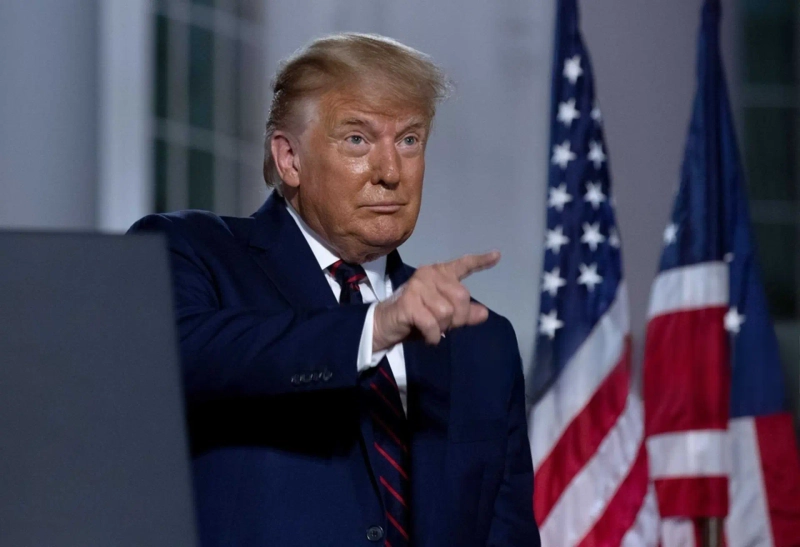
"The White House needs to explain its tariff strategy more clearly" (Todd Young, Republican Senator from Indiana)
After President Donald Trump postponed some tariffs on Canada and Mexico for a month on the 6th (local time), complaints are erupting even within the Republican Party about his tariff policy. Policy changes are too frequent to be interpreted as negotiation strategy, and even Trump's close aides cannot predict them. Canadian Foreign Minister Mélanie Joly expressed her frustration with Trump's tariffs, saying, "We don't want to repeat this psychodrama every 30 days."
Frequent Policy Changes
President Trump's tariff policy is impossible to predict. Shortly after taking office on January 20, he announced that he would impose additional tariffs of 25% on Mexico and Canada and 10% on China starting February 4. As the effective date approached, he abruptly postponed the 25% tariffs on Mexico and Canada for one month on February 3, just one day before implementation. He imposed the planned 10% additional tariff on China as scheduled and added another 10% on the 4th.
The purpose of imposing tariffs is also unclear. President Trump cites illegal immigrants and drug influx, including fentanyl, as the basis for imposing tariffs on Canada and Mexico. However, the amount of fentanyl coming from Canada is not significant, and Mexico is implementing active drug blocking policies based on specific numbers.
For this reason, complaints are erupting from Canada and Mexico, which have had the most conversations with President Trump regarding tariffs so far. It's like shooting an arrow at a moving target.
In the early stages when President Trump mentioned implementing tariff policies, such policy changes were interpreted as part of a negotiation strategy. They were seen as calculated actions to gain the upper hand.
However, recent analysis suggests that President Trump may not have fully considered the inflationary backlash from his tariff policy. A prime example is major U.S. automakers like GM, Stellantis, and Ford securing a one-month exemption from tariffs on Canada and Mexico. This is explained as a response to concerns that tariffs could lead to a sharp increase in car prices for U.S. consumers. Besides the auto industry, various sectors including agriculture are demanding similar measures from the Trump administration to avoid the impact of a trade war.
Likely Convergence to Reciprocal Tariffs
Instead, Mexico and Canada are expected to be included in reciprocal tariffs after April. The U.S. plans to impose 'reciprocal tariffs' on April 2, considering various countries' tariff rates on the U.S. and non-tariff barriers. The policy intent is to impose tariffs on countries that impose tariffs on the U.S. Previously, the European Union (EU) was the main target of reciprocal tariffs.
President Trump said, "I hope that Mexico and Canada will make sufficient efforts in the fentanyl sector so that this discussion (fentanyl-related tariffs) will be removed from the agenda and move to reciprocal tariff dialogue."
President Trump stated that he would proceed without changes to steel and aluminum tariffs, which he had decided to impose on countries that had been exempt from tariffs, including South Korea, starting on the 12th. When reporters at the White House Oval Office asked if he would also adjust steel and aluminum tariffs, he replied, "No. I'm not adjusting them. They take effect next week."
However, the market believes that this too could be subject to change. Like Canada and Mexico, President Trump could respond with tariff exemptions or scope reductions when other countries take proactive gestures such as expanding investment in the U.S. to avoid tariff impositions.
The expected scenario changes when tariffs are President Trump's goal. The WSJ predicted, "If Mexico and Canada come to view tariffs as the final goal rather than a negotiating tool, their strategy will change," adding, "They will move away from attempts to appease President Trump and toward preparing for an unpredictable and threatening neighbor."
New York=Park Shin-young Special Correspondent nyusos@hankyung.com

Korea Economic Daily
hankyung@bloomingbit.ioThe Korea Economic Daily Global is a digital media where latest news on Korean companies, industries, and financial markets.