

Trump-triggered recession concerns... New York Stock Exchange Nasdaq down 2.6%
Summary
- President Trump's tariff policies are fueling concerns about a U.S. economic recession, causing the Nasdaq Composite to fall 2.6%.
- Major stock analysts have warned of increased stock volatility, with some predicting drops of up to 20% during the year.
- Experts from RBC Capital Markets and Morgan Stanley have moderated their bullish market outlook and advised investors to closely monitor continued volatility.
Trump's response of "transition period" to recession possibility question fuels recession concerns
Tesla falls over 7%, Nvidia drops 2%
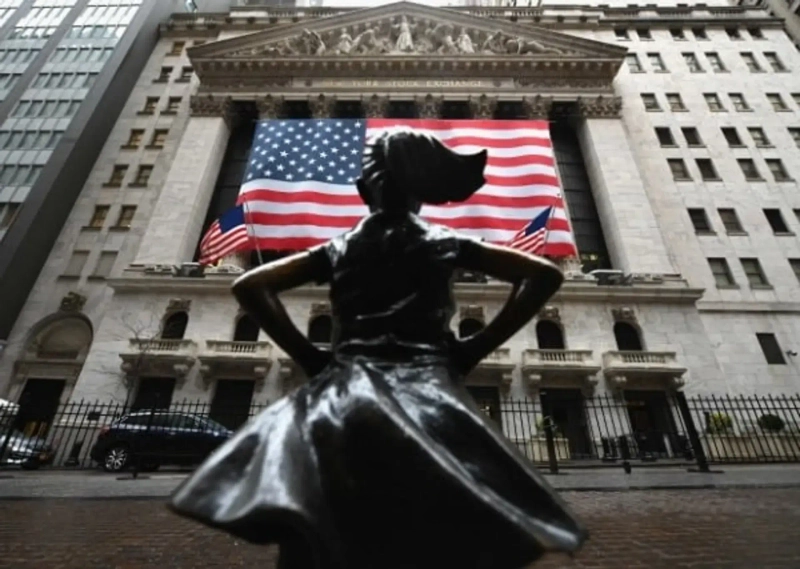
U.S. stock markets fell sharply on the 10th (local time) as concerns about a U.S. recession stemming from Trump's tariff policies emerged.
Around 10 a.m. Eastern Standard Time, the S&P 500 fell 1.7%, and the Nasdaq Composite dropped 2.6%. The Dow Jones Industrial Average declined 0.8%.
The 10-year Treasury yield fell 7 basis points (1bp=0.01%) to 4.24%. The Japanese yen rose 0.8% against the dollar, reaching 146.88. The Bloomberg Dollar Spot Index is fluctuating at similar levels to the previous day.
Bitcoin traded at $82,609.38 in the U.S. market, down 0.6%. Ether reached $2,112.16, up 3.2%.
Nvidia is trading at $110, down 2.2%. Tesla is trading at $242, plunging 7.5%.
In an interview aired on Sunday, President Trump responded to Fox News' question about the possibility of a recession by saying the economy is "going through a transition period." He claimed that "it will take some time to bring wealth back to America."
Lori Calvasina, head of U.S. equity strategy at RBC Capital Markets, said in an interview with CNBC that day, "The risk of a bear market scenario has increased." She pointed out, "I thought we would close at 6,600 points at the end of the year with a 5-10% drop during the year, but now the risk of a 14%-20% drop is increasing."
Chris Larkin of Morgan Stanley E*TRADE noted, "Right now, tariffs are dominating all topics," adding that "traders and investors should expect continued volatility until trade policies become clearer."
Wall Street strategists have unanimously warned of increased stock volatility. Strategists from major banks, including Michael Wilson of Morgan Stanley, JPMorgan Chase, and RBC Capital Markets, have tempered their bullish outlook for the stock market this year amid concerns about economic slowdown triggered by Trump's tariffs.
The Consumer Price Index for February will be released on Wednesday, the 12th, and the Producer Price Index on Thursday, the 13th.
Bill Adams, chief economist at Comerica Bank, said, "February headline and core Consumer Price Index (CPI) likely rose at a somewhat more moderate pace after sharp increases in the previous month." He added, "Due to tariffs and tariff threats, producer prices are likely to have risen more than consumer prices for two consecutive months."
Kim Jung-a, Contributing Writer kja@hankyung.com

Korea Economic Daily
hankyung@bloomingbit.ioThe Korea Economic Daily Global is a digital media where latest news on Korean companies, industries, and financial markets.