

Wall Street: "40% Chance of Recession"... US Growth Forecast Down from 2% to 1% Range
Summary
- Goldman Sachs lowered US growth rate forecast from 2.4% to 1.7% and raised the probability of recession to 20%.
- JP Morgan Chase adjusted the recession risk to 40%, citing extreme US policies as a major risk to the economy.
- According to BCA Research, the S&P500 could fall to 4200, with analysis showing a 50% possibility of US economic recession.
Goldman Drastically Lowers US Growth Forecast from 2.4% to 1.7%
BCA Research: "S&P500 Could Go to 4200 by Year-End"
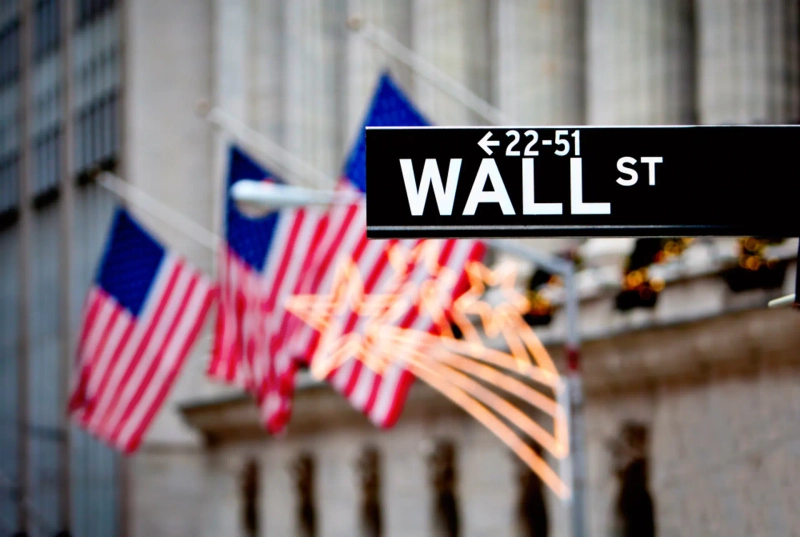
Major banks have been raising the probability of a recession even before the stock market crash on the 10th (local time) as Donald Trump's tariff policies become a reality. This comes as recent US economic indicators suggest an economic slowdown, while concerns grow about inflation due to tariffs. If stagflation—where recession and inflation occur simultaneously—hits, both the US government and the Federal Reserve (Fed) will have limited policy options.
Wall Street Raising Recession Probability
As the Trump administration accelerates its tariff policies, major banks' economic analysis teams are raising their recession probability forecasts or lowering US economic growth projections.
Goldman Sachs, a major US investment bank, drastically cut its 2025 US growth forecast from 2.4% to 1.7% on the 10th (local time). Chief Economist Jan Hatzius wrote in a memo to clients, "Our assumptions regarding trade policy have changed quite negatively, and the administration appears to be managing expectations for short-term economic weakness due to tariffs."
Goldman Sachs also raised the probability of a US recession from 15% to 20%. Goldman noted, "If the Trump administration remains committed to its policy despite much worse economic data, the recession forecast could go higher."
JP Morgan Chase initially projected a 30% risk of recession this year but recently adjusted it upward to 40%. JP Morgan's Chief Economist Bruce Kasman predicted that "there is a substantial risk that the US will fall into a recession this year due to extreme US policies."
Research firm Yardeni Research also stated, "Last week, our confidence in avoiding a recession increased from 20% to 35%."
Morgan Stanley lowered its US economic growth forecast and raised its inflation expectations. Morgan Stanley now expects real GDP growth of 1.5% this year and 1.2% in 2026, lower than previous estimates.
Concerning US Economic Indicators
Major Wall Street banks' economic forecasts aren't just due to tariffs. Various economic indicators have begun to show troubling trends. Signs of economic slowdown are particularly prominent in the consumer sector, which accounts for 70% of the US economy.
The Conference Board recently reported that the US Consumer Confidence Index for February was 98.3 (based on 1985=100), down 7 points from January. This is significantly below the Dow Jones forecast (102.3) and the lowest since June last year. The drop is the largest on a monthly basis since August 2021.
According to the University of Michigan, the Consumer Sentiment Index, reflecting US consumers' economic confidence, fell 7 points to 64.7 from January (71.7). US retail sales in January also decreased by 0.9% from the previous month to $723.9 billion (seasonally adjusted). This is the largest decline since March 2023 (-1.1%) and far exceeds the expert forecast compiled by Dow Jones (-0.2%).
"S&P500 Could Go to 4200"
Wall Street had predicted that the S&P 500 would rise at least by its annual average rate, if not by the approximately 24% it gained last year. Among them, Oppenheimer was the most optimistic, forecasting that the S&P 500 would reach 7100 by the end of this year, recording a gain of about 20%.
However, as it became clear that President Trump's tariff policy is not simply a negotiation card but aims at imposing tariffs themselves, bearish views on the S&P500 have rapidly emerged. Research firm BCA Research is a prime example. Peter Berezin, Global Chief Strategist at BCA Research, forecasts that the S&P500 could fall to 4200. Berezin's forecast assumes that the price-to-earnings ratio (PER) will drop from the current 21 to 17, and corporate earnings forecasts will decrease by 10%. Berezin analyzed, "The probability that the US economy has already entered a recession is 50%," adding, "Although it's not confirmed yet, there's a high possibility that the recession began in March."
Meanwhile, a White House official, in a statement responding to reporters' questions about the stock market plunge, claimed, "There is a strong difference between the animal spirits of the stock market and what we actually understand from the industry and industry leaders," adding, "In terms of the medium to long-term impact on the economy, the latter is certainly more meaningful than the former." This is interpreted as an argument that President Trump's economic policies, including tariffs, may shock the market in the short term but will be more beneficial to the economy in the long run.
New York=Park Shin-young, Special Correspondent nyusos@hankyung.com

Korea Economic Daily
hankyung@bloomingbit.ioThe Korea Economic Daily Global is a digital media where latest news on Korean companies, industries, and financial markets.