

PiCK
Won-Yen Exchange Rate Approaching '1000 Won per 100 Yen'... "Japan Travel Will Be Difficult" [Hankyung Foreign Exchange Market Watch]
Summary
- The won-yen exchange rate is approaching 1000 won per 100 yen, which is expected to significantly increase the cost of travel to Japan.
- The foreign exchange market revealed that concerns about a U.S. economic recession caused the Korean won to depreciate and both won-dollar and won-yen exchange rates to rise.
- Analysis showed that the yen is classified as a safe asset while the Korean won is classified as a risky asset, contributing to the rise in the won-yen exchange rate due to safe asset preference.
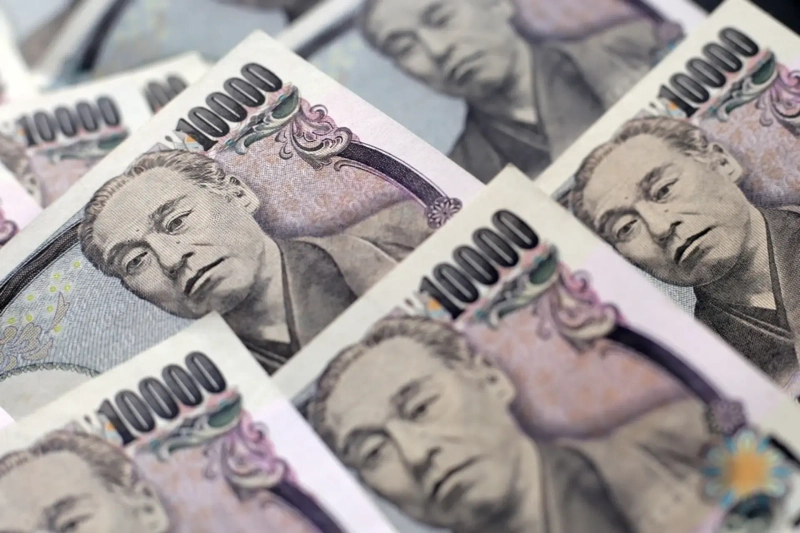
As concerns about a U.S. economic recession spread, both the won-dollar and won-yen exchange rates rose simultaneously (the value of the Korean won fell against both). In particular, the won-yen exchange rate rose to its highest level in about 1 year and 10 months, approaching 1000 won per 100 yen.
On the 11th, the won-dollar exchange rate (as of 3:30 PM) in the Seoul foreign exchange market closed weekly trading at 1458.20 won, up 5.90 won from the previous trading day. The exchange rate started at 1459.10 won, up 6.80 won, and even rose above 1460 won during the morning.
The won-yen cross rate, calculated as the ratio of the won-dollar exchange rate to the yen-dollar exchange rate, stood at 989.85 won per 100 yen at the same time. This was 5.81 won higher than the previous day's reference rate of 984.04 won at 3:30 PM, marking the highest level since May 12, 2023 (990.39 won). The yen-dollar exchange rate fell 0.18% (the yen's value rose) to 147.319 yen compared to the previous day, pushing up the won-yen exchange rate.
At one point in the morning, it soared to 995.90 won per 100 yen, raising concerns that it could break the 1000 won per 100 yen level, but it fell back in the afternoon. However, it was reported that retail transactions at bank counters were conducted at exchange rates over 1000 won per 100 yen.
In the foreign exchange market today, concerns about a U.S. economic recession were assessed as determining the exchange rate. The previous day, when U.S. President Donald Trump was asked in an interview whether he expected an economic recession this year, he responded, "There is a transition. Because what we are doing is a very big thing," triggering recession concerns.
While the dollar index, which shows the value of the dollar against six major currencies, recorded 103.751, down about 0.03% from the previous day, the preference for safe assets other than the dollar strengthened. The yen is considered the safest asset after the dollar. In contrast, the Korean won is classified as a risky asset. Analysis suggests that the won-dollar and won-yen exchange rates rose significantly as the strengthening of the safe-haven yen coincided with the weakening of the won.
Reporter Jinkyu Kang josep@hankyung.com

Son Min
sonmin@bloomingbit.ioHello I’m Son Min, a journalist at BloomingBit