

Cryptocurrency Market Heats Up with Trump's Second Term [Pacific's Future Finance]
Summary
- It was reported that deregulation and support for cryptocurrencies following the launch of Trump's second administration are attracting interest among investors.
- In Korea, discussions are underway regarding strengthening regulations on market manipulation in relation to the implementation of the Virtual Asset User Protection Act.
- It was reported that legal and institutional responses are needed for algorithmic trading activation and cryptocurrency liquidity supply issues.
"An Industry Creating Money and Jobs"...Focus on Trump's Moves
Will Algorithmic Trading Ignite Controversy Over Market Manipulation?
Need for Liquidity Provider System Emerges in Korea
The 'Law Street' column by Hankyung Law & Biz provides practical legal knowledge to businesses and individuals. Specialized attorneys cover legal issues in taxation, inheritance, labor, fair trade, M&A, finance, and more, along with analysis of major court decisions.
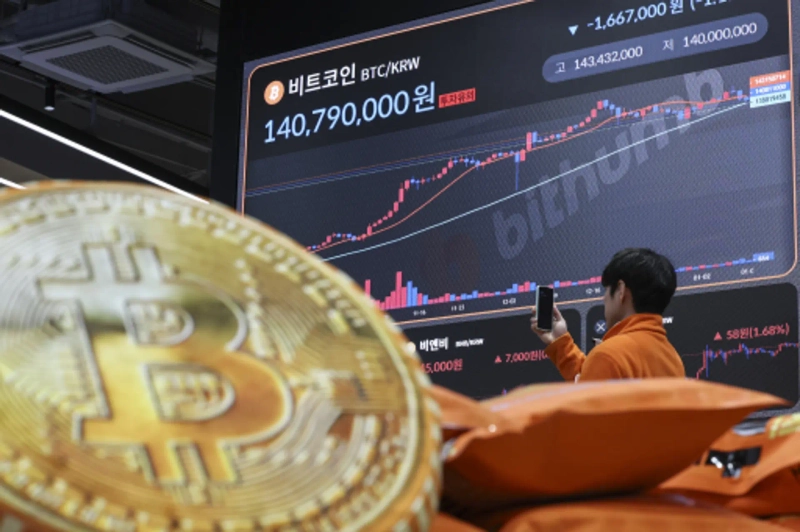
Interest in cryptocurrencies is intensifying with the launch of Trump's second administration. Throughout his campaign, President Trump promised deregulation and support for the cryptocurrency industry, and after taking office, he signed an executive order to strategically stockpile Bitcoin and other digital assets.
The cryptocurrency policy direction of President Trump, who was elected under the slogan 'America First,' can be summarized in two main points. First, recognizing its value as a new growth industry that creates jobs and wealth. Second, restructuring the industry with America at the center.
Korea Accelerates Cryptocurrency Institutionalization
In Korea, institutionalization is progressing, beginning with the implementation of the Virtual Asset User Protection Act in July 2024. This year, discussions are actively underway regarding allowing corporate investment in cryptocurrencies, introducing cryptocurrency spot ETFs, and permitting specialized investment corporations to trade digital assets. While the future cannot be predicted with certainty, the direction toward a more active cryptocurrency market seems clear.
On the other hand, since the implementation of the Virtual Asset User Protection Act, there have been frequent reports about the launch of various cryptocurrency investigation units and the detection of market manipulation violations. According to the Financial Supervisory Service, market manipulation accounted for the highest proportion of unfair trading practices reported in cryptocurrencies last year and through February this year.
![Cryptocurrency Market Heats Up with Trump's Second Term [Pacific's Future Finance]](https://media.bloomingbit.io/prod/news/ffac8988-96f3-4fcf-a8ad-c4cb70834ca9.webp?w=800)
Legal Gap with No Definition of 'Market Price'
Ironically, however, the Virtual Asset User Protection Act does not clearly define 'market price.' In the case of securities, the Capital Markets Act clearly defines market price as 'prices formed in securities markets or derivatives markets, prices formed when a multilateral trading intermediary company mediates the trading of listed stocks, and other prices prescribed by Presidential Decree.' It is questionable why the Virtual Asset User Protection Act, despite being legislated similarly to the market manipulation provisions of the Capital Markets Act, does not include regulations on market price itself.
Cryptocurrencies are traded simultaneously 24 hours a day on numerous domestic and international exchanges, and are actively traded in over-the-counter markets and decentralized exchanges (DEX). They are also traded in various units such as Korean won, dollars, Tether (USDT), and Bitcoin (BTC), with no limits on price fluctuations. Cryptocurrencies listed on both domestic and international exchanges show characteristics where prices on individual exchanges are linked with time lags.
Despite the fact that market prices can be formed reflecting these various characteristics, the Virtual Asset User Protection Act stipulates severe penalties—life imprisonment or imprisonment for at least 5 years—for cases where profits from market manipulation exceed 5 billion won, without defining market price. This is expected to become an issue in criminal cases in light of the clarity principle, a core element of the constitutional principle of nulla poena sine lege (no punishment without law).
Algorithmic Trading: The Dilemma Between Regulation and Industry Activation
Cryptocurrencies can be traded 24 hours a day with no limits on price fluctuations, making algorithmic trading methods using API programs and trading bots widespread. Algorithmic trading operates automatically according to desired conditions once they are input. In the future, with the development of artificial intelligence technology and quantum computers, we may enter an era where cryptocurrencies are automatically ordered and traded based on verbal instructions.
Such algorithmic trading provides liquidity to cryptocurrencies by enabling 24-hour trading that cannot be done manually. In fact, in Hong Kong, Singapore, and other places, industries utilizing liquidity providers (LP) or market makers (MM) using algorithmic trading methods are thriving.
However, under the current Virtual Asset User Protection Act, these liquidity provision activities risk being treated as market manipulation. To revitalize the cryptocurrency industry, it may be necessary to consider introducing a liquidity provision system.
Although the Virtual Asset User Protection Act is in effect, there are still many shortcomings, and many point out that it focuses more on punishment and regulation rather than industry development. With the launch of Trump's second administration, follow-up legislation on cryptocurrencies should be promptly enacted in Korea as well.
![Cryptocurrency Market Heats Up with Trump's Second Term [Pacific's Future Finance]](https://media.bloomingbit.io/prod/news/cdd252c5-330b-413a-8b25-f07bcfb144e6.webp?w=800)
Kim Dae-hyun, Attorney at Law Firm (Limited) Pacific | A graduate of the 45th class of the Judicial Research and Training Institute and the Korean National Police University, he has accumulated diverse police investigation experience over 20 years, serving as an investigator, investigation team leader, and investigation division chief, and has also been in charge of investigation planning at the National Police Agency and the National Investigation Headquarters. At the Financial Intelligence Unit (FIU) of the Financial Services Commission, he was responsible for analyzing criminal cases related to financial transactions and virtual assets. He personally authored the Investigation Report Writing Techniques (National Police Agency Investigation Bureau) used by frontline investigators, and has supervised the production of numerous police investigation manuals such as Suspect Interrogation Report Writing Techniques, Compulsory Investigation Document Writing Techniques, and Non-Prosecution Decision Writing Techniques, demonstrating expertise in both practical and theoretical aspects of police investigations. Since joining Pacific in 2023, he has provided legal advice on numerous cases involving cryptocurrencies and digital financial crimes.
Pacific's Future Financial Strategy Center (Center Director: Advisor Han Jun-sung) was launched in May 2024 and is building a team of elite experts in finance and IT fields such as virtual assets, electronic finance, regulatory response, and information protection, in line with the acceleration of digital innovation in the financial sector and the development of financial technology.

Uk Jin
wook9629@bloomingbit.ioH3LLO, World! I am Uk Jin.