

PiCK
[New York Stock Market Briefing] Nasdaq Surges 2.6% as Bargain Appeal Outweighs Weakened Consumer Sentiment
Summary
- The three major New York stock indices rebounded sharply together, attracting investor interest due to their bargain appeal.
- Although the US Consumer Sentiment Index recorded its lowest level since 2022, investors focused more on attractive stock price levels than on this negative indicator.
- The technology sector rose more than 3%, with major tech stocks like Nvidia and Tesla showing strength and leading the market.
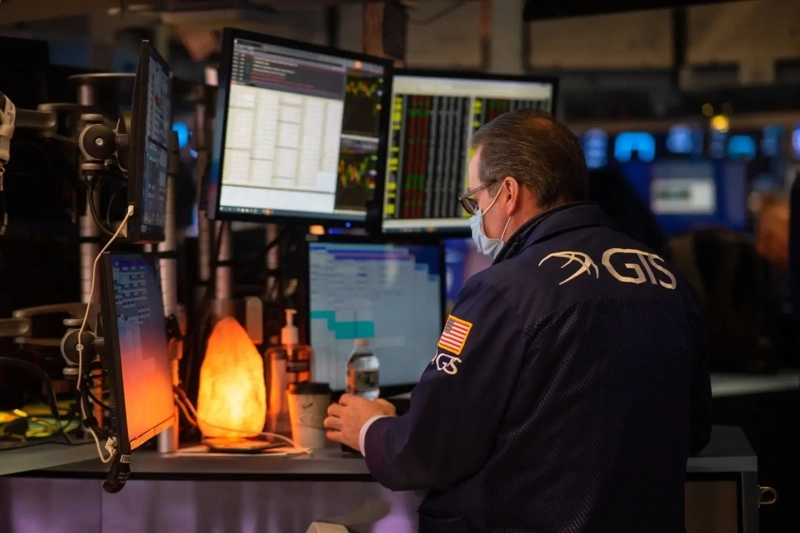
The three major New York stock indices rebounded sharply together as buying interest emerged at market lows.
On the 14th (Eastern US time), the Dow Jones Industrial Average closed at 41,488.19, up 674.62 points (1.65%) from the previous session on the New York Stock Exchange.
The Standard & Poor's (S&P) 500 index finished at 5,638.94, up 117.42 points (2.13%), while the Nasdaq Composite jumped 451.08 points (2.61%) to close at 17,754.09.
This marks the first time since the 7th that all three major US stock indices rose together. The Nasdaq and S&P 500 indices also rose on the 12th, but the Dow remained slightly weak.
The economic indicators released today were not positive news. American sentiment toward consumption, which accounts for two-thirds of the US economy, has once again significantly declined.
According to the University of Michigan, the preliminary March Consumer Sentiment Index was recorded at 57.9, the lowest since November 2022. Compared to February's final reading of 64.7, it decreased by 6.8 points (10.5%). Year-over-year, it plunged 27.1%. It also fell short of market expectations of 63.1.
US consumer sentiment has been declining sharply this year. After dropping from 71.7 in January to 64.7 in February, it fell further to 57.9 in March. In just two months, it has tumbled by 13.8 points.
The February consumer sentiment index was a factor that triggered this recent market plunge. However, today investors appeared to focus more on bargain opportunities than on weakened consumer sentiment.
The S&P 500 entered correction territory yesterday after falling more than 10% from its February peak. The Nasdaq had declined more than 12% from its December high. This highlighted the appeal of stocks at these lower prices.
The fact that US President Donald Trump remained quiet today was interpreted as 'positive news' for the market. Trump, who had been erratic about tariff policies since taking office, made no particular mention of tariffs today.
Although US Commerce Secretary Howard Lutnick emphasized in a Fox News interview that reciprocal tariffs would be imposed on all imported cars from April 2, the market judged this as already priced in.
Looking at sectors, all industries rose. Technology gained more than 3%, while consumer discretionary, energy, financials, and communication services recorded increases of over 2%. Only healthcare and consumer staples showed gains of more than 1%.
All of the 'Magnificent Seven (M7)' mega-tech companies showed strength. Nvidia led the market with a 5.27% jump, while Microsoft, Amazon, Apple, Meta, and Alphabet recorded gains of around 2%.
Nvidia saw buying interest surge after Foxconn, the Taiwanese contract manufacturer that produces Apple iPhones and Nvidia AI servers, predicted that AI-related demand would double this quarter.
Tesla rose 3.86%, seeking recovery from what had been a particularly steep decline among the M7. The Philadelphia Semiconductor Index also surged 3.27%.
All but Marvel Technology among the 30 stocks comprising the index showed strength.
Arm rose 5.26%, Micron Technology jumped 6.23%, while Broadcom, TSMC, ASML, and AMD also gained around 2%.
Shares of DocuSign, the US digital document management service provider, jumped 15% after reporting better-than-expected results.
Rubrik, a cloud data security company, saw its stock surge more than 26% after reporting a smaller-than-expected quarterly loss and providing a fiscal 2026 outlook that exceeded expectations.
According to the CME FedWatch Tool, the probability of a 50bp rate cut in the federal funds rate by the end of June fell to 20% in the federal funds futures market. This is down from 24.5% at yesterday's close. Meanwhile, the probability of no change rose to 22.5% from yesterday's 18.8%.
The Chicago Board Options Exchange (CBOE) Volatility Index (VIX) recorded 21.77, down 2.89 points (11.71%) from the previous session.
Choi Su-jin, Hankyung.com reporter naive@hankyung.com

Doohyun Hwang
cow5361@bloomingbit.ioKEEP CALM AND HODL🍀