

PiCK
US Reciprocal Tariffs Officially Implemented... 25% on Korea, 84% on China
Summary
- President Trump's reciprocal tariffs took effect on the 9th, applying 25% to Korea and increasing to 84% for China.
- Most of the US's major trading partners are generally attempting to negotiate, but China has announced strong retaliation, indicating the possibility of an intensified trade war.
- Canada and Mexico, which have free trade agreements with the US, are excluded from the reciprocal tariffs.
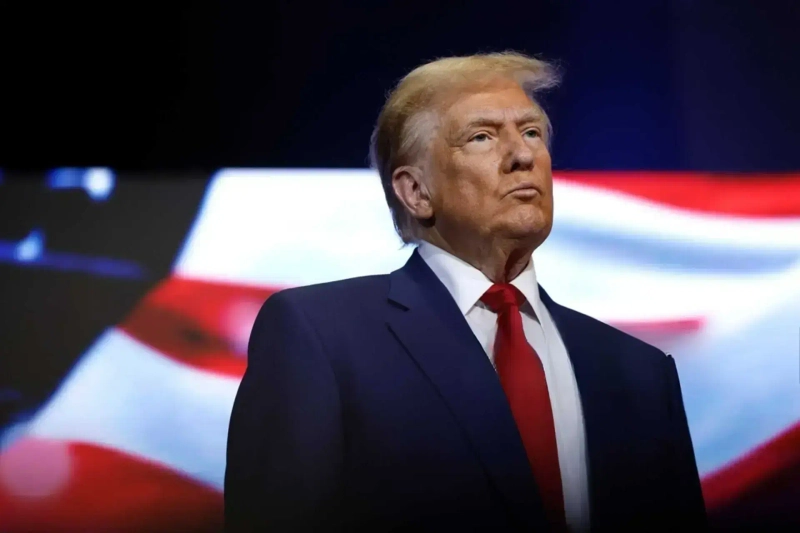
US President Donald Trump's reciprocal tariffs came into effect on the 9th (local time).
The 'tariff bomb' targeting major US trading partners such as Korea, China, Japan, and the European Union (EU) has become a reality.
Currently, most countries are attempting to negotiate with the US regarding its unilateral actions. Previously, President Trump stated in a speech, "Most countries are negotiating tariffs with me through dialogue." However, the outlook remains uncertain as the demands and positions of the US and its trading partners are at odds.
In China, a representative adversary of the US, there is speculation that a global trade war could intensify as China has announced its intention to take strong retaliatory measures.
On the 5th, the US government began imposing country-specific reciprocal tariffs ranging from a minimum of 11% to a maximum of 50% on over 80 countries, including Korea, starting at 12:01 AM.
As a result, all goods exported from Korea to the US are now subject to a 25% tariff. Additionally, countries classified by the US government as 'worst offenders' such as ▲ Cambodia (49%) ▲ Vietnam (46%) ▲ Thailand (36%) ▲ Taiwan (32%) ▲ Japan (24%) ▲ EU (20%) are also subject to high reciprocal tariffs above the basic rate.
The country with the highest tariff is China. The additional tariffs on China, introduced after the Trump administration took office, have risen to 104%.
When President Trump first announced the reciprocal tariffs on the 2nd, China's country-specific reciprocal tariff was 34%, but as China took corresponding retaliatory measures, President Trump decided to add 50 percentage points to the tariff from that day. President Trump signed an executive order the previous day to increase the reciprocal tariff on China from 34% to 84%.
China was already subject to a 20% tariff due to non-cooperation in blocking the influx of fentanyl into the US after the inauguration of the second Trump administration, resulting in a final tariff rate of 104%.
However, Canada and Mexico, which have free trade agreements with the US, are excluded from the reciprocal tariffs.
Previously, President Trump imposed a 25% tariff on Canada and Mexico due to inadequate responses to illegal immigration and drug smuggling issues, but still applies zero tariffs to goods covered by the United States-Mexico-Canada Agreement (USMCA).

Uk Jin
wook9629@bloomingbit.ioH3LLO, World! I am Uk Jin.