

Safe Assets Like US Long-term Bonds Also Sold Off…Biggest Drop Since Pandemic
Summary
- It was reported that even in safe assets like long-term US bonds, selling occurred, causing yields to surge.
- It was stated that the analysis suggesting that China and others have started selling US bonds is accelerating the outflow of foreign investment.
- JP Morgan estimated that there is a 60% chance that the global economy will fall into recession by the end of this year.
It is estimated that foreign investors, including China, have started selling US bonds
Buying rush towards gold, Swiss franc, and Japanese yen
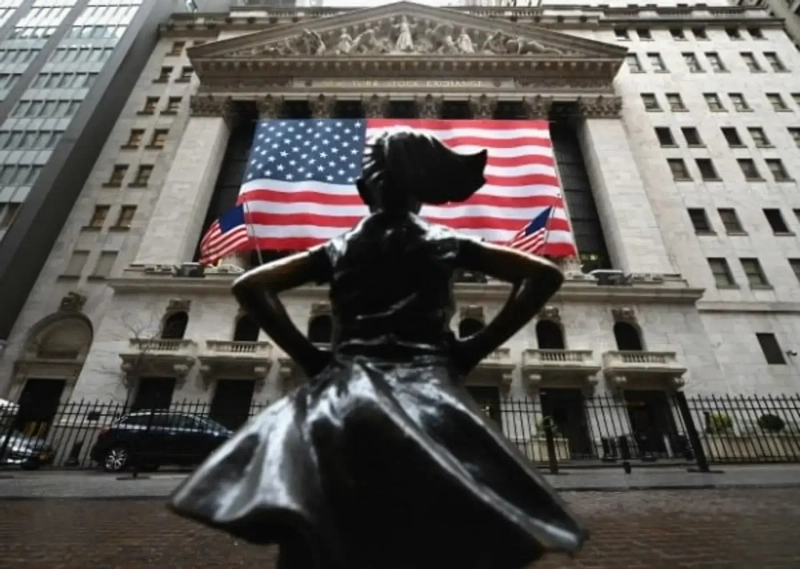
Shortly after midnight on the 9th local time in the US, Trump's reciprocal tariffs took effect, causing global stock markets to fall simultaneously. Notably, even in long-term US bonds, considered safe assets, selling occurred, causing bond yields to surge rapidly.
According to foreign media on the 9th, while selling continued in global stock markets, selling also occurred in long-term US bonds, considered the safest assets alongside gold. The 10-year US bond yield surged by about 13 basis points (1bp=0.01%) to 4.40%. It has risen more than 45bp just this week. Bond prices and yields move in opposite directions.
The largest sell-off of US bonds since the 2020 COVID-19 pandemic is analyzed as foreign investment leaving the US market. Some analysts have also mentioned the possibility that Chinese investment, which has held a large amount of US bonds, might sell them off. While US bonds and the dollar fell, investors flocked to gold, Swiss francs, and Japanese yen.
The indicator showing the inherent volatility of US Treasury bonds soared to the most extreme level since October 2023. Exchange rate volatility reached its highest in two years, and the Chicago Board Options Exchange (CBOE) Volatility Index (VIX), which indicates stock volatility, hit its highest in eight months.
Following the failed rebound attempt the previous day, the New York stock market fell again, and Asian and European stock markets also fell simultaneously.
The Nikkei index of the Tokyo stock market in Japan fell by 3.9% from the previous day, and Korea's KOSPI index fell by 1.7%. The Hang Seng index closed on an upward trend as the Chinese government announced strong market support.
Europe's Stoxx 600 index also fell by 3.3% at 9:30 am London time.
US stock index futures, which failed to rebound and closed lower the previous day, are showing a downward trend before opening today. Dow Jones Industrial Average futures and S&P 500 futures fell by 0.4% and 0.3%, respectively. Nasdaq 100 futures are fluctuating at similar levels to the previous day.
The dollar index fell for two consecutive days, showing a downward trend against the currencies of the major 10 countries (G10). Investors flocked to the Japanese yen and Swiss franc. The dollar traded at 145 yen, down 0.9% against the Japanese yen, and at 0.843 Swiss francs, down 0.5% against the Swiss franc. The euro also rose by about 1%, surpassing 1.10 dollars.
International oil prices fell by up to 4% at one point due to concerns about the global energy demand outlook. Brent crude futures fell by 2.4% to 61.30 dollars per barrel. West Texas Intermediate (WTI) fell by 3.3% to 57.59 dollars per barrel. Gold recovered its upward trend, trading at 3,005 dollars per ounce, up 2%.
Some investors speculated that major foreign exchange reserve countries, including China, might reassess their stance on US bonds due to the impact of Trump's tariff policy. Kenichiro Kitamura, head of investment planning and research at Meiji Yasuda in Japan, said, "China may have started selling US bonds in retaliation for tariffs."
Some major investors are raising concerns that there could be problems in the financial system. Ray Dalio, founder of Bridgewater Associates, warned that "a once-in-a-lifetime collapse in currency, politics, and geopolitical order could occur."
President Trump said the previous day that he would soon announce "very large tariffs" on pharmaceuticals. He also tripled the previously announced tariff rates on low-cost package imports from China to the US, such as Ali and Temu, via international mail.
JP Morgan estimated that there is a 60% chance that the global economy will fall into recession by the end of this year.
Guest reporter Jung-A Kim kja@hankyung.com

Korea Economic Daily
hankyung@bloomingbit.ioThe Korea Economic Daily Global is a digital media where latest news on Korean companies, industries, and financial markets.