

Amid China-EU Retaliatory Tariff Tensions, US Stock Market Starts with Unsteady Rebound
Summary
- The US stock market started with an unsteady rebound as China and the EU announced retaliatory tariffs against US tariffs.
- The unusual surge in long-term US Treasury yields is suspected to be driven by Chinese selling, increasing volatility in the bond market.
- Amid tariff concerns, the S&P 500 and Nasdaq Composite indices have fallen by more than 10%, demonstrating the market's instability.
Long-term Treasury Yields Surge, Suspected to be Driven by Chinese Selling
China Imposes 84% Retaliatory Tariff, EU Approves First Retaliatory Tariff
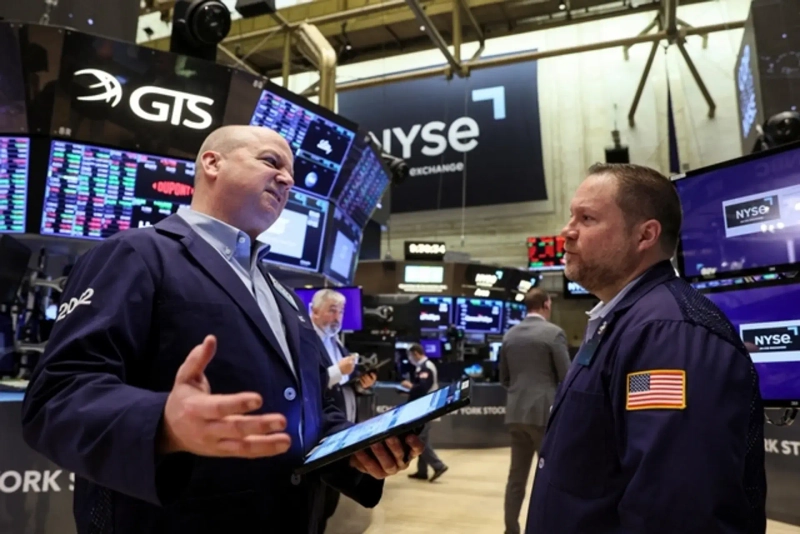
Shortly after the announcement of retaliatory tariffs by China and the European Union (EU) against Trump's tariffs, the US stock market started with an unsteady rebound on the 9th (local time).
At 10:15 AM Eastern Standard Time, the S&P 500 rose by 0.4%. The Dow Jones Industrial Average is fluctuating at levels similar to the previous day. The tech-heavy Nasdaq Composite Index increased by 1.3%. Both the S&P 500 and Nasdaq Composite started with gains of over 1% right after the opening but showed volatility as the gains narrowed.
Long-term US Treasuries continued to decline due to unusual selling pressure, which the market suspects is driven by China.
Early in the morning, the 30-year Treasury yield surged by 14 basis points (1bp=0.01%) and continued to decline for three consecutive days, but reduced its decline around 9 AM Eastern Standard Time. It still recorded an increase of 11bp to 4.83%. Bond yields and prices move in opposite directions. The 10-year Treasury yield surged by 12bp on Wednesday, recording 4.38%.
Nvidia is trading up 3.6% at $99, having risen 4%, and Tesla recorded a 4% increase to $230. Apple, which had been significantly impacted due to concerns over tariffs on China, also rebounded by 2.6%.
China announced that it would impose an 84% tariff on US goods starting from the 10th. This is in response to the US imposing a 104% tariff on Chinese imports right after midnight that day. The EU also approved the implementation of a 25% retaliatory tariff on US products starting April 15.
Canada reaffirmed its plan to impose a 25% retaliatory tariff on US vehicles the previous day. This includes not only vehicles that do not comply with the United States-Mexico-Canada Agreement but also parts that are not Canadian or Mexican in origin among finished vehicles imported from the US to Canada.
CNBC pointed out that some stock market participants might have been encouraged by Treasury Secretary Scott Besant's announcement that he would take a leading role in tariff negotiations. Wall Street prefers Besant's role over White House trade advisor Peter Navarro, known as the architect of tariffs, or the more hardline Commerce Secretary Howard Lutnick.
Carol Schleif, Chief Market Strategist at BMO Private Wealth, pointed out, "The market shows that there are buyers waiting to hear even a little bit of constructive news related to tariffs." However, she mentioned that there is no market-related strategy in the current situation where President Trump has created a completely new game.
Due to concerns over tariff imposition, the Dow Jones has fallen by more than 4,500 points over the past four trading days. The S&P 500 index has dropped by more than 12%, and the Nasdaq Composite index has fallen by more than 13%.
Guest reporter Kim Jung-ah kja@hankyung.com

Korea Economic Daily
hankyung@bloomingbit.ioThe Korea Economic Daily Global is a digital media where latest news on Korean companies, industries, and financial markets.