

Summary
- President Trump announced a 90-day suspension of reciprocal tariffs, applying a 10% base tariff to all countries.
- For China, he announced additional measures on retaliatory tariffs, significantly increasing them to 125%.
- The news of the tariff suspension led to a surge in stock markets in Korea, Japan, and other countries, showing a positive reaction.
"90-Day Tariff Suspension Announced"
First Tariff Retraction Since Inauguration
China's Tariff Raised to 125%
10% Tariff Applied to Other Countries
Stock Markets in Korea, Japan, Taiwan Surge
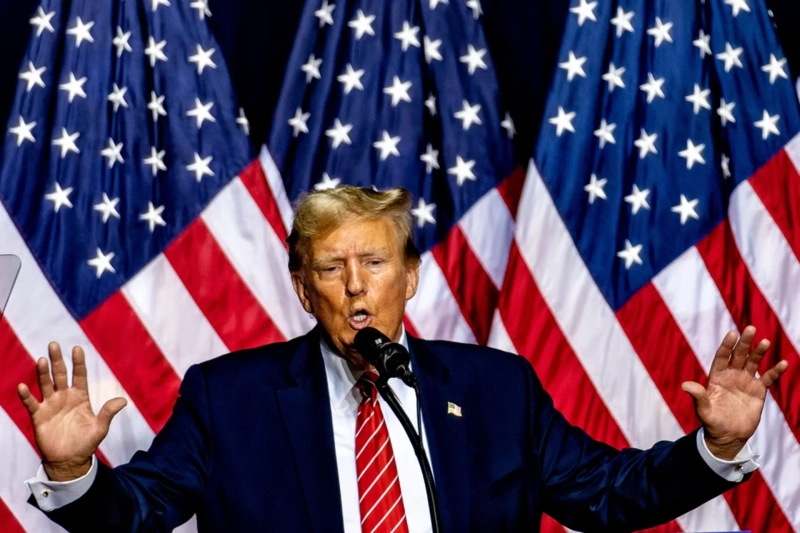
On the 9th (local time), U.S. President Donald Trump announced a 90-day suspension of reciprocal tariffs imposed on countries worldwide, applying only a 10% base tariff during this period. However, he stated that the additional tariff rate on China, which imposed retaliatory tariffs on the U.S., would be increased from 104% to 125%. Observers suggest that the tariff war is ultimately targeting China.
President Trump announced on social media that "since China is not showing respect for the global market, the tariff rate on China will be immediately raised to 125%." He added, "For other countries that have not retaliated against the U.S., the application of reciprocal tariffs will be temporarily suspended for 90 days, and a 10% tariff rate will be immediately applied during this period." Consequently, Korea's reciprocal tariff has been lowered from 25% to 10% for the time being. This suspension, announced 13 hours after the reciprocal tariffs took effect, marks the first halt in President Trump's ongoing 'tariff drive' since his inauguration in January.
President Trump explained that the reason for suspending reciprocal tariffs on countries other than China was that "more than 75 countries have contacted U.S. representatives to negotiate topics such as trade barriers, tariffs, and currency manipulation." The suspension was made to facilitate negotiations. U.S. Treasury Secretary Scott Besant also stated, "It takes time to find tailored solutions with each country that has requested negotiations," adding that "President Trump wanted to be directly involved in the negotiations, which is why the suspension was made." He also mentioned that "it was President Trump's strategy from the beginning."
However, market analysts suggest that the tariff suspension decision was influenced by opposition from Trump's supporters after the stock market plummeted following the implementation of reciprocal tariffs, along with a sharp drop in U.S. Treasury prices (a surge in Treasury yields).
The unexpected tariff suspension led to the Nasdaq index jumping over 12%, marking the highest increase in 24 years. The Dow Jones and S&P 500 indices surged by more than 7% and 9%, respectively. In the Asian markets on the 10th, the Nikkei 225 index rose by 8.36%, Taiwan's Taiex index by 9.25%, and Korea's KOSPI index by 6.60%. The Shanghai index's rise was limited to 1% due to the intensifying U.S.-China tariff war. The won-dollar exchange rate closed the weekly trading at 1,459.90 won, down 12.10 won (as of 3:30 PM).
Washington Correspondent: Sang-eun Lee selee@hankyung.com

Korea Economic Daily
hankyung@bloomingbit.ioThe Korea Economic Daily Global is a digital media where latest news on Korean companies, industries, and financial markets.