

PiCK
Smartphone and Semiconductor Tariffs 'Uncertain'... Apple and Samsung on Edge
Summary
- The change in the U.S. electronics tariff policy could be a game-changing scenario for tech investors.
- President Donald Trump's denial of tariff exemptions is causing uncertainty in the supply chain and increasing confusion for companies.
- If Apple relocates its production base to the U.S., the iPhone price could rise significantly, and Korean companies like Samsung Electronics may also face pressure to relocate production facilities.
Trump: "Smartphones Not Exempt from Tariffs"
'Semiconductor Tariffs' Also Applied to Electronics
Rutnick: "Measures for Manufacturing in the U.S."
"It's a dream scenario for tech investors." Dan Ives, an analyst in charge of global technology research at Wedbush Securities, said this shortly after it was reported that the Trump administration would exempt mutual tariffs on electronics such as smartphones and computers, calling it a "game-changing scenario" in the imposition of tariffs on China.
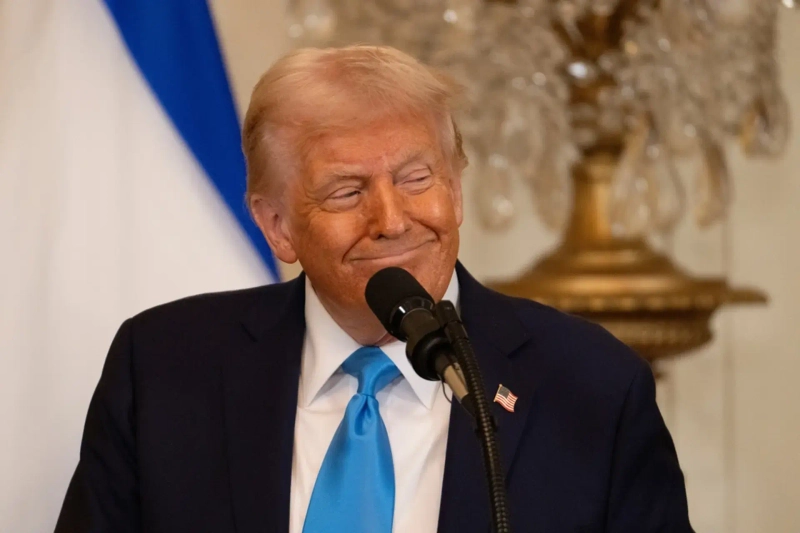
However, he soon had to deliver a contradictory message. This was because U.S. President Donald Trump stated on Truth Social, "There has never been an announcement of an exemption for (electronics) tariffs. It's just moving to another tariff category."
On the 13th (local time), Ives pointed out on his X (formerly Twitter) account, "The constant news pouring out of the White House has thrown the industry and investors into extreme confusion, causing tremendous uncertainty and chaos for companies trying to plan supply chains, inventory, and demand."
Previously, on the 11th (local time), President Trump released a 'memorandum' that included smartphones, laptops, computer processors, memory chips, and flat displays as tariff-exempt items. On the same day, the U.S. Customs and Border Protection (CBP) also announced a list specifying the inclusion of these items in a detailed document.
Subsequently, there were observations among related industries and local media that major companies such as Samsung Electronics, Apple, NVIDIA, Microsoft, and Google could breathe a sigh of relief.
Apple, known to produce about 80% of its iPhones in China, was analyzed to have avoided the worst-case scenario of facing a tariff bomb totaling 145%. Samsung Electronics was also relieved as it was producing most of its smartphones for North America in Vietnam, which was subject to a 10% tariff for 90 days.
Furthermore, it was expected to alleviate concerns about a slowdown in demand for general-purpose memory. If electronic product prices soar due to the tariff bomb, sales would decrease, inevitably shrinking demand for DRAM and NAND.
Local media also welcomed the news, saying, "In a situation where many tech products are produced in China, this broad tariff exemption news is good news for American consumers."
However, U.S. Secretary of Commerce Howard Rutnick poured cold water on the situation. In a media interview, Secretary Rutnick mentioned, "We will announce semiconductor and pharmaceutical tariffs within a month or two," and "Items exempt from mutual tariffs, such as smartphones, computers, flat TV displays, and semiconductor-based storage devices, will be included in the semiconductor tariff category in the future."
President Trump also directly stated on Truth Social that "No one can escape responsibility for an unfair trade balance," clearly indicating that it was not an exemption for electronics tariffs, further increasing the confusion.
President Trump said he would provide a specific answer regarding semiconductor tariffs on Monday, the 14th, local time.
The Trump administration reiterated its intention to pressure the relocation of production facilities to the U.S. through 'semiconductor tariffs' that include major electronics. Secretary Rutnick also said, "This tariff will be a special measure to incentivize manufacturing in the U.S."
If Apple relocates its smartphone production base to the U.S., the price of an iPhone could approach $3,500, according to Ives' forecast. Needham analyst Roma Martin also criticized that Apple's move to the U.S. is "not a realistic option."
Even Apple founder Steve Jobs was skeptical about producing iPhones in the U.S. during his lifetime due to a lack of workforce. Ives recently warned, "Even if only 10% of Apple's supply chain is moved from Asia to the U.S., it will take three years and $30 billion (about 43 trillion won) and cause significant disruption."
Korean companies are no exception. Manufacturers of electronics such as smartphones and home appliances are inevitably exposed to strong pressure to relocate production bases to the U.S. While Samsung Electronics stated it would "respond flexibly," LG Electronics is known to be expanding a refrigerator production line at its Tennessee plant in the U.S., where it used to produce washing machines and dryers.
Kim Dae-young, Hankyung.com reporter kdy@hankyung.com

Korea Economic Daily
hankyung@bloomingbit.ioThe Korea Economic Daily Global is a digital media where latest news on Korean companies, industries, and financial markets.