

PiCK
The Won-Dollar Exchange Rate's High-Flying Streak Halts... Foreign Exchange Authorities "Now We Should Worry About a Sharp Decline"
Summary
- The won-dollar exchange rate has fallen to the 1300 won range for the first time in about 5 months, and it is analyzed that the strengthening of Asian currencies had an impact.
- The decline in the exchange rate was mainly due to expectations for US-China trade negotiations and China's monetary easing policies.
- Market experts conveyed that if the exchange rate falls below 1400 won, there is a possibility of further decline, and attention should be paid to the increase in foreign exchange market volatility.
Won-Dollar Exchange Rate Falls to 1300 Won Range for the First Time in 5 Months
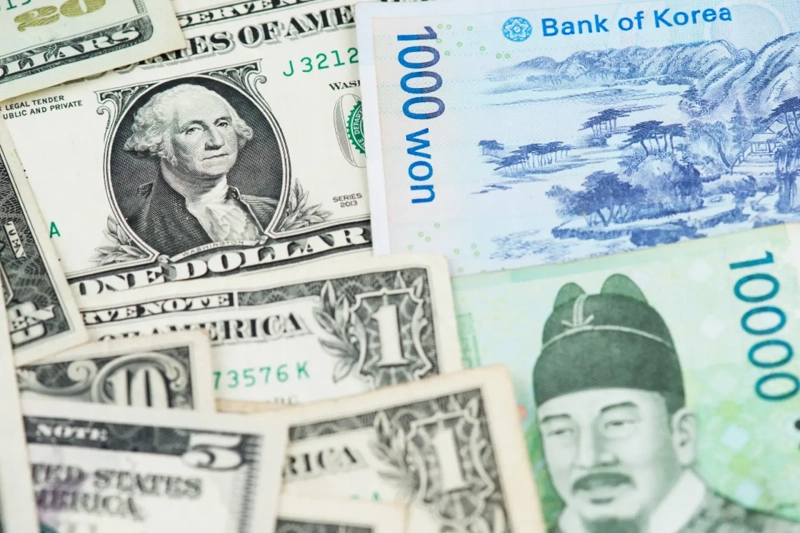
The won-dollar exchange rate has fallen to the 1300 won range for the first time in about 5 months. Analysts attribute this to expectations related to US-China trade negotiations and the strengthening of Asian currencies during the holiday period.
On the 7th at the Seoul Foreign Exchange Market, the won-dollar exchange rate (as of 3:30 PM) ended weekly trading at 1398 won, down 7 won and 30 jeon. This is the first time the exchange rate has been in the 1300 won range on a weekly closing basis since November 29 last year (1394 won and 70 jeon). Asian currencies such as the yuan and yen, which showed simultaneous strength earlier this week, turned weak on this day. As of 3:30 PM, the won-yen exchange rate rose by 9 won and 70 jeon to 978 won per 100 yen compared to the previous trading day.
1300 Won Range for the First Time in 5 Months... Concerns Over 'Asian Plaza Accord' Are Excessive
The won-dollar exchange rate started with a sharp decline due to the simultaneous strengthening of Asian currencies during the holiday period. It opened at 1380 won, down 25 won and 30 jeon, and at one point in the early session, it fell to 1379 won and 70 jeon. This is the lowest level in 6 months on an intraday basis since November 6 last year (1374 won), just before Donald Trump was elected President of the United States.
It is interpreted that the strengthening of major Asian currencies such as the yuan, Taiwan dollar, and yen during the holiday period was influenced by the observation that the Trump administration would pressure for currency appreciation. On the 5th, in the offshore non-deliverable forward (NDF) market, the 1-month won-dollar rate once fell to 1357 won and 81 jeon. The expectation that the US and China would hold their first official talks in Switzerland later this week was also analyzed as a factor that pushed up the exchange rate in the early session.
However, the exchange rate reversed direction around 10 AM and steadily rose until the weekly market close, recovering a significant portion of the decline. Around 1:40 PM, it even surpassed 1400 won. The difference between the intraday low and high (1402 won and 50 jeon) reached 22 won and 80 jeon.
The change in the exchange rate trend back to a weak won is interpreted as the impact of China's monetary easing policies, such as lowering the reserve requirement ratio. Hongcheol Moon, a researcher at DB Securities, explained, "The People's Bank of China's simultaneous reduction of the reserve requirement ratio and the benchmark interest rate today is not only for domestic demand stimulation but also to maintain a weak yuan currency policy," adding, "The reversal in the won-dollar exchange rate direction is due to the weak yuan." The yuan-dollar exchange rate rose to 7.2328 yuan at one point during the session.
The perception that concerns over an Asian version of the Plaza Accord, where the US would demand currency appreciation from major Asian countries, are excessive also limited the won's strength.
Foreign exchange authorities and market experts said, "If the outlook for a weak dollar spreads, the won-dollar exchange rate, which has shown an upward trend for years, could turn to a downward trend," adding, "Volatility in the foreign exchange market could increase for the time being." Kyungwon Min, a researcher at Woori Bank, stated, "If the exchange rate falls below the 1400 won level, we are considering further declines," maintaining the existing forecast that it could drop to 1340 won in early Q3." Researcher Moon predicted, "The point at which the won-dollar exchange rate turns to a downward trend was initially expected to be around the end of the year, but that point will be significantly advanced."
A foreign exchange authority official said, "Until now, we were only worried about the won jumping up, but now we need to watch the downward pressure as well," adding, "It is necessary to look at the volatility in both directions."
Dongwook Jwa/Jungmin Nam reporters leftking@hankyung.com

Korea Economic Daily
hankyung@bloomingbit.ioThe Korea Economic Daily Global is a digital media where latest news on Korean companies, industries, and financial markets.