

Trump Stands Firm Again... No Intention to Lower Tariffs First [Lee Sang-eun's Washington Now]
Summary
- It was reported that expectations for U.S.-China negotiations are rising as the U.S. and China are set to hold talks in Switzerland.
- President Trump maintains a high-pressure stance, stating he has no intention to lower tariffs first.
- As both countries meet in Switzerland, there is a possibility that the ultra-high tariffs may be eased.
With the U.S. and China set to meet in Switzerland this weekend amid their 'chicken game' over tariffs, expectations for U.S.-China negotiations are rising. Although a big deal is unlikely to be reached just by meeting a few times, the market expects that the current situation, where both sides are only maintaining their pride and running parallel, will improve.
The U.S.-China talks will be held in Geneva, Switzerland, for two days starting on the 10th. Representing the U.S. will be Treasury Secretary Scott Besant and USTR Representative Jamison Greer, while Vice Premier He Lifeng of the Chinese State Council will represent China.
The meeting is taking place in a third location, not in the U.S. or China, and without direct involvement from President Xi Jinping or President Trump, but rather between the economic leaders of each country. This is not typically President Trump's style, as he prefers summits and has repeatedly demanded phone calls with President Xi. However, it seems he has agreed to this approach to give face to China and open the door for negotiations.
The tone of the announcements from both countries is slightly different. The U.S. Treasury and USTR statements did not detail tariff negotiations, only mentioning a meeting with China without specifying who or what would be discussed. In contrast, the Chinese Ministry of Commerce showed a very aggressive stance yesterday, stating, "The U.S. hopes to meet as it voluntarily provides information to China," and "If negotiations are conducted under the guise of threats and intimidation, China will never comply."
While both the U.S. and China are outwardly maintaining their pride, it is not easy to endlessly endure with tariffs at levels like 125% or 145%. U.S. companies are already complaining, and consumer dissatisfaction is growing with the expectation of rising prices. If China's export routes are completely cut off, its already weakened economy will suffer a significant blow. This is why many believe there have been behind-the-scenes contacts, even if not openly acknowledged.
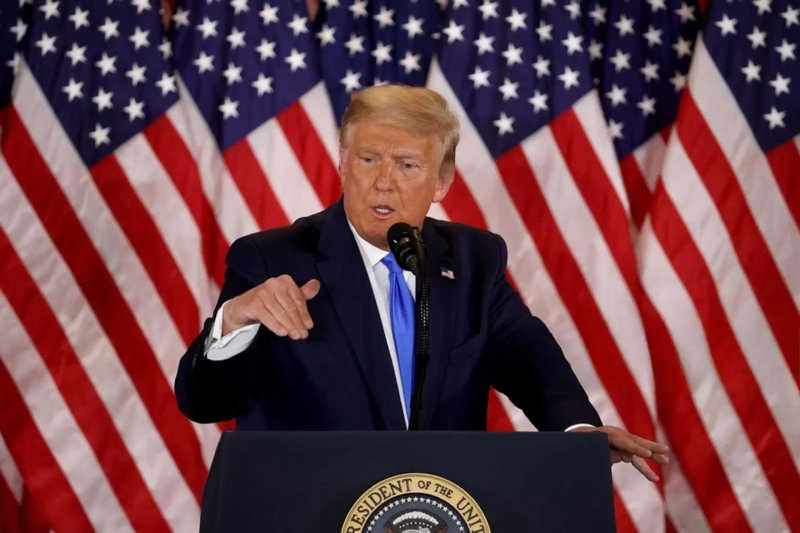
However, President Trump continues to maintain a high-pressure stance outwardly. Today, when asked at the swearing-in ceremony of the new U.S. ambassador to China whether he would agree to lower the 145% tariff to bring China to the negotiating table, he firmly said, "No."
When asked what he hopes to achieve from the Swiss negotiations, he stated, "We need to stop the influx of fentanyl," adding that "President Xi understood that and there was a previous agreement." He reiterated his stance of not lowering tariffs first. He also responded to China's claim that the U.S. proposed the Swiss meeting by saying, "They might want to check the records again," asserting that the U.S. did not propose it first.
The level of negotiation the U.S. desires has increased compared to the past, and China's size has grown, making an agreement more challenging. However, as both sides are meeting in Switzerland, there is hope that if appropriate coordination on the method and timing is achieved, the ultra-high tariffs exceeding 100% will be reduced to a more realistic level. This could buy companies some time.
Washington Correspondent Lee Sang-eun selee@hankyung.com

Korea Economic Daily
hankyung@bloomingbit.ioThe Korea Economic Daily Global is a digital media where latest news on Korean companies, industries, and financial markets.