

Fed Holds Rates Steady Despite Trump's Pressure... Powell: "Inflation and Unemployment Risks Increasing"
Summary
- The U.S. Federal Reserve (Fed) announced at the May FOMC that it is holding the benchmark interest rate steady at 4.25~4.5% to prepare for inflation and stagflation.
- President Donald Trump pressured for a rate cut due to concerns over economic slowdown from tariff policies, but the Fed did not respond to this pressure.
- Market participants expect that rate cuts will resume after July due to the long-term effects of tariffs.
Decision to hold rates at May FOMC held on the 7th (local time)
Trump pressured for cuts amid tariff-induced slowdown concerns
Fed maintains rates to counter inflation
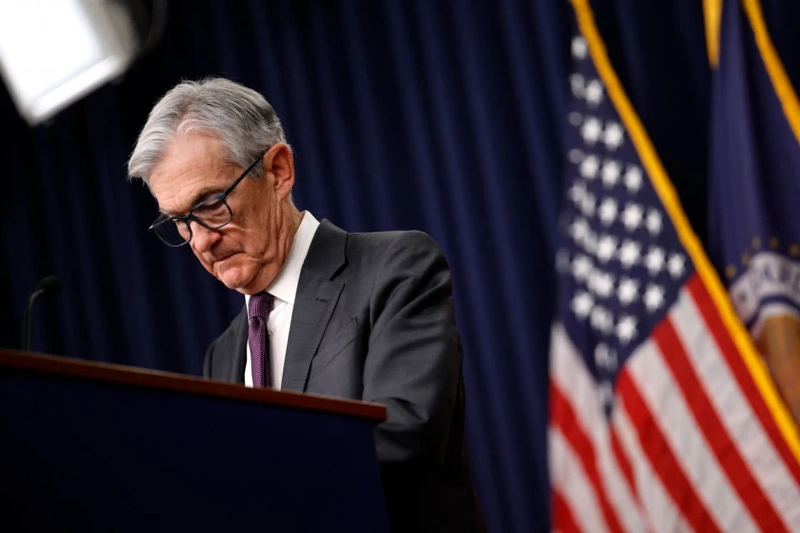
Amid growing economic uncertainty due to the Trump administration's tariff policies, the U.S. Federal Reserve (Fed) held its May Federal Open Market Committee (FOMC) meeting on the 7th (local time) and decided to keep the benchmark interest rate steady at 4.25~4.5% per annum. Despite U.S. President Donald Trump's pressure to cut rates, the Fed, led by Chairman Powell, appears to be preparing for stagflation.
In a statement announcing the decision to hold rates, the Fed diagnosed that "uncertainty about the economic outlook has increased further" and "the risks of higher unemployment and inflation have grown." With this, the Fed has held three FOMC meetings since President Trump's inauguration in January and has kept the benchmark interest rate steady each time.
Notably, this FOMC was the first rate decision since President Trump's reciprocal tariffs took effect last month. Although President Trump has pressured for a rate cut due to concerns over rising prices and economic slowdown from tariff policies, the Fed did not respond.
The Fed is aware of the growing concerns about economic slowdown but decided to hold rates to also prepare for the possibility of inflation. Given the high uncertainty, they intend to watch more cautiously. At a press conference held immediately after the FOMC, Fed Chairman Jerome Powell stated, "Considering the scale and scope of the tariffs, the risks of rising inflation and unemployment have certainly increased," adding, "In my intuition, the uncertainty about the future path of the economy is extremely high, and downside risks have increased."
With the Fed's decision, the interest rate gap between South Korea (2.75% per annum) and the U.S. remains at 1.75 percentage points at the upper end. Market participants expect that the Fed's resumption of rate cuts will not occur until at least July, considering the uncertainty of the long-term effects of tariffs.
New York = Shin-Young Park, Correspondent nyusos@hankyung.com

Korea Economic Daily
hankyung@bloomingbit.ioThe Korea Economic Daily Global is a digital media where latest news on Korean companies, industries, and financial markets.