

PiCK
Clash Over Stablecoins Between Lee Jae-myung and Lee Jun-seok... Debate Intensifies with Democratic Party's Involvement
Summary
- Candidate Lee Jae-myung emphasized the need for won-based stablecoins, while candidate Lee Jun-seok criticized it as irresponsible, citing the Terra incident.
- Democratic Party lawmakers pointed out that Lee Jun-seok's argument is an overgeneralization, emphasizing the need for introducing structurally different collateral-based stablecoins.
- Industry experts conveyed that the possibility of a recurrence like the Terra incident has decreased, and the introduction of won-based stablecoins is necessary for Korea's digital economic innovation.
Lee Jae-myung's Statement on the Need for 'Won-based Stablecoins'
Lee Jun-seok Criticizes, Asking 'Have You Forgotten the Terra Incident?'
Democratic Party Rebuts, Calling Lee Jun-seok's Remarks an Overgeneralization
Industry Says 'Low Possibility of Terra Incident Recurrence'
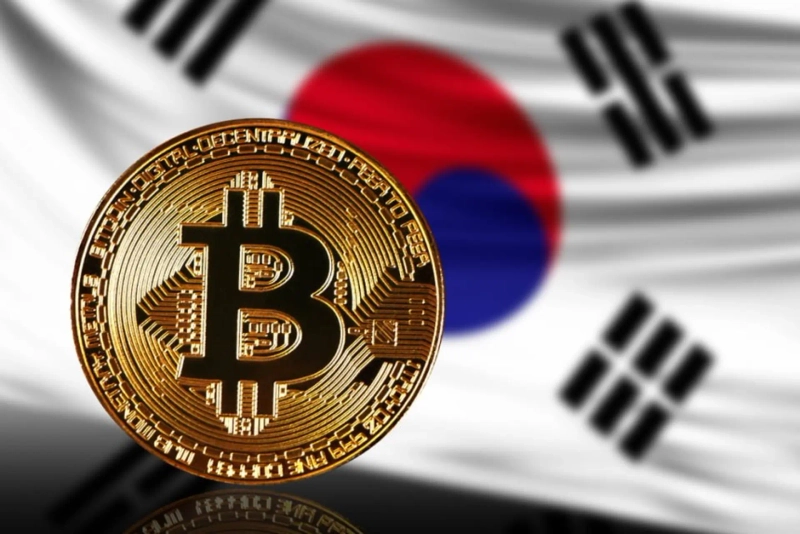
The political dispute over the introduction of domestic stablecoins is intensifying. When Lee Jae-myung, the presidential candidate of the Democratic Party of Korea, mentioned the necessity of won-based stablecoins, Lee Jun-seok, the presidential candidate of the Reform Party, strongly criticized it as an "irresponsible claim," and Democratic Party lawmakers are countering Lee Jun-seok's remarks, escalating the related debate.
On the 8th, Lee Jun-seok criticized on his Facebook, "Lee Jae-myung's economic view is always dangerous and experimental," stating, "He irresponsibly throws unverified ideas and repeats plausible words without understanding the market." This was in response to Lee Jae-myung's statement on a YouTube broadcast the same day, saying, "We need to establish a won-based stablecoin market to prevent national wealth outflow."
Particularly, Lee Jun-seok pointed out the Terra-Luna incident, saying, "Terra and Luna started under the name of won-linked stablecoins but maintained their price using Luna without substantial assets," and "The result was disastrous, and numerous investors suffered losses."
In response, former Democratic Party lawmaker Kim Byung-wook countered on the 9th, "Banning all won-based stablecoins based on the Terra incident does not align with the international regulatory trend." He explained, "Major regulatory bodies like the US, EU, Japan, BIS, and FSB have already adopted a common standard that algorithmic tokens are too volatile to be included in the stablecoin category," and "Structures like Terra are excluded from policy discussions, and now collateral-based stablecoins with 1:1 cash or treasury collateral, real-time reserve disclosure, and immediate redemption obligations are at the center."
Former lawmaker Kim pointed out, "Lee Jun-seok is denying the entire policy discussion with an overgeneralization like 'Terra failed, so stablecoins are dangerous' without distinguishing between algorithmic and collateral-based structures," adding, "If he had understood the basic global regulatory concepts, such overgeneralization could have been avoided."
Democratic Party lawmaker Min Byung-deok also criticized on Facebook the same day, "Banning all won-based stablecoins based on Terra's failure is no different from arguing to abolish the entire printing technology because one copier broke down." He emphasized, "The stablecoin being reviewed by the Democratic Party is designed to meet international standards by depositing 1:1 cash reserves in bank or trust accounts, mandating accounting audits and real-time balance disclosures, and adding statutory interest in case of redemption delays," and "It has no structural similarities with Terra-Luna."
In fact, algorithmic stablecoins attempt to peg value using sister coins or algorithms but have been criticized for being vulnerable to market shocks. The Terra incident, which maintained pegging linked to the sister coin Luna and then collapsed, produced numerous victims and revealed structural limitations.
On the other hand, collateral-based stablecoins, which deposit fiat currency or treasury in a 1:1 ratio, are emerging as the center of the current financial market due to their efficiency, stability, and transparency. Tether (USDT) and USD Coin (USDC), which hold US treasuries as reserves based on the US dollar, are representative examples.
Major countries around the world are also reorganizing their regulatory systems to meet these standards. Japan enacted a law related to stablecoins in 2022, introducing real asset collateral requirements and issuer registration, and in 2023, amended the Payment Services Act to classify stablecoins as 'electronic payment means' and establish a legal basis. The European Union (EU) specified through the 'MiCA' virtual asset regulation that algorithmic stablecoins will not be recognized as stablecoins. The US is also actively discussing collateral-based stablecoin regulations in both the Senate and the House.
Seo Byung-yoon, director of the DSRV Future Finance Research Institute, diagnosed, "After the Terra incident, countries around the world have reorganized stablecoin regulations based on 100% reserve and redemption obligations as recommended by international organizations," adding, "The possibility of a recurrence of issues like the Terra incident seems low." He further noted, "If won-based stablecoins are not allowed, there is a concern that Korea may fall behind in the newly reorganizing global digital economic system."
Hwang Doo-hyun, Bloomingbit Reporter cow5361@bloomingbit.io

Doohyun Hwang
cow5361@bloomingbit.ioKEEP CALM AND HODL🍀