

PiCK
US-China Surprise Big Deal After Two-Day Negotiation... Financial Markets 'Cheer'
Summary
- The US and China announced that they agreed to significantly lower tariffs between the two countries and withdraw non-tariff retaliatory measures.
- As a result of the negotiations, the markets of both countries stabilized, and the value of the dollar and stock indices surged.
- This negotiation is said to be an opportunity for the two countries to continue ongoing economic and trade discussions aimed at easing tensions.
Tariffs on Chinese Goods Lowered to 30%, Tariffs on US Goods to 10%
Fentanyl Tariff + Mutual Tariff Set at 30%
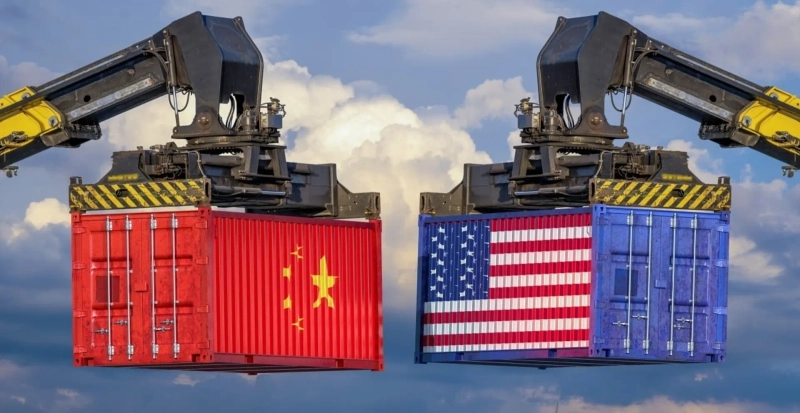
The United States and China have dramatically succeeded in concluding tariff negotiations. The US will lower tariffs on Chinese imports from at least 145% to at least 30% for 90 days, and China will reduce tariffs on US imports from at least 125% to at least 10%. China has decided to withdraw non-tariff retaliatory measures such as restrictions on rare earth exports. As the damage from the tariff war spread, it is analyzed that both the US and China chose practicality to prevent mutual destruction.
The US and China announced the results of this trade negotiation on the 12th (local time) in Geneva, Switzerland. The negotiation team, led by US Treasury Secretary Scott Besant and Chinese Vice Premier He Lifeng, conducted a marathon negotiation for two days starting on the 10th.
The US decided to lower the additional 145% tariff imposed on Chinese imports after the Trump administration took office to 30%. The 145% tariff imposed by the US on China consists of a 125% mutual tariff and a 20% 'Fentanyl Tariff' imposed as a punitive measure for China's neglect of fentanyl (synthetic drug) exports, but the mutual tariff will be reduced to 10% while maintaining the Fentanyl Tariff. However, this will only apply for 90 days from May 14, and if no further negotiations occur, it will revert to the mutual tariff rate (34%) announced on April 2.
The retaliatory tariff of 125% that China imposed on US products will be lowered to 10%. This is the result of a decision to defer 24% of the 34% imposed on US products as a retaliatory measure against the US's mutual tariff imposition for 90 days from the 2nd of last month.
The two countries agreed to continue negotiations based on this discussion. They explained that they would promote related work under the spirit of mutual openness, continuous communication, cooperation, and mutual respect.
The US and China have been negotiating tariff reductions through high-level trade negotiations in Geneva since the 10th. On the US side, Treasury Secretary Scott Besant and US Trade Representative (USTR) Representative Jamieson Greer participated, while on the Chinese side, Vice Premier He Lifeng and Li Chenggang, Deputy Minister and representative of international trade negotiations at the Ministry of Commerce, participated.
Since the inauguration of the second Trump administration earlier this year, the US and China have been engaged in a tariff war without any concessions over trade hegemony. As successive retaliatory measures by both countries caused prices of Chinese products to soar in the US and export contraction led to job losses and management difficulties centered on manufacturing in China, many analysts believe that both countries chose practicality over justification.
Secretary Besant said at a press conference held immediately after the negotiations ended, "It was a very productive dialogue," and Vice Premier He said, "This negotiation is an important first step towards resolving differences between the two countries."
Tariff War Concluded... "Complete Reset"
The joint announcement made by the US and China on the 12th (local time) in Geneva, Switzerland, signifies the conclusion of the months-long US-China tariff war. Both countries agreed to defer all ultra-high tariff rates that were sharply raised last month. The US decided to leave only the 20% Fentanyl Tariff and the basic 10% tariff, and China will impose a 10% tariff on the US as a measure corresponding to the basic tariff. This measure will apply for 90 days starting from the 14th.
Previously, US President Donald Trump stated on social media on the 10th that the two countries had made "great progress" and that "a total reset negotiation was conducted in a friendly and constructive manner." Until then, there was little expectation that the two countries would actually be able to make a big deal. The Chinese side showed an aggressive attitude, stating that they would never respond to threats disguised as negotiations in the process of attending this meeting.
On the other hand, the US took a cautious approach. Even when announcing the Swiss meeting plan on the 6th, they did not use expressions that would provoke China and did not use the word tariff much, stating that this meeting would focus on "easing tensions" rather than the trade negotiations themselves (Scott Besant, Treasury Secretary, Fox News interview).
However, during the two-day negotiations, the two countries made very rapid progress. According to Reuters, the negotiations held at Villa Saladin (the residence of the Permanent Representative of the UN Office in Geneva) in Geneva lasted about 10 hours on the 10th and several hours on the 11th.
US Trade Representative (USTR) Representative Jamieson Greer said on the 11th, "It is important to understand how quickly we reached an agreement," adding, "It probably reflects that the differences between the two countries are not as great as we thought." He also said, "The agreement we reached with China will help in efforts to resolve the national emergency caused by the trade deficit."
The Chinese side, which Greer described as "tough negotiators," also showed satisfaction after the negotiations. Chinese Vice Premier He Lifeng, who served as the chief representative of the Chinese side, said, "The two sides have agreed to establish a mechanism for trade and economic consultations, and follow-up discussions will continue." Li Chenggang, the representative of international trade negotiations at the Chinese Ministry of Commerce, responded to a question about the timing of the disclosure of the negotiation contents, saying, "Good food is worth waiting for," and "I believe the world's response will be positive whenever it is announced."
US "Does Not Want Decoupling"
The tariff rates derived from the negotiations are much lower than the market expected. Previously, the New York Post reported that the US side expected a tariff rate in the 50% range, and President Trump wrote on social media that 80% was appropriate. The final tariff rate on Chinese goods being set at 30% suggests that the Chinese side may have initially presented a very forward-looking negotiation proposal to the US. China has decided to delete all retaliatory measures, including restrictions on rare earth exports.
In April, China's manufacturing sector deteriorated to its lowest level since December 2023. According to the BBC, Chinese export companies are busy seeking alternative markets other than the US as inventories pile up in warehouses. The number of Chinese companies complaining of management difficulties due to the steep tariff increase is snowballing. Bert Hofman, a professor at the National University of Singapore's East Asian Institute, told the BBC, "China realizes that having negotiations is better than not having them," and "They have taken a pragmatic perspective and started negotiations."
The two countries plan to pursue a more permanent trade agreement based on this agreement. There is also the possibility of creating a cooperative body to resolve issues such as the fentanyl problem.
One of the points to watch in the future is whether the results of this tariff negotiation will affect the relationship between Chinese President Xi Jinping and President Trump. President Trump told reporters that President Xi had called him at his request, but the truth is unclear. If the economic issues between the two countries enter a thawing period, President Xi may have room to respond to President Trump's requests for phone calls or meetings. It is known that officials from both countries once considered creating a scene where the two meet during the birthday week of President Trump (June 14) and President Xi (June 15).
Dollar Value Rises by 0.7%
As the two countries made a surprise big deal, the financial markets cheered greatly. The US S&P 500 futures price immediately rose by 2.8%. The value of the US dollar jumped by 0.7%. Treasury Secretary Besant said at the press conference, "We want more balanced trade, and both sides are committed to achieving it." He added, "Neither side wants 'decoupling.'"
The US Federal Reserve's monetary policy, which had predicted economic slowdown and inflation based on high tariff rates, may become more accommodative.
Companies are expected to endure a confusing situation for the time being due to the abrupt policy shift. The announcement did not include retroactive application of tariff reduction measures on Chinese and US tariffs. Depending on the timing of imports, costs will fluctuate significantly. Discussions on changing various raw material supply sources, investment plans, and funding plans, assuming the continuation of US-China conflicts, will also need to be comprehensively reviewed again.
Joint Statement of the US-China Economic and Trade Talks in Geneva
The governments of the People's Republic of China ("China") and the United States of America ("US"),
Recognizing the importance of bilateral economic and trade relations to both countries and the global economy;
Recognizing the importance of sustainable, long-term, and mutually beneficial economic and trade relations;
Reflecting on recent discussions and believing that continued dialogue can address each side's concerns in economic and trade relations;
To move forward in the spirit of mutual openness, continuous communication, cooperation, and mutual respect;
The parties commit to taking the following actions by May 14, 2025:
The US will (i) amend the application of additional ad valorem tariffs on Chinese goods (including goods from the Hong Kong Special Administrative Region and the Macao Special Administrative Region) specified in Executive Order 14257 dated April 2, 2025, deferring 24 percentage points of the tariff for the initial 90 days, while maintaining the remaining ad valorem tariff of 10% on goods under the conditions of the order; (ii) remove the modified additional ad valorem tariffs imposed on goods by Executive Order 14259 dated April 8, 2025, and Executive Order 14266 dated April 9, 2025.
China will (i) amend the application of additional ad valorem tariffs on US goods specified in State Council Tariff Commission Announcement No. 4 of 2025, deferring 24 percentage points of the tariff for the initial 90 days, while maintaining the remaining additional ad valorem tariff of 10% on goods, and remove the modified additional ad valorem tariffs imposed on goods by State Council Tariff Commission Announcement No. 5 of 2025 and State Council Tariff Commission Announcement No. 6 of 2025; (ii) take all necessary administrative actions to defer or remove non-tariff countermeasures taken against the US after April 2, 2025.
After taking the above actions, the parties will establish a mechanism to continue discussions on economic and trade relations. The Chinese representative for these discussions will be Vice Premier He Lifeng, and the US representatives will be Treasury Secretary Scott Besant and US Trade Representative Jamieson Greer. These discussions may take place alternately in China and the US, or in a third country, as agreed by the parties. If necessary, the two sides may conduct working-level consultations on relevant economic and trade issues. End.
Washington=Lee Sang-eun/Beijing=Kim Eun-jung Correspondent

Korea Economic Daily
hankyung@bloomingbit.ioThe Korea Economic Daily Global is a digital media where latest news on Korean companies, industries, and financial markets.