

US Commerce "Maintains Basic Tariff at 10%... Some Items May Be Duty-Free"
Summary
- The US Department of Commerce announced plans to maintain the basic tariff at 10%.
- It was reported that there is a possibility of converting some items to duty-free.
- The case of tariff negotiations with the UK was presented as a guiding principle for negotiations with other countries.
Japan's Ishiba "No Unfavorable Compromise"
The United States has made it clear that it will not abolish the basic tariff of 10% in tariff negotiations with various countries. It stated that exemptions for certain items are possible.
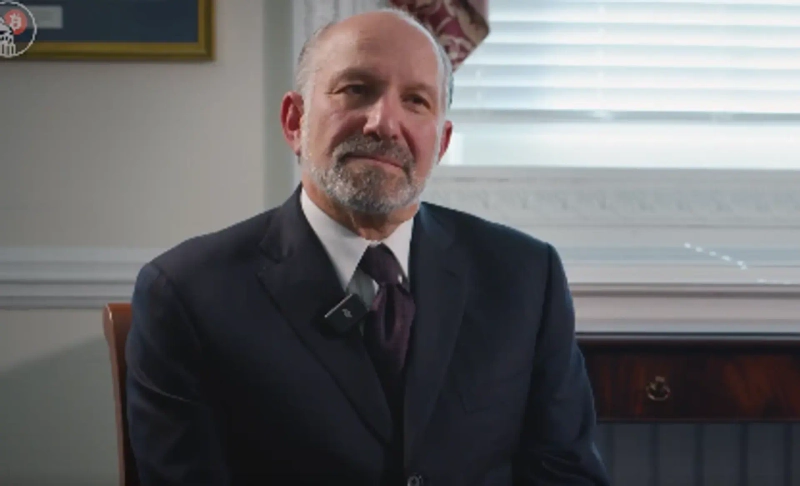
Howard Lutnick, the US Secretary of Commerce, mentioned in an interview with Fox News on the 11th (local time) that the remaining countries have a basic tariff of 10% while referring to the additional 145% tariff imposed on China, saying "Don't exaggerate too much." He indicated that the tariff burden is not significant except for some countries that cause a large trade deficit with the US. He continued, "We (the US) are the consumers of the world," and "Everyone wants to sell goods here and also needs to trade with the US."
In an interview with CNN the previous day, Secretary Lutnick also stated, "The basic tariff will not go below 10%," adding, "That's a point we cannot go beyond." However, he said, "We will address specific issues of counterpart countries," and "For example, steel, aluminum, and aircraft parts can be imported without tariffs." The tariffs imposed by the Trump administration on various countries consist of a basic tariff of 10% and country-specific tariffs. For example, of the 25% reciprocal tariff imposed on Korea, 10% is the basic tariff, and 15% is the country-specific tariff. Even if tariff negotiations are conducted, only the country-specific tariffs will be adjusted, while item-specific tariffs such as on automobiles and steel/aluminum can be partially exempted or reduced. The US has already applied this approach in its trade agreement with the UK. For British cars, tariffs have been lowered from 25% to 10% for up to 100,000 units annually, and British steel has been completely exempted from the 25% tariff. The US-UK negotiations are expected to serve as a guideline when the US negotiates with other countries.
However, there is a possibility that various countries may oppose this US administration policy. Japanese Prime Minister Shigeru Ishiba recently stated in an interview with Fuji TV, "We are demanding the abolition of tariffs, and 10% is not acceptable," adding, "Even if the negotiation deadline (July 8) comes, it does not mean we should compromise unfavorably."
New York = Correspondent Park Shin-young hohoboy@hankyung.com

Korea Economic Daily
hankyung@bloomingbit.ioThe Korea Economic Daily Global is a digital media where latest news on Korean companies, industries, and financial markets.