

US-China 'Tariff War 90-Day Truce' Leads to Global Financial Market Rally
Summary
- The US and China agreed to suspend the tariff war for 90 days, leading to a strong reaction in the global financial market.
- US stock futures and the dollar surged, while safe-haven assets like gold and US Treasuries fell, showing investors' optimism.
- Some experts still caution about the uncertainty due to the 90-day grace period.
US Stock Futures, European Markets, Asian Stocks, and Dollar Rise
Safe-Haven Assets Gold and US Treasuries Plunge
Nvidia and Tesla, with Significant China Business, Surge Pre-Market
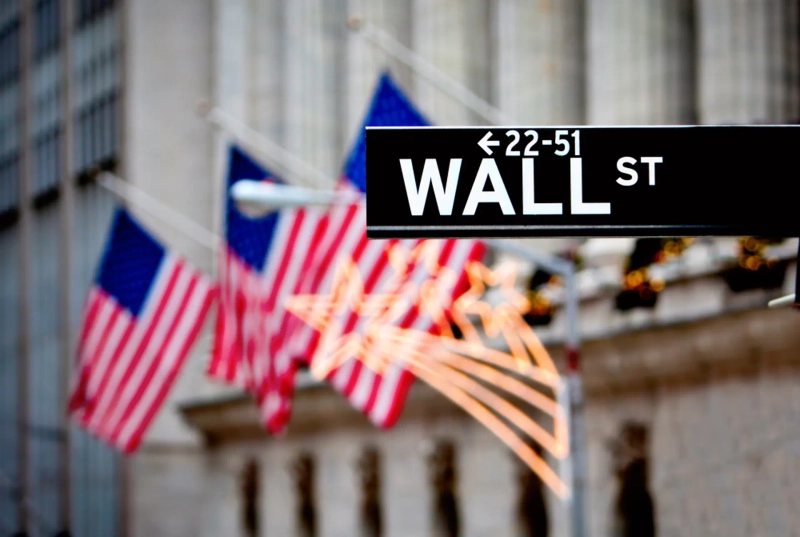
The US and China agreed to revert to pre-trade war tariff levels for 90 days, causing US stock futures and the dollar to surge, while gold and US Treasuries plummeted.
On the 12th (local time), the US and China, having their first meeting in Geneva, announced an agreement to reduce tariffs by 115 percentage points each for 90 days. As a result, US tariffs on Chinese goods will remain at 30%, and Chinese tariffs on US goods will remain at 10%.
Following this news, Nasdaq 100 futures (E-mini) rose 3.3% around 4:30 AM Eastern Standard Time. S&P 500 index futures (E-mini) also rose 2.5%, and Dow futures (E-mini) surged over 800 points, nearly 2%.
The CBOE Volatility Index, known as Wall Street's fear gauge, briefly fell below 20 points for the first time since the end of March. On the last trading day of the previous week, it recorded 20.37 points.
European stocks started with the Stoxx 600 index rising 1.1%, and Germany's DAX index surged 1.5% to a record high.
With significant progress announced in the US-China talks, the Hang Seng index in the Asian market surged 2.98%. South Korea's KOSPI rose 1.17%, and Japan's Nikkei 225 increased by 0.38%. The truce news also led India's Sensex index to jump 3.6%.
The index representing the dollar's value against major currencies rose 0.9% from last month's three-year low. The Japanese yen, considered a safe-haven asset, fell 1.5% against the US dollar to 147.08 yen, and the euro fell 1.1% to 1.1131 dollars. The Chinese yuan recorded its strongest level in six months at 7.2001 yuan against the dollar.
In contrast, gold, a safe-haven asset, plunged 3.3% to $3,231.90 per ounce on the New York Mercantile Exchange (NYMEX) as of 5:30 AM. The 10-year US Treasury yield rose 7 basis points (1bp = 0.01%) to 4.44%. Bond prices and yields move in opposite directions.
Bitcoin rose 1.2% to surpass $105,000, reaching $105,509.18. Ether increased 2.7% to trade at $2,578.32.
Nvidia, which was significantly impacted by the US-China trade war, surged 5% to $122 in pre-market trading, and Tesla rose 7.6% to $321.
On this day, US Treasury Secretary Besant stated, "Both sides agreed that they do not want decoupling."
Meanwhile, President Trump announced that he would sign an executive order to reduce drug prices by 30-80% on Monday, leading pharmaceutical stocks to weaken. Following the decline in South Korean and Japanese pharmaceutical companies' stocks, Pfizer, Eli Lilly, and Johnson & Johnson also fell over 2% in pre-market trading on the US stock market.
While the market generally showed a sense of relief, some experts still pointed out the uncertainty due to the 90-day grace period and Trump's ongoing tariff announcements.
Kenneth Brooks, Chief Strategist for Foreign Exchange and Rates at Société Générale Bank in London, noted, "It doesn't mean we're back to the pre-Trump era, and we need to be cautious about the uncertainty."
Guest Reporter Kim Jung-ah kja@hankyung.com

Korea Economic Daily
hankyung@bloomingbit.ioThe Korea Economic Daily Global is a digital media where latest news on Korean companies, industries, and financial markets.