

PiCK
Cheering on Eased US-China Trade Tensions... Tesla Soars 6.75% [New York Stock Market Briefing]
Summary
- The New York stock market surged on news of eased US-China trade tensions, with Tesla rising by 6.75%.
- It was reported that as both countries agreed to lower tariffs, tech stocks and companies dependent on Chinese producers showed an upward trend.
- The easing of US-China tensions alleviated recession fears, driving up US Treasury yields and international oil prices.
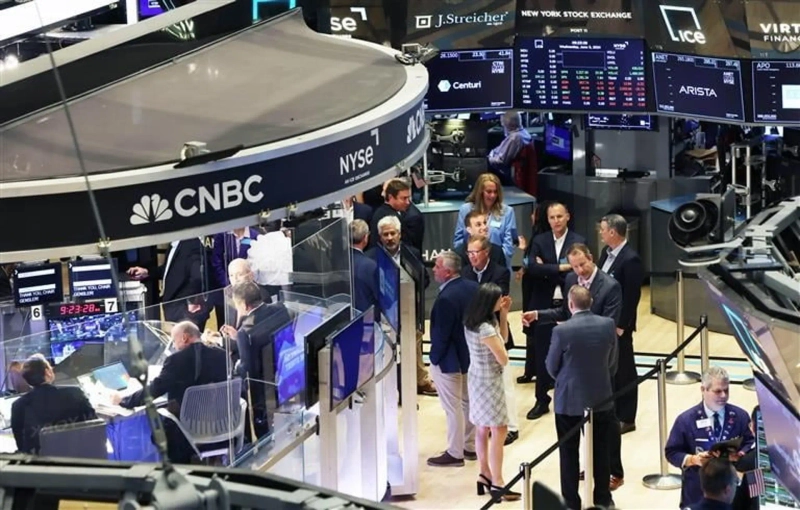
Major indices on the New York Stock Exchange surged due to the significant reduction in the tariff war between the US and China.
On the 12th (local time) at the New York Stock Exchange (NYSE), the Dow Jones Industrial Average closed at 42,410.10, up 1,160.72 points (2.81%) from the previous day, the S&P 500 index rose 184.28 points (3.26%) to 5,844.19, and the tech-heavy Nasdaq Composite Index finished at 18,708.34, up 779.43 (4.35%).
A joint statement was released following the high-level US-China trade talks held in Geneva, Switzerland, over the weekend, announcing that both sides agreed to reduce tariffs imposed on each other's goods by 115 percentage points. As a result, US tariffs on Chinese imports will decrease from 145% to 30%, and China's retaliatory tariffs on US imports will drop from 125% to 10%.
US Treasury Secretary Scott Besant stated in a briefing that "both delegations agreed that neither side wants decoupling (complete supply chain separation)," and both countries are doing their best to achieve balanced trade. He also mentioned that a larger agreement is expected to begin in the coming weeks, raising expectations for further easing of trade tensions.
Tech stocks soared significantly due to the easing tensions between the US and China. Tesla's stock rose by 6.75%, and major big tech stocks such as Nvidia (5.44%), Amazon (8.07%), Meta Platforms (7.92%), and Apple (6.31%) also surged.
Companies highly dependent on Chinese producers, such as Best Buy (6.56%) and Dell Technologies (7.83%), also saw significant gains.
The CBOE Volatility Index (VIX), known as the 'fear index,' fell 3.51 points to 18.39, dropping below the 20 mark for the first time since the Trump administration's reciprocal tariff announcement on April 2.
As signs of the tariff war subsiding emerged, recession fears also eased. Consequently, the yield on the US 10-year Treasury note rose to 4.48%. Additionally, expectations that the US Federal Reserve (Fed) might cut interest rates early have receded.
According to the CME FedWatch Tool, the interest rate futures market reflected a 57% probability that the Fed will hold rates steady at the FOMC meeting on July 29-30, up significantly from 40% on the 9th.
International oil prices, which had fallen due to recession and supply increase concerns, also rose. The closing price of West Texas Intermediate (WTI) crude futures for near-month delivery on the New York Mercantile Exchange was $61.95 per barrel, up 93 cents (1.5%) from the previous day.
On the other hand, gold prices fell. As risk appetite revived, the preference for safe assets weakened. The closing price of gold futures for near-month delivery on the New York Mercantile Exchange fell 3.5% to $3,228 per ounce.
Han Kyung-woo, Hankyung.com Reporter case@hankyung.com

Korea Economic Daily
hankyung@bloomingbit.ioThe Korea Economic Daily Global is a digital media where latest news on Korean companies, industries, and financial markets.